Category: General

  • April’s Fool

    April’s Fool

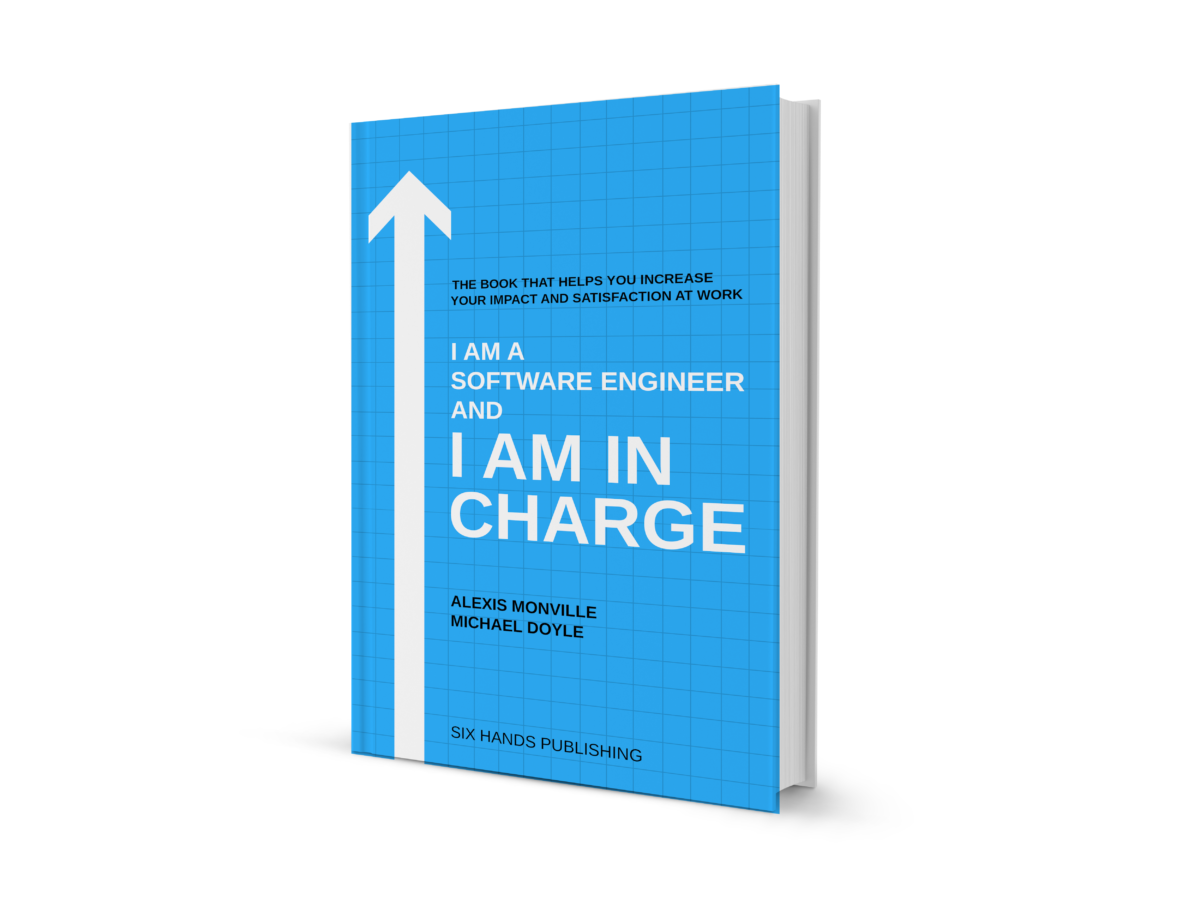
    Michael Doyle and I are launching a new book in May 2020. The book is I am a Software Engineer and I am in Charge: The book that helps increase your impact and satisfaction at work.

    Some people told us that it was not the perfect timing as people surely have other things on their minds. Others told us it was the right timing because people will want something to read. As a result, I think I don’t really know if it is good or bad. I only hope that the book will find its audience and have the impact we wished for when we wrote it.

    For April’s fool, we thought about what kind of joke we could make. We opted for a merch store with announces on Twitter using quotes from movies. We thought everybody would guess the joke and laugh with us.

    I don’t think it worked. The products were named, the first, the of, and the month. Maybe people did not even get to the page and saw that?

    Let’s not all of them, because someone ask it was for real, and if it was possible to order something 🙂 Yes, it is for real and we updated the page with real product names!

    Here are two links for if you want to learn more about the book and why we decided to write it.

  • Chief of Staff in the Tech Industry

    Chief of Staff in the Tech Industry

    In this article, I would like to provide information and pointers to information on the Chief of Staff’s role in the tech industry. As a member of the Engineering Leadership Team at Red Hat, I have been in that kind of role for almost three years for the SVP of Engineering.

    People instantly connect the role to the one that John R. Steelman was the first to hold in 1946: White House Chief of Staff. The definition of the role varies immensely between every presidency. Even more, as Chris Whipple states in the subtitle of his book The Gatekeepers, “The White House Chiefs of Staff Define Every Presidency.”

    As for the White House, the job depends on the company and executive the Chiefs of Staff serve. The general acceleration of the pace of business is the main reason mentioned for the emergence of the role in tech companies. CEO and Executive tend to shift their focus from inside their organization to outside. They need someone trusted to cover for them. Mark Organ, the CEO of Influitive, describes the Chief of Staff job as making him a superhero.

    Rob Dickins, who served as Chief of Staff for several executives at Autodesk, describes the role using three orientations. I find the framework useful to structure the conversations with other Chief of Staffs, or with executives looking for Chief of Staffs (CoS).

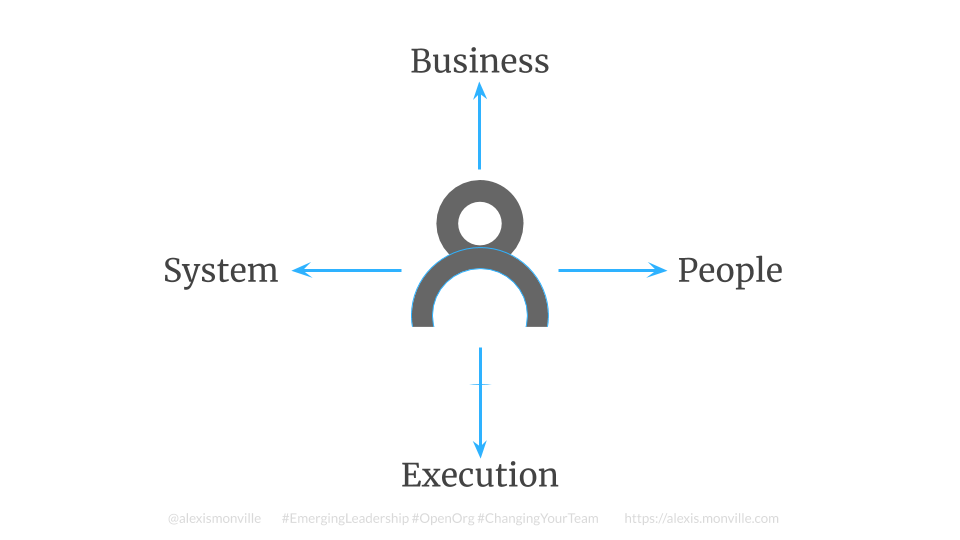
    The first orientation focuses on the executive the CoS reports. How do we make the executive operate at the highest level of performance?

    The second orientation includes, in addition, the executive’s leadership team. I love that aspect of the job, transforming a group of people reporting to an executive into a true team leading the company or the business unit. Being part of a team, each member levels up his game and benefits from the diversity of the group.

    The third orientation is the organization itself aiming at answering the question: How do we best set the organization to accomplish its objectives. One aspect of that is why I love using Objectives and Key Results (OKRs) to establish a continuous two-way street dialog between the people in the organization and their leadership team. The dialogue helps to clarify the strategy and to evaluate what are the right things to do to implement it.

    Julia DeWhal, Chief of Staff to the CEO at Opendoor, describes the role as the right-hand person and the force multiplier. Brian Rumao, Chief of Staff to the CEO at LinkedIn, uses the same description in the short course he made available, and adds, that the CoS have to stand in for their executive as needed. Mark Organ even says that the CoS is his stunt double.

    As Ben Casnocha, who was the Chief of Staff for Reid Hoffman, surfaces very well, the more connected the Chief of Staff is with the executive he or she served, enable better decision making and better tradeoffs.

    What are the attributes you will want as or for a Chief of Staff:

    • Expert Facilitator: you manage conversations, synthesize multiple points of view, align on strategic orientation, either in-person or remotely,
    • Trusted Organizer: you bring order to things, you get things done, and you manage sensitive information in confidence and discretion.
    • Strategic Thinker: you can see the big picture, evaluate importance and urgency, and provide context for decisions.

    I often wondered how Elon Musk was managing his time between his three main companies: SpaceX, Tesla, and The Boring Company. Surprisingly, Sam Teller was the Director of the Office of the CEO for the three companies.

    It seems that the “Alter Egos” were doing well together. Jonah Bromwich used the term in his New York Time article, Hail to the Chief of Staff, The title is suddenly everywhere. It can mean almost anything.

    Can it mean almost anything? Yes. So it means that you can define a role so that your contribution has the most significant impact on your organization.

    To find out more about the Chief of Staff role in tech, follow the CoS Tech Forum.

    Edit on April 20: Here is another article to add to the references. This is from the Harvard Business Review: The Case for a Chief of Staff. The three-level model makes a lot of sense to refine the role.
  • A very special dinner

    A very special dinner

    In May 2011, Isabel and I had the pleasure of organizing the first edition of TEDxBordeaux. The theme we chose was Together. The underlying idea was, as I said in my introduction to the event, We can rediscover our power to change things. Together.

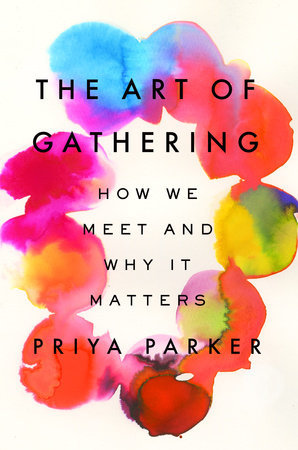
    When I read about 15 Toasts in Priya Parker’s book, The Art of Gathering, it reminded me of the dinner we organized with the speakers and organizers the night before the event.

    The 15 Toasts dinners aim at creating safe spaces that give the “15 guests the permission to be vulnerable, engage as human beings in an open and genuine conversation, and surprise one another and themselves.”

    I hadn’t thought of that this way, but when I read that sentence, I thought: “Yes, exactly that!”

    Side conversations are not necessarily the ones you plan for…

    Our goal was that the speakers connect, learn more about each other so that they support each other on the big day on which they will give the best talk of their lives. We thought that the audience would feel the connection between the speakers, the organizers, and that will contribute to the overall perception of the event, and help make the connection between the theme, and each of the topics the speakers will cover: Education, Healthcare, Technology, Art, Universal Basic Income, Open Source…

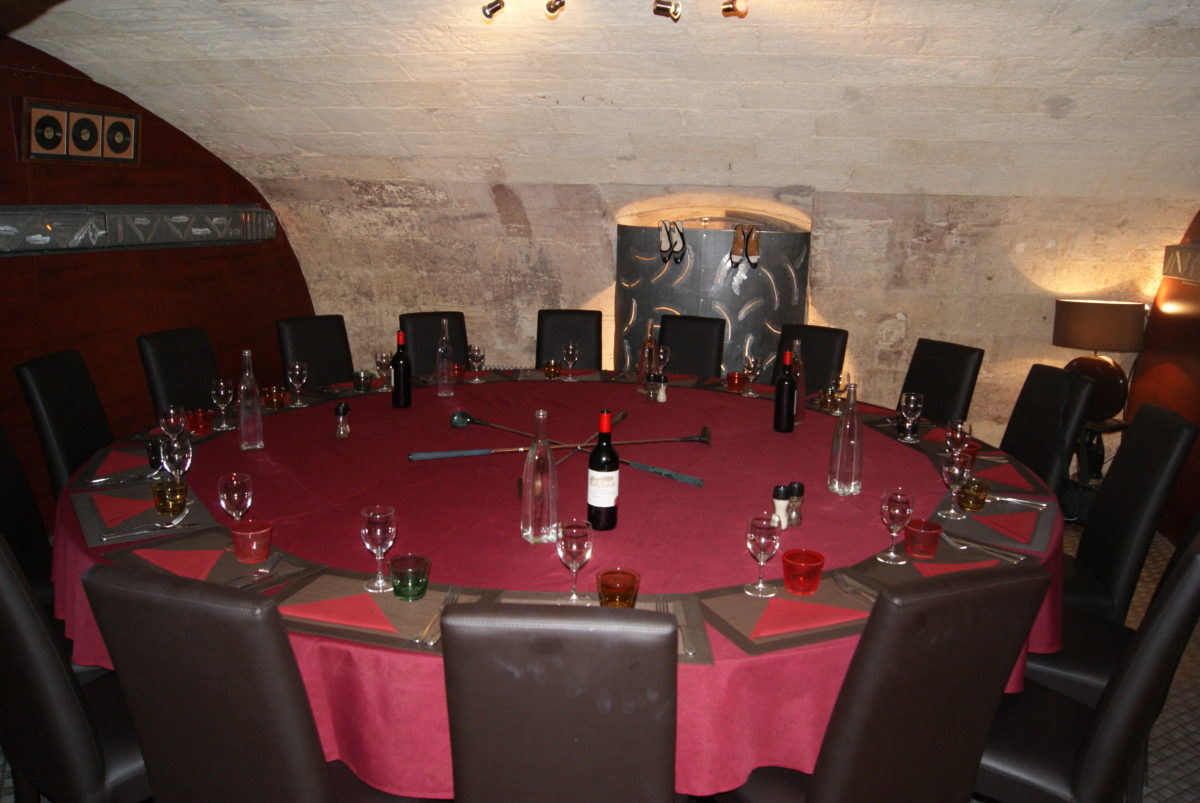
    We were lucky enough to find the best possible location to do that: a big round table in a private room at the back of a good and reasonably priced restaurant. Unfortunately, that space does not exist anymore, the restaurant moved to another location, and the people who took over chose to remove the big round table and replaced with too many small tables of four.

    As Isabel coached all the speakers, she was the connection point between all of them. We worked on assigning the seats so that the people can be comfortable to engage in side conversations. But we wanted more. The dinner participants all knew that they would have to introduce themselves, answering three questions that Isabel had shared in advance. We don’t remember the questions but it was something to push them out of delivering their usual pitch.

    And it worked! It worked during the dinner. It also worked during the rehearsals the morning of the event. It worked during the event itself on that Saturday afternoon. The speakers and the organizers all behaved kindly, supporting each other, overcoming the obvious growing pressure, and contributing to the magic of the event.

    The next time you organize an event, you can start to think of using the necessity of food to accomplish something more. I don’t believe large dinners in conference centers can accomplish that, and this is the reason I love so much the Dinner with a Stranger idea.

    I will cover that next time.

    What are your best ideas to foster that sense of connectedness that definitely gets things done? Please share through the usual means: comments, Linkedin, Twitter, or direct email. Thank you!

  • The Art of Gathering

    The Art of Gathering

    I have been asked thousands of times to facilitate small or large gatherings. When I worked on Changing Your Team From The Inside, I wanted to make clear that self-organization is the most powerful way for people to organize, but that based on their history, you will need to help them get there. You will need to create the conditions for self-organization to happen.

    Chapter nine of the book is titled Organize because self-organization requires organization. I focused the chapter on meetings because it is something easier to change, to adjust, to experiment on, than to change the whole organization. And I believe it is much more impactful to change the way we meet than to change the reporting structure.

    The Art of Gathering, by Priya Parker, is a perfect book. The structure brings you gently to think about all the aspects that matter about your gathering.

    It starts with the purpose of the gathering. Why do we really gather? And, of course, the answer is not because it is Monday.

    Then you cover the uncomfortable question of who should join. And, no, inviting everybody is not an inclusive option. It is even the opposite. Why would someone who attends a meeting on which he or she will bring no value should feel included?

    In the role of the host, you have power, and you have to use that power to serve the purpose of the gathering and your guests.

    The time of the gathering is a temporary alternative world in which the traditional rules are not necessarily valid. You can, and in fact, you have to create rules that once again will serve the purpose and the guests. The author gives a ton of inspiring examples.

    I know that, and even knowing it, I understood reading the chapter that I was not investing smartly enough on the openings of my gatherings.

    In conferences or other gatherings, my frustration level grows each minute that passes. Why that? Because people are not true and authentic. Okay, I am over-generalizing. Not all people are manipulative and insincere. And not all people behave all the time the same way. The big idea is that it takes intentional efforts to create conditions for people to be true and authentic.

    In meetings, when we stay on the surface of things, we can be very polite and respectful, avoid any potential conflicts and keep the status quo forever. If keeping the status quo is what you need, you probably don’t have to push hard to get to that. If not, then it is on you to organize the controversy so we can really discuss what matters and initiate a change.

    We are approaching the end of the post, and you have to know that ends matter a lot. I would like to, once again, thank the author for having created that perfect book. I would like to thank you for reading and sharing this post. I would like to encourage you to read the book, and to share what you learned and how it affects your next gatherings. Working on ending the meeting properly is probably one thing I would change in Chapter 9 of Changing Your Team From The Inside.

    And finally, what I would love is to have Priya Parker on Le Podcast to discuss how to apply her expertise and experience to online gatherings. But I guess you will all have to ask for it to happen!

  • Time matter for a team

    Time matter for a team

    The fact that time matter for a team is not a controversial matter. I think we would all agree on that. The other aspect of time that we will all agree quickly on is that, not all time will matter the same way.

    We will not value an hour stuck in a traffic jam the same way as an hour hiking on a trail, or an hour shopping, or an hour playing with friends, and so on…

    So when it comes to how an individual contribution could be the most effective, what is the time that matters the most?

    When asked, people usually look at three different types of time:

    • Synchronization time,
    • Collaboration time,
    • Focus time.

    Synchronization time

    Synchronization time is when team members share their progress, challenges, learnings, so they all can stay on the same page, aligned toward the same goal.

    During synchronization time, we can identify opportunities for activities that will fall into the two other types of time. It could be an opportunity of collaboration on understanding and solving an issue or a possibility of training in a specific area to take two examples.

    Collaboration time

    Collaboration time is when two or more people work together to accomplish a specific activity. Activities could be different, like pair or mob programming, writing, designing, reviewing, and so on.

    Focus time

    Focus time is when team members work alone, ideally without interruptions so that they can work on one thing in an ideal state. Like writing an article to share knowledge (and initiate a feedback loop that will bring more learning opportunities in return).

    Why it Matters?

    I believe it matters for a team to agree on the practices they will adopt to benefit from the three types of time. Those practices can evolve over time, and as a consequence, their team agreements evolve accordingly.

    The practices vary upon the physical organization of the team. Practices have to be different when the team is collocated in the same room, spread over a building, in multiple offices or locations, spread over multiple timezones.

    A practice that works well for synchronization when the team is collocated, like a quick 10-minute morning check-in in front of a kanban board, will not work when the team is distributed over 15 timezones. In the latter case, synchronization still matters, but another synchronization practice will have to be defined for the team.

    It is the same for the collaboration time and focus time. Practices are different depending on the collocation or distribution of the team. The main aspect is that it has to be defined!

    Do you and your team have defined practices for the three types of time? And what are you preferred practices?

    As usual, please comment, tweet or direct emails! Thank you!

  • How do we Communicate?

    How do we communicate is a really important question to ask when the team is up to define its Team Agreements.

    Valve, the game company published its Handbook for New Employees in 2012. The subtitle provides information on how their approach to communication will have to be different: A fearless adventure in knowing what to do when no one’s there telling you what to do.

    How communication works when the organization values self-organization and self-management at that level. As you can see based on the illustration below coming from the handbook, the organization relies on individuals taking matters in their own hands.

    The Basecamp Guide to Internal Communication is another example of clarifying not only how we communicate but also where, why, and when.

    Reading the Basecamp Guide, it is obvious that Basecamp values the time of people, and values the time when they are not interrupted.

    Those two examples show that the underlying values and principles of the organization condition the way communication happens, its purpose and who has the initiative to initiate or improve the communication.

    The one thing I would like to leave you with is: It has to be defined!

    As a team member, you cannot rely on the fact that other team members know how to do it if there is no formal agreement on how the team is doing it. The understanding of each team member is probably slightly different leading to bigger misunderstandings.

  • Team Awards Retrospective

    Everything is awesome, everything is cool when you are part of a team!

    The LEGO Movie

    Even if a lot of people would genuinely like to think that way, not everything is awesome when you are part of a team. The great thing about this is that it leaves room for improvements which a regular retrospective will help you find as a team.

    In 2015, the LEGO Movie song: “Everything is Awesome” was nominated for the best song at the Academy Awards (The Oscars). The Directors of the movie ordered the artist Nathan Sawaya to create 20 Lego statuettes to be given while the song was played.

    During the winter break, my (young adult) kids and I assemble quite a lot of Legos with the younger ones. That reminded me of the happy face of people during the 2015 Oscar ceremony when they were given the statuettes and of one retrospective format created by my amazing wife Isabel.

    I decided that the next retrospective for my team will be a Team Awards Retrospective and that I will give away two Oscar statuettes made of LEGO! I ordered the bricks online and built the statuettes thanks to that article.

    How did it work?

    We intended to do a quick retrospective at the beginning of our face to face meeting to examine the last period. Our team is widely distributed, so when we have some time with each other, we invest that time for high-bandwidth collaboration.

    I asked the team members to consider the last period as a movie.

    Using two sticky notes, they had to nominate for two awards:

    • The best failure for the team
    • The best contribution from a team member

    All the team members gathered around the whiteboard to display their sticky notes in the dedicated boxes for each award.

    Starting with the team award, they took the time to read what was on the notes and then asked clarifying questions. The conversation was focused on what we learned from those failures. I then proposed a silent reordering of the notes as a way of voting. The session was not really silent, but still, they quickly agreed on what should be at the top.

    The conversation went on what we learned and what we should adjust in the way our teamwork. The award went to the new team member who proposed the failure.

    We moved then to the team member award with the same approach, and in the end, the award went to the other new team member whose mission is to lead our actions to get to more diverse and inclusive teams. The discussion focused on how to best support the mission.

    The retrospective was fun and short. We focused on consolidating our culture. And we welcomed our new team members with awards!

    They were maybe not as expressive as Oprah but I feel that they were really happy 🙂

  • Talking to Strangers

    Talking to Strangers

    Based on a recent recommendation, I read Talking to Strangers by Malcolm Gladwell. The book was already on my reading list, as I really enjoyed his previous books.

    In reality, I listened to the enhanced audiobook on audible. Enhanced means that you have real interviews, and others played dialogues along with the narration by the author.

    The book is excellent. It is about our (in)ability to grasp what strangers are up to because of three aspects:

    • We default to the truth: we think people are telling the truth, and it serves us well because people usually are telling the truth. But, it is not always the case.
    • We believe in transparency: we think we are pretty good at reading people. We believe the behavior we observed is aligned with what people think and say. But, it is not always the case.
    • We don’t believe in coupling. In reality, location or context dictates the behavior of people. Their behavior is not defined by who they are.

    The combination of the two first aspects makes us easy to be fooled. By adding the third aspect, we turn it into a society problem. The book is a must-read. And, by the way, the part on Alcohol is a must-read.

    Go for it and tell me what you think!

  • Understanding A3 Thinking

    Understanding A3 Thinking

    Understanding A3 Thinking: A Critical Component of Toyota’s PDCA Management System is a book by Durward Sobek and Art Smalley enabling you to understand A3 thinking.

    The A3 report is a key tool used by Toyota in support of problem resolution. The approach enable them to solve the root causes of the problem and not only to find paliative temporary fixes.

    To learn more and before reading the book, I invite you to watch the excellent presentation by Claudio Perrone (@agilesensei). A3 & Kaizen: Here’s How from Claudio Perrone

    This post is a translation of my original French post from 2012.

  • Willpower is a “melting” currency

    Willpower is a “melting” currency

    This is that time of the year when we think it is a good idea to take “good resolution.” Last year, I already discussed in the article How to keep up with your 2019 resolutions, how the willpower effect will come into play when we say we will do something, and we are not.

    Blaming ourselves will not help. It is even the opposite, as guilt will damage our willpower even more.

    It is as if we started with a certain amount of willpower, our initial capital, and that our actions would affect our capital. Using our willpower would increase the amount of willpower we have because now, we know we can do it, we are happy because we did it… and so on…

    On the contrary, not using our willpower will damage our capital, as we tend to build a belief that we will NEVER be able to do ANYTHING…

    Willpower is really like a “melting” currency. I know the term is used in French and not in English, so I need to tell you a little bit more about that so you can get the analogy. Silvio Gesell proposed demurrage fees as a way to foster economic activity. When you don’t use your money, you pay a fee that will decrease your capital. If the fee is high enough, you cannot earn money just by possession, you have to use your money.

    Back to our willpower: if you want to increase your capital, you have to use it, even if it is just a little. Let’s say that the goal is to feel more energetic. Exercise is a good way to achieve that goal, but before committing to go to the gym, maybe you can start small and do a 30-day plank challenge. It does not require any specific equipment and will take you only 2 or 3 minutes a day.

    Ready to grow your willpower capital?

    Stick the 30-day calendar on the fridge and tick each day when you are done!

    Enjoy the new year!

  • Keynoting with my wife

    Keynoting with my wife

    I had the great pleasure of giving four keynote speeches this fall. I already told you about the keynote I gave in Bordeaux for AgileTour in this post. The three others are really special to me. We did those addresses with my wife.

    Last year, I was invited to speak about Changing Your Team From The Inside in Grenoble and Rennes. After the conferences, Isabel and I had a great dinner with Aurelien, Celine, Chris, Nelson, Benji, and Jerome. All of them happen to be conference organizers. And they asked us if we were giving talks together. Even if we worked together for quite some time when we had our management and organization consulting and coaching firm, but we never gave talks together.

    One of them said that if we were to prepare something, it would be probably worth a keynote. And as all the others were enthusiastic about the idea, we decided to give it a try.

    Of course, we went through our ups and downs in preparing the keynotes. But in the end, we were happy with the result! The feedback was way above what we were hoping for! Thank you!

    We did AgileTour Lille and AgileTour Toulouse in October, and Agile Grenoble, the biggest Agile event in France, in November.

    The three keynotes were, of course, each a little bit different. This was influenced by a lot of factors like the location (being in a real theater in Toulouse was much better for us, for example) and, of course, by our own experience, you know the drill, the more you practice, the luckier you are.

    The talk, about Individuals and their interactions, is structured in three acts and a conclusion. Each act is composed of a role-play of a situation, followed by a debrief to consolidate what we learn from the story.

    Here is the recording of the last one we gave in Grenoble!


  • Sketchnoting Resources

    Sketchnoting Resources

    One of my colleagues noticed that I take all my notes graphically and asked me for resources on how to start. I am far from being an expert, and I am not doing as beautiful drawings as the experts will do, even if I am taking notes this way for more than ten years.

    Having a beautiful result is, of course, something that I would like to have, but this is not the most important benefit I see with the practice. Among those benefits: the connection of ideas with each other, the ability to have a whole meeting on one page, see when people are tempted to go back to a previous agenda item (it could be a sign that the topic was not closed properly and there are still things to be discussed)…

    How to start?

    First, you have to be comfortable with your tools and be satisfied with an imperfect result.

    I started by using just sheets of paper. I think I was not comfortable to waste a page in my notebook, speaking of being satisfied with an imperfect result… I then moved to a small notebook, and then a large-high-quality notebook. I loved the feeling of the pen gliding on the paper on those notebooks! Then I switched to a reMarkable tablet which gives me the ability to have topics dedicated notebooks. Really useful to have the ability to go back one page to have a look at the notes of the previous meeting on that topic.

    Once you have tools, you are ready to start. To make sure I am clear, a pen and paper, and you are ready to start!

    Have a look at how a mindmap works. The mindmap approach will give you one way to use the space until you invent your own way.

    Then you have to increase your graphic vocabulary.

    My preferred book for that is Bikablo. Those other books are also useful (ranked in order of preference):

    In the end, there is no magic, and you have to practice! Every day!

    One way to get started is to draw TED Talks. TED Talks are very well structured talks, so you will be able to get clues on how to use the space early in the speech. Furthermore, you can start with the shorter ones.

    One of my preferred short talks is 8 Secrets of Sucess by Richard St. John.

    Ready to start?

    Please enjoy the process of learning!

    If you have other tips or resources, please use the comments to share (or drop me a note).

    Share with me your first results, and we can discuss ideas of improvements!