Open leadership is often described through principles such as transparency, inclusivity, or collaboration.
But what does the job of an open leader actually look like, day to day?
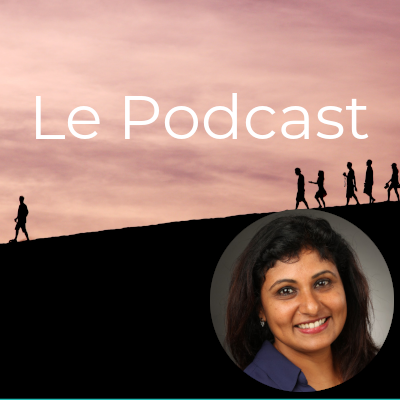
In this episode of Le Podcast on Emerging Leadership, I had the pleasure of welcoming Preethi Thomas, Software Engineering Manager at Red Hat, to explore this question through her own journey and experience.
From individual contributor to manager
Preethi’s career started as a software developer, then moved through quality engineering, before she joined Red Hat as an individual contributor.
Like many experienced engineers, she eventually reached a crossroads:
- stay an individual contributor, or
- move into a management role
What helped her navigate that decision was reflection, guidance from her manager, and the OPT model used at Red Hat.
Finding the right intersection: the OPT model
The OPT model stands for:
- Opportunity
- Passion
- Talent
Preethi shares how she realized that her passion was centered on people and growing others, that she had the talent to support that, and that she needed to actively look for opportunities to explore management.
Participating in Red Hat’s Aspiring Managers Program gave her the space to experiment, learn, and decide intentionally.
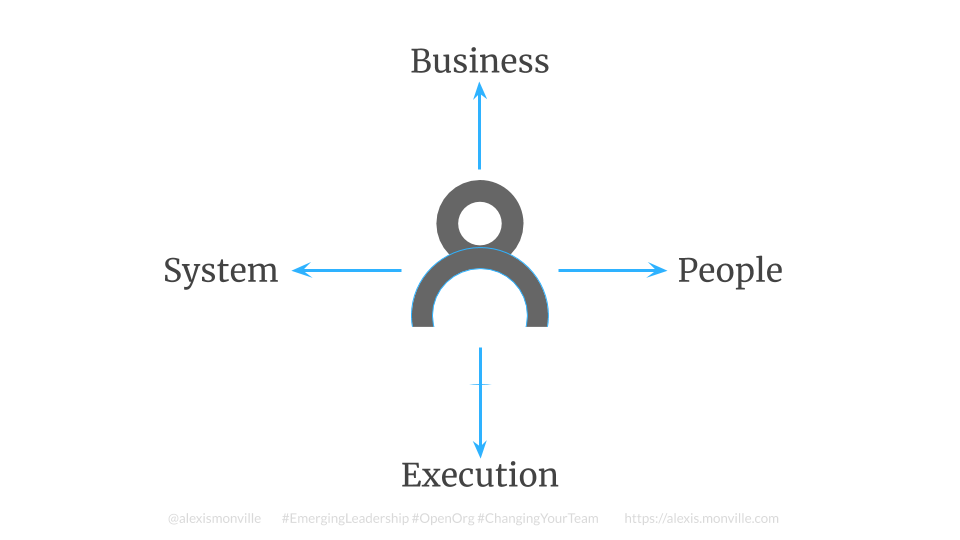
The four axes of leadership
During the conversation, we explore leadership through four complementary axes:
- People: attracting, developing, and supporting others
- Business: understanding strategy, customers, and the broader context
- System: removing obstacles and improving the environment
- Execution: delivering outcomes
A key insight Preethi shares is that execution is often a result of the other three. When people, business context, and systems are taken care of, execution follows.
Context and trust as foundations
A recurring theme in the episode is the importance of providing context.
Preethi explains how transparency and communication help people understand the “why” behind decisions, connect their work to the bigger picture, and collaborate more effectively.
Context and trust, together, become the roots of collaboration.
Open organizations in practice
We also explore the five characteristics of open organizations:
- transparency
- inclusivity
- adaptability
- collaboration
- community
Rather than ranking them, Preethi highlights how they reinforce each other and ultimately build trust.
Inclusivity, in particular, shows up through everyday signals:
- who speaks and who doesn’t
- how disagreements are handled
- whether people feel safe to contribute
Open leadership means noticing these signals and acting when something feels off.
Mentoring: you need a village
One of the strongest threads in the conversation is mentoring.
Preethi shares how having mentors radically accelerated her growth, and why she believes:
“You need a village to help you succeed.”
Mentoring is not transactional or time-boxed for her. It is a long-term relationship where both mentor and mentee learn, reflect, and grow.
She also encourages everyone, regardless of seniority, to both have a mentor and be a mentor. Everyone has something to teach, even if they don’t realize it yet.
Learning, confidence, and short-term wins
Transitioning into management came with its own challenges. Preethi reflects on:
- the importance of short-term wins to build confidence
- how difficult it can be to recognize relational work (like one-on-ones) as “real work”
- why naming and valuing these responsibilities matters
These insights apply well beyond management roles.
Books and resources that shaped the journey
Preethi recommends several books that supported her growth:
- The First 90 Days
- The Manager’s Path
- The Making of a Manager
- The Five Dysfunctions of a Team
Combined with mentoring and reflection, these resources helped her navigate different phases of her leadership journey.
A final thought
Open leadership is not about control or visibility. It is about creating conditions where others can grow, contribute, and scale their impact.
As Preethi beautifully puts it, the job of an open leader is to help others succeed — and in doing so, to build something far greater than individual performance.
Here is the transcript of the episode:
Alexis:
Can you tell us a little bit more about your background?
Preethi:
Thank you, Alexis and thank you for inviting me for this opportunity. Like you said, my name is Preethi Thomas. I’m a manager for the Containers team at Red Hat. So a little bit of background about myself. I have a background in computer science, I have a master’s in computer applications from a university in India, and I moved to the US. I worked for a little bit in India, maybe, a few months in India before I moved to the US. So I’ve been here 20 plus years now. I started off as a software developer, remember programming and visual basic C, C++.
Preethi:
I can remember when it probably was because of an opportunity that I moved to quality engineering. So at the time when I moved to quality engineering there was a lot more manual testing and things of that sort going, but then I enjoyed that part of being on the customer side of things, maybe the first customer getting to use a software. So I went back and forth. After I moved to the US, I went back and forth between development and software engineering, or software development and quality engineering or quality assurance for a little bit.
Preethi:
Once I had my kids, I decided quality engineering was more where I could focus a little bit more while managing my kids. I found my passion there. So later on, I think I applied to Red Hat three times before I finally got a job at Red Hat. I got hired at Red Hat and as a quality engineer so I was an individual contributor. So I think that is where my most of my career for worse apart until like maybe a few years into the career I was at the cross roads as in where do I move? Do I stay an individual contributor or move to a leadership role?
Preethi:
I think my manager at the time kind of guided me through my questions. So at Red Hat, we followed the OPT model. I remember listening to a session at QE camp in Brno about the OPT model. And that’s when I really thought about what it is that I’m passionate about and where the opportunities are.
Alexis:
You need to tell us a little bit more about what is the OPT model?
Preethi:
All right. So the OPT model is the intersection of the opportunities, your talent, and the passion. I always have felt that I am passionate about people and growing people or being there for people. And I thought as a parent and my passion, I have the talent to do that. And then the next thing was the opportunity. So finding that opportunity, and I wasn’t sure where I would find that opportunity or how to go about that.
Preethi:
Doing a little bit more research into it, I found there was the training program that Red Hat offers called Aspiring Managers Program or AMP training. So I took that and I decided that I wanted to try it. Two years ago I decided to take it the opportunity or move into management. And then here I am. So far I have to say, I’m enjoying this.
Alexis:
You were an individual contributor, or you were already within Red Hat so within an organization that is an open organization where the individual contributor can really be real leaders and you wanted to go to management. Nice thing I like with Red Hat is that Aspiring Manager training that can give you a lot of tools, insights if you decide to stay an individual contributor to really increase your impact as a leader, as an individual contributor, or can help you decide if you really want to switch to manager.
Alexis:
So you already mentioned that you wanted to go there because you like growing people, helping people be the best of themselves. What were all the aspects that were attracting you to be a manager?
Preethi:
I felt at the time that I was a little bit more focused on just what I am doing. So I liked the thought that just to get a little bit more perspective into the company’s vision, or yes, as an individual contributor, I could do that, but I felt like I would have a little bit more opportunity to learn that and be passionate about what the company is passionate about and be able to help other people who likes to be the individual contributor and help them along as well. And get them to understand that make the connection a little bit better.
Alexis:
I love it. When I try to describe what is the role of leader, I have a four default axis. My first axis is the execution piece. That’s how what you deliver or what your organization delivers. And second axis, it’s the people, it’s how to attract, retain, develop people so they can really be the best of themselves. Usually I’m saying the people part is the first axis by the way, but that’s too bad. I failed on that.
Alexis:
You touch on what we can do for the business. That’s my other axis, the business axis where we think about the strategy, we think about where the industry is going, we think of what our customers really want to achieve and how can we support them with our partners are doing, with all the communities are doing and how we can be involved in that or support that or change the way it works already to think larger than what our team is really doing. And our team can contribute to that or influence the direction where we are going.
Alexis:
And the last axis is the system part. We live in the system, we have to improve that system so that the people can work in the right way. That’s a bad system will beat people each time so that we need to really improve the system. And I think as a leader, you need to consider the four axis to be able to work on that. How do you feel about those four axis, execution, people, business and system?
Preethi:
Yes. I think I completely agree with you on that four axis, because we need all that to have a successful product or a company. I think I would probably call execution as the last piece, at least in my opinion, because once you have a strategy, once you have a business problem that you’re trying to solve, and you have people and you’re taking care of your people and removing obstacles-
Alexis:
The system part, absolutely, removing obstacles is a great summary of it. Yep.
Preethi:
Yes. The system part. And then once you have all those three taken care of, I think the execution comes naturally, or that is, I think I would say execution is a product of the three.
Alexis:
It’s relatively a rare that people have that level of clarity. I had some into your contributors or even manager when I was asking them about their role, they were 100% focused on execution. And when I was asking about all those things, either they were saying it’s a, “That’s a manager problem,” or “That’s my manager’s problem,” it’s not theirs.
Preethi:
Yeah. I think for, especially for people, when you take care of people and create context for people, the why, it makes them understand the bigger picture. As an individual contributor, I think there were times that I was too focused on what I was doing. So I think once I started thinking outside of the box I think it kind of, I made the connection and then that my passion increased.
Alexis:
The open organization it’s said that they have five main characteristics, transparency as a foundation for everything, inclusivity, adaptability, collaboration, and community. Do you feel that in your work you experience in a way those characteristics? Is there one in particular that you feel is really really important compared to others or are they all important?
Preethi:
I think each of them has its own… I mean, each of them are important in its own way. A product of all that together is the trust. And without trust, I feel like you lose that. So when you have open communication and transparency, I feel like you are creating a culture of collaboration. So then it becomes easy to gain people’s trust and help them move forward. However, as a leader you create that passion in them by following these open management principles. To me, transparency is extremely important. So I think transparency and communication helps create that context for my people.
Alexis:
Creating context for the team is really important. By being transparent, we can provide the information that everybody needs to make those decisions. What about the inclusivity, welcoming others’ perspectives?
Preethi:
Yes, absolutely. So to have a healthy and collaborative community, you have to be inclusive. As a woman there is different contexts that you see, there is people not being inclusive. So you kind of notice a little when you are a minority group if I say so. Then I think that having a healthy, inclusive community makes it easy for people to grow and collaborate better. So if you have a hostile community, people don’t want to be part of that. So like a meeting, the end result of not being inclusive is you end up having a retention problem. People who are of a diverse opinion may not want to be in that organization when it is not inclusive. Like I said, I think the five aspects, I don’t know what is better than the other.
Alexis:
That’s probably not the right question. It seems that they are all really important.
Preethi:
Mm-hmm (affirmative).
Alexis:
You’re right. On the inclusivity aspect, I feel that it’s sometimes difficult to realize if the team or the community is inclusive enough. What are the signs we should look at?
Preethi:
Well, I’m not an expert at that, but then again, I’ll try. I don’t think there is a bar as in how much inclusivity is enough. So I think the more inclusive you are, there is always room for improvement. I think a couple of things that you would notice if a community is not inclusive would be fewer contributions from the outside of the project or someone, especially on a company sponsored project. If you have fewer people coming in contributing, then that means there is something not right.
Preethi:
Another way to look at it is be mindful of the platforms that you use in the communication channel, email lists, or even GitHub conversations where you get those hostility to see if there are people being really mean to each other. Okay. It’s okay to have really good discussions and sometimes the discussions getting heated, but then there is also… I think, looking for signs of those… If the results have really heated discussion as people leaving the community, then you’re not doing something right. I think there are, I think, signs that you can watch for, if you are paying attention, it’ll show itself out.
Alexis:
How do you get people in your team paying more attention to those signs and how can you help them to fix those issues?
Preethi:
Really paying attention, and making sure that if there is a conversation that happens, that you noticed and making awareness for that. If one of your associates is you see that something’s happening, sometimes you’re not watching it all the time, or someone raises it to you, that there is this incident that happened and getting to the why behind it, and being able to talk and coach your people on the right behaviors. Or even making sure that they are aware that some of these might have caused someone to feel a certain way or not included in that, I think making sure that you say something when you see something.
Alexis:
I love it.
Preethi:
To me, something that I feel, if I feel something is not right, that doesn’t mean that you feel the same way, but then I have that opportunity to raise it to you saying, “Okay, I felt this. It doesn’t mean that you may have…” But then the next time this happens, you might think, “Oh, this may be something that is going to be offensive to X, Y, and Z.”
Alexis:
Do you feel that it’s the job of the manager in particular, in that context or is it the job of anybody in the team?
Preethi:
I think it’s the job of anybody in the team. A manager may not be watching all the conversations or everything that is happening, especially in the open source community, right? If you have a set of standards, making sure other people in the team are aware of this. A manager cannot be a gatekeeper for the community. We can make sure the expectations are known to the team so that the team can to be inclusive. It’s everyone’s responsibility to be inclusive.
Alexis:
Yeah. Excellent. So, that’s where I can see the power of the team agreements, or the code of conduct in communities so we can raise the awareness of what are the expected behavior from each other. As you said before, when you see something, you say something and you are expected to speak up when there’s something that is not going well.
Alexis:
I know you mentioned, if I recall to encouraging and using mentoring in your team to help people grow in their roles. Can you tell us more about that?
Preethi:
Oh, absolutely. That is something that I’m very passionate about. I think in my journey to be here right now, you need a village to help you succeed. I have a village of mentors, but then I did not have a formal mentor until like maybe four years ago or five years ago. So once I got a mentor, my growth has been exponential. I think it helped me come to terms, to crystallize my goal so what I want. I came in even to the point that as in, even though it was in the back of my mind, it was I found it from within me, but then someone helped me get to that by asking the right question.
Preethi:
The thing about me, I think I’ve read somewhere that you use a mentor for a certain period of time, and then you find other mentors. But then with me, I’ve had excellent relationship with all my mentors and you know that as well. I keep learning from all my mentors. So I don’t want to stop the relationship. I say, “Now okay, this is two months into it. Okay, I’m done. I achieved this goal so let me move on to another mentor.” It’s not that for me, it’s my village of support that I need. Because I’ve personally experienced that relationship and what it can do to grow you in your career, as well as, as a person, I really encourage my team to be mentors and mentees.
Preethi:
Each one, wherever they are in their career I think they have an aspiration to do whatever the next thing is. And everyone has something to teach. That I think, it took a long time for me to realize that, “Okay, there may be something that I can teach others too.” And then I’m like, “Okay, I can be a mentor for someone and I have something to offer as well.” So yes, I think mentor and having a mentor and mentee is super important. And that is something that I think you learn from a mentor as much. And you learn from your mentee as well.
Alexis:
How it works for the people that you nudge or you pushed to become a mentor of others, we always have something to teach to other how to… How it works? Because I guess some people were more reluctant than others to try to be a mentor.
Preethi:
So in my team, I think I’ve mentioned this too, I’m very open and creating that context is really important to me. I’m open and honest about my journey as in how this has helped and how this relationship is super important and how that can help them grow as an individual contributor and however they want to grow their career. I keep repeating or I’m honest about and answering about any questions that they have in those contexts and my experience, I’m always willing to share that my experience that can inspire others.
Preethi:
I think when people hear stories and when they see the value, people do not hesitate. And I always tell them that even now sometimes I feel I don’t have anything to offer to a mentee, but then I have to think of myself and my journey, there may be someone who was looking for something, what I was looking for at the time that I was looking for.
Alexis:
Very good point. I have an experience like, I think last week I had a discussion with a mentee. She started the call asking me question about what I was doing. And I was surprised because usually people start with, they come with their problems and they want to discuss those problems. They don’t necessarily come to ask me questions. So I was not ready for that. I started to discuss that and at some point she stopped and says, “Oh, this is interesting, what you are saying, because it make me think about something I’m working on right now. I didn’t think I was ready to discuss that, but maybe we can discuss that topic.”
Alexis:
Until we discussed her topic and I realized discussing her topic that we were in the discussion designing something that could be a solution to one of the problems I had. So it was really interesting to see, okay, that we went back and forth discussing both our different challenges we were working, perfectly helped each other design solutions for us. I’m always saying it’s a social learning experiment. And we both learned that one call, that was 40 minutes call and it was really the embodiment of everything I’ve seen. Those relationships, those discussions are really special to me. That’s really something that I hope everybody will be able to experience.
Preethi:
Yeah absolutely.
Alexis:
Have you experienced things that are similar to that?
Preethi:
Oh, absolutely. Red Hat has the mentoring program, I have a mentee now and we were talking about something or even last week. As I’m asking her questions I keep thinking, “Okay, this is where I was, and I think this is, while I’m preaching, am I doing this as well?” So maybe there is a room for improvement for me in implementing what I am suggesting, or we are talking about. So what is it that…
Preethi:
I think it kind of instills the qualities a little bit more into your brain too, like inspires you to try them out as well, to come to a solution that works. You’re helping someone, but then at the same time you are learning as you go. You come up with ideas that you can try on yourself as well. Yes. So I think I’m completely with you on that.
Alexis:
Excellent. We covered a lot during that call and I’m really glad that we cover those things about being an open leader, could be an individual contributor or the manager. When you started your journey, what is the one thing you wish you should have known?
Preethi:
I think more recently, the one thing that I would say, or I don’t know if it just ended up being one thing, it probably ended up being multiple things. So, it’s like, I felt like I had the tools to try it out, but then again, I didn’t have like a practical experience. I remember reading this, I came upon this book, First 90 Days when I started my management journey, I think I started reading that around maybe around 60 days into my new job and I was, “Maybe I should have done a little bit more research and read this book before I started.” Because in that book, there was things like, okay, what are your short-term wins and your long-term wins.
Preethi:
I think that short-term wins really would have helped me realize, okay or give you that confidence that, okay, you may be on the right path. It’s like for the first three months, I felt like I didn’t know what I’m doing. I was doing it anyway. Just thinking, “Okay, this may be right or maybe, otherwise someone will tell me,” but I think having those tangible things that you can check off that first few months of you are navigating a new job or new role would definitely help you give you that inspiration to go on or the motivation to go on.
Alexis:
It’s interesting because it’s at the same time, the inspiration to go on, it’s the motivation to go on. And it’s really building the confidence that you need to do all of that.
Preethi:
Exactly.
Alexis:
Short term wins are really, really important in that process. So it’s already good one. I think whatever role you’re starting, it’s really an important insight.
Preethi:
One of the biggest thing that I felt when going from individual contributor to a management role was that quantifying your achievements or quantifying what you’re doing. It took me a long time for example, it took me a long time to admit that, to myself, that my one-on-one is part of my job or it is something that I can say, “Okay, this is my responsibility.”
Preethi:
To me, it felt like, “Okay, I’m just having a conversation. I’m not verifying a bug. I’m not writing any code.” It wasn’t quantifying enough for me. Seeing that written down as in, okay, this is part of my job, this is my responsibility, this is a check mark that I can do, was important to me.
Alexis:
Excellent. Is there a question I should have asked you?
Preethi:
I think along with the mentors, my manager, I think the village, the village that helped me grow and still continuing to help me grow has been I think another thing that I’ve picked up over the last two years that has been a little bit more helping me grow more it’s been some of the business books. So I think a couple of a few books that I really enjoyed and helped me find these little nuggets everywhere so I have these post-its from multiple books that is on my desk in my room. So I think a couple of books that I really want to call out are The First 90 Days, I really recommend it to anyone who is starting a new job.
Preethi:
So the two other ones were to help me earlier on in my management path is A Manager’s Path and The Making of a Manager, both are written by people who’ve been in individual contributors in tech space growing into management. And then they’re really honest, really stories about things that didn’t work for them, things that kind of, they figured out on their journey. Those have been really helpful for me.
Preethi:
And then I think I’ve felt like I’ve been going from what I can do as a manager and now I’m getting into how I can help my team. So I think I’m in my journey in that right now. So how can I, as a manager, help my team grow, be there for my team. The Five Dysfunctions of a Team, it was another great one that I really enjoyed reading. I feel like I’m growing in the books that I find too.
Alexis:
It’s really interesting because that in the book you mentioned, I read a few of them. When you combine the book reading, when you combine that with having several mentors, like you said, I love your expression that you need a village to help you succeed, I think combining that book reading, mentoring, and probably having those kinds of distribution about the insights or the nuggets you find, this can be already powerful in helping you in your journey. Thank you for mentioning those books. I will put that in reference in the blog post that will-
Preethi:
Oh, thank you.
Alexis:
… at Le Podcast. Okay. Anything else you want to share to the audience today, Preethi?
Preethi:
I think one other thing that I would definitely say is I’m really thankful for the Red Hat mentoring program. And I think that really helped me grow and really gave this opportunity to connect with you too. I think, with my personality, I’m an introvert, so I would not have on my own have had that opportunity to reach out to you and talk to you before. So I think that got us to here. So I’m really grateful for the program that I have found me mentors. And I think I’ve really enjoyed this journey so far and shout out to all the people in my village.
Alexis:
Excellent. I hope they will listen to you and appreciate your progress in your journey. I’m pretty sure your mentees will also love that and see the path forward for them, that they will help other people to grow and in this way scale their impact. And I think this is really the job of an open leader, really helping the others to scale their impact. Thank you very much, Preethi, that was really great to have you on Le Podcast.
Preethi:
Thank you so much for this opportunity. I enjoyed this as well.
Alexis:
Thank you for listening to this episode of Le Podcast. Go to blog-blog-alexis.monville.com for the references mentioned in the episode and to find more help to increase your impact and satisfaction at work. Drop a comment or an email with your feedback or just to say hello. And until next time to find better ways of changing your team.
The music is Funkorama by Kevin MacLeod (Creative Commons CC BY 4.0)
The picture is by Jehyun Sung.
Le Podcast – Season Two
- Playful Leadership: Helping Others Be Their Best

- Blessed, Grateful, and Human

- Build the Right Product, with Gojko Adzic

- Hiring and Diversity Without Dropping the Bar

- Leadership and Teamwork in a Crisis

- Chief of Staff: The Role, the Craft, the Community

- Belonging, Identity, and Better Hiring,

- What Software Teams Can Learn from Sporting Teams

- Agile and Open Innovation: Building the Bridge Between Tech and Business

- Radical Focus: OKRs, Cadence, and the “Seduction of the Task”

- Human-Centric Agility Coaching: The Expert Paradox and the Ideology Paradox

- The Job of an Open Leader: Context, Trust, and Growing Others

Le Podcast – Season One
- Growing as a Software Engineer: Learning, Sharing, and Impact

- Thirteen Rules for Building Strong Teams

- OKRs in Practice: Learning, Focus, and Common Pitfalls

- The Myth of 10x Engineers: Growing Beyond Technical Skills

- The Anatomy of Peace: Leadership Starts With Who You Are

- Psychological Safety: Creating Teams Where People Can Speak Up

- Leading Distributed Teams: Collaboration Across Time Zones

- Changing Your Team from the Inside: A Practitioner’s View on Leadership

- Why Shared Language Matters: How Terms Shape Collaboration

- How (Not) to Give Feedback: Responsibility, Ego, and Relationships

- Rock Stars and Superstars: Supporting Growth Without Losing Stability

- Do Cultural Differences Really Block Agile Adoption?

- How to Create Great Goals: Using OKRs to Focus on Impact

- Making Change from the Inside: Leadership Beyond Management Roles

- How to Form a Cross-Functional Team That Actually Works