Tag: leadership

  • The Motive

    The Motive

    Why so many leaders abdicate their most important responsibilities?

    The sentence above is the subtitle of The Motive, a book by Patrick Lencioni, the famous author of The Five Dysfunctions of a Team and The Advantage.

    The first part of the book is a business fable. If you read I am a Software Engineer and I am in Charge, you know that I love the genre. I love it because it helps me identify with the characters and with the story and better imagine what could be the outcome if I were to apply the same concepts and ideas.

    The second part provides the lessons from the fable starting with the two leadership motives:

    • Reward-centered leadership,
    • Responsibility-centered leadership.

    As mentioned by Patrick Lencioni, no leader is purely on one side, but the one that will be predominant will have huge impact on the success of the leader and his team.

    Responsibility-centered leadership is preferred to get to success, and struggle is expected along the way.

    Lencioni then covers the five omissions of Reward-centered leaders:

    1. Developing the leadership team
    2. Managing subordinates (and making manage theirs)
    3. Having difficult and uncomfortable conversations
    4. Running great team meetings
    5. Communicating constantly and repetitively to employees

    The book is a very short read. I believe that the point 3, 4 and 5 are easy to observe symptoms that 1 and 2 are not happening properly.

  • Thirteen Rules for Building Strong Teams

    Thirteen Rules for Building Strong Teams

    Great teams are not defined by talent alone. They are shaped by clear expectations, shared responsibility, and leadership that shows up consistently.

    In this episode of Le Podcast on Emerging Leadership, I had the great pleasure of welcoming Jason McKerr, Engineering Leader for Management and Automation at Red Hat, to discuss his Thirteen Rules of a Team.

    A practical leadership framework

    I first encountered these rules during a mentoring conversation with a member of Jason’s team. What struck me immediately was how practical and grounded they were.

    They are not aspirational slogans. They are decision rules — principles leaders and team members can rely on when things get difficult.

    My objective for this episode was simple: to have Jason explain where these rules come from and how he uses them in practice.

    The Thirteen Rules of a Team

    Here are Jason’s thirteen rules for team members and team leaders:

    1. Have fun.
    2. Do good work. Make some money.
    3. Take care of the people who work for and with you. The team comes first.
    4. Take care of the user or customer.
    5. Take care of the people you work for.
      Rules 3 and 4 will do most of the work here. The boss always comes last.
    6. It is the team’s obligation to challenge its leader.
      You won’t get smacked down, you’ll get more respect. Do it appropriately and respectfully. In private.
    7. Once the leader has made a decision, even if a team member disagreed before, it is now their responsibility to support that decision externally as if it were their own.
    8. There is no such thing as a bad team, only bad team leaders.
      If the team is struggling, it is still the leader’s responsibility to make it better.
    9. It is the team leader’s job to protect the team from the outside so they can do their work.
    10. Don’t ever say, “That’s not my job.”
    11. Passing knowledge on is a core part of leadership.
      Teach others. Share what you know.
    12. It is a leader’s job to push power and loyalty down, not up.
    13. See rule number one.

    Rules that guide everyday leadership

    What makes these rules powerful is not their originality, but their consistency.

    They:

    • clarify responsibility
    • make expectations explicit
    • remove ambiguity when tensions arise

    Jason also explains how he reviews these rules with new team members during onboarding, using them as a shared reference point from day one.

    A final thought

    Frameworks don’t replace leadership. But the right framework can support it.

    If you are leading a team and looking for principles that are both demanding and humane, this episode offers a clear, actionable reference.

    Listen to the episode to hear Jason walk through the rules, explain how they play out in real situations, and share how they support strong, self-managing teams.

    As always, I would love to hear what resonates with you.

    Le Podcast – Season Two

    Le Podcast – Season One

  • Theory X and Theory Y

    Theory X and Theory Y

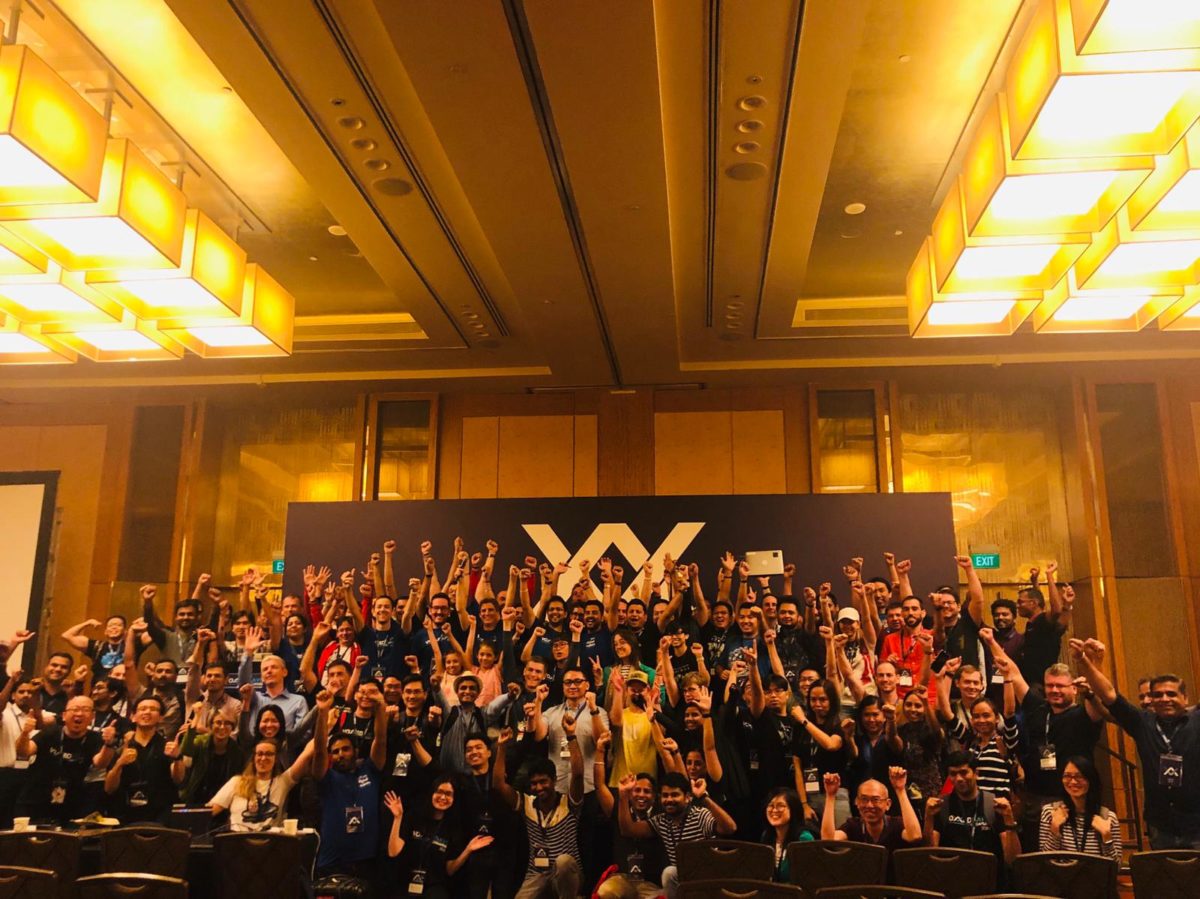
    I had the great pleasure to deliver the closing keynote of Voxxed Days Singapore. During the talk, Going Open, I introduced Douglas McGregor theories on human motivation and management that he developed at the MIT Sloan School of Management  in 1957.

    The assumption in Theory X is that workers are lazy; they dislike and don’t want to work and do all they can to avoid it. As a consequence, if you agree with that assumption, your way of managing people, who have no intrinsic motivation and no ambition, the system needs to be “command and control.”

    The assumption in Theory Y is that work could be as natural as play and rest; people seek responsibility and are able to direct themselves to deliver on their commitments. As a consequence, if you agree with that assumption, your management style is radically different, and the system could tend toward self-organization.

    Theory X and Theory Y are self-fulfilling prophecies. Acting accordingly to the theory causes it to come true.

    Reconsidering the way we are managing people in an organization is an essential ongoing exercise.

    As an example, our actual reward system might perfectly fit the Theory X assumption, while we would prefer our whole team to live under Theory Y.

    What about you?

    What type is your organization?

    What type are you?

    Could I behave like X, because my organization is X?

    Do you think my organization could change if I change my behavior?

    It could be really interesting because X organizations suffer from a centralization flaw. And like spiders, if you cut the head, the organization dies.

    By contrast, Y organizations are resilient like starfishes, if you cut an arm, the starfish will regrow it, and even more interesting the arm will regrow a whole new starfish, as all the knowledge needed is available to do exactly that.

    Y organization are really like Open Organization.

    Open Organization is the term coined by Jim Whitehurst, CEO of Red Hat for his eponym book published in  2015. The book written primarily for organizational leaders, demonstrates how open source principles are changing the nature of working and managing in the 21st century.

    There are five characteristics of Open Organization:

    • Transparency. Transparency by default as a foundation.
    • Inclusivity. Inclusivity of all perspectives.
    • Adaptability. Feedback mechanism to continuously learn.
    • Collaboration. Collaboration to produce better outcomes.
    • Community. Shared values and purpose.

    How can we adopt those characteristics in our organizations?

    I then proposed some of the approaches that you can find in the book, Changing Your Team From The Inside, to foster the change in your team and organization.

  • Going Open – Closing Keynote

    Going Open – Closing Keynote

    On May 31, 2019, I had the pleasure to deliver the closing keynote of Voxxed Days Singapore: Going Open!

    Thank you to all the participants and organizers for a fantastic event!

    I had the opportunity to sign my book, Changing Your Team From The Inside on the Red Hat booth, and to meet great people!

    The title of the talk is Going Open to Support Your Digital Transformation, the slides are available here and I will update the post as soon as the recording is available.


    The pitch of the talk: “Do you feel your organization, your team, and yourself are focusing on the right things or are you overwhelmed by the thousands of tasks that you need to do? What do you need to get your organization, your team, and yourself to continuously improve to get to the point of doing the things right? Going open is the best way to support your organization’s digital transformation. Going open is applying the principles of the open organization. Open is the antidote of the lack of focus and the lack of continuous learnings that is ailing organizations today. What are the differences between a centralized organization and an open organization? Learning about these differences can help you advance your objectives in your digital transformation. The open source development model is the root of the Open Organization. The diversity the open source model brings is an endless source of inspiration to transform your organization–and this is what this session will expose.”


  • How to start when managers are stuck in uncertainty and fear

    How to start when managers are stuck in uncertainty and fear

    How to start when managers are stuck in uncertainty and fea? That was the question I asked to my peers that participate to the Happy Melly Coffee.

    This was the first day I was able to participate to the Happy Melly Coffee since when I moved to Boston.

    Uncertainty and Fear were the main questions.

    Unfortunately, I was forced to leave the building, and to loose the Internet access after a few minutes.

    The good thing is that my peers continue to discuss the topic, and the recording is available just above 😉 THANK YOU!

    This could inspire you to participate in a future coffee, the Trello Board with the questions is there.

    The previous recordings are there.

  • Beyond Measure

    Beyond Measure

    Beyond Measure: The Big Impact of Small Changes is a book by Margaret Heffernan published by TED.

    And it starts with:

    Beyond-MeasuresTrust

    The author suggests an exercise for team members. Form pairs in which one will ask a real question and listen for 5 minutes: “Who you really are?”, “What do you want in life?”. Silent listening, maintaining eye contact for 5 minutes is a great exercise. And then we switch role for another 5 minutes.

    I already tried similar exercises using appreciative inquiry to start workshop or training with people that don’t know each other well. I can attest this is efficient!

    Trust between team members is a prerequisite to developing our ability to talk about our mistakes and to develop our capacity to learn from those mistakes. This foundation for effective teams is also covered in this article: The Five Dysfunctions of a Team.

    Social capital

    Margaret introduce the notion of social capital with:

    “The dynamic between people is what brings organization to life.”

    She explains the importance of the time spent together at work, during breaks or lunch. She gives an example of the decision to synchronize breaks in a call center that dramatically improved the performance.

    Interruptions

    If some time needs to be dedicated to interactions between people, quite time needs to be organized to allow concentration. I already covered this topic in a previous article: Let us Code. One of the example given is a scientific study that shows the danger of multitasking. People are shown a video recording – in a typical news channel format – of a CEO explaining the strategy of a company. People are told to focus their attention to the sequence as there will be some questions to answer after that. They have been asked to give their opinion about the strategy… And if they were able to remember some information, together with not relevant ones about weather, stock quotes, other news alerts, that were displayed on the multiple banners… They were totally unable to criticize the strategy. The conclusion of the study was that multitasking prevents us to think. Quite scary if we think about who are the people addicted to multitasking in organizations.

    Rest

    The author also quotes other studies on work day duration (more than 11 hours a day lead to depression) or necessity for the brain to rest at least for 7 or 8 hours a day (less lead to reducing the ability to think).

    Leadership

    Margaret explains the Pygmalion effect: expect great things, and they will more probably happen. This reminds us the importance to define ambitious goals, and to believe in the ability of people to reach those goals.

    She encourages also to get rid of silos, and to empower people, to accept that leadership needs to be fluid, linked to skills and not to titles and ranks… Title and ranks could lead a part of the people (unfortunately the majority) to think that they are not good enough… And the Pygmalion effect will play in a bad way.

    She recommends to people to choose to make some space for their contribution, even if it’s not their job or their role, just because it’s their life.

    The author also gives the example of check lists, that reduced by a third mortality in hospitals as a way to take the power from a few to empower the many. This has been covered in another article: Black Box.

    When we accept that there are talented people everywhere, people will think not only about the work to be done, but why we need to do it, and how to do it.

    When you have done what is needed, Ask yourself what one more thing you could do to make those people happy?

    A book to read (or to listen) and you could start with a TED conference given by the author:

    Margaret-Heffernan-TED-Talks

    La photo d’entête est de Ryan McGuire.