Tag: innovation

  • Agility, Innovation, and Leadership with Jurgen Appelo

    Agility, Innovation, and Leadership with Jurgen Appelo

    What does it take to help organizations stay innovative, adaptive, and human as complexity keeps rising?

    In this episode of Le Podcast on Emerging Leadership, I sit down with Jurgen Appelo — author, speaker, and entrepreneur — to explore the stories behind his books, the communities he helped grow, and his perspective on leadership in modern organizations.

    Jurgen is best known for Management 3.0, which emerged from a practical question he faced as a CIO: what is the role of the manager in an agile organization? At the time, agile focused mostly on team practices. The leadership part was missing. Jurgen chose that gap as his niche and wrote into it.

    The leadership trait he returns to: experimentation

    When I ask Jurgen what leadership trait matters most, he refuses the simplistic answer. Social systems are complex. There is no single magic trait.

    And still, one idea keeps coming back: experimentation with fast feedback loops.

    The core of agile thinking is learning quickly through small experiments. Jurgen argues that the same logic applies to managers and leaders. Leaders also need tight feedback loops — and often their “customers” are the employees. Retention, engagement, and trust become central signals.

    Community as belonging, even for introverts

    We revisit a shared memory: the first Agile Lean Europe event in Berlin more than ten years ago. Jurgen reflects on how communities matter, especially for someone who is introverted and spends much of his time reading, writing, and building things alone.

    Community provides belonging. Across Europe, weak ties stay alive. You see familiar names in different constellations, and events feel like homecoming.

    Management 3.0, Happy Melly, and other initiatives are, for Jurgen, subcommunities inside a broader ecosystem of agile and lean oriented people.

    Every book is a different baby

    Jurgen’s books each had a different origin story and process.

    • Management 3.0 took years and required deep research.
    • How to Change the World was a self-publishing experiment.
    • Managing for Happiness was intentionally designed as a full-color, horizontal, practical book.
    • Startup, Scaleup, Screwup came from a publisher request and was built through interviews and travel under a tight timeline.

    And then he drops a detail that makes me smile: his fifth book will be a novel. Yet another experiment.

    Teacher and practitioner are different roles

    One of the most honest moments in the conversation comes when Jurgen explains that he is a better writer and speaker than practitioner.

    He uses analogies from music and sport: great teachers aren’t always great performers. Great performers aren’t always great teachers. Different talents.

    Jurgen’s role, as he sees it, is often a 30,000-foot view. He spots patterns and builds models. That makes it easier to propose frameworks, but it also means he doesn’t spend his life inside large organizations as a consultant. He gets his “feet in the mud” mostly through his own ventures and experiments.

    It is a refreshing stance, and it clarifies what kind of value he aims to provide.

    What makes a great talk

    Jurgen describes his style as infotainment. Not fluff. Not slides full of bullet points.

    A great talk requires:

    • understanding the audience before you start
    • choosing the right stories for their reality
    • making people laugh
    • delivering takeaways

    “No bullet points” is a rule he repeats. Stories, humor, and relevance do most of the work.

    The pandemic, travel, and painting walls

    Like many speakers, Jurgen’s business collapsed when events were canceled in March 2020. He watched the dominoes fall and had to experiment with new models.

    But he also made a discovery: he does not want to return to the old rhythm of travel. In 2019, he traveled around 250 days a year. Too much.

    During the pandemic, he bought a house and learned to paint it himself. The satisfaction of looking around and seeing what you built with your hands stayed with him. He wants more of that kind of life.

    So he chooses hybrid. Back to stages, back to people, back to cafés across Europe, but not at the same cost.

    One action to develop as a leader

    Jurgen’s personal development habit is simple and consistent: podcasts.

    He listens while walking, commuting, traveling — and he deliberately draws inspiration from domains far from management. Economics, medicine, design, science. He mentions listening to a Nobel prize winning economist who pushed field experiments, and he recognizes the same logic as agile.

    Learning, for him, is cross-pollination.

    Closing thought

    Jurgen’s message is not “copy me.” It is “keep experimenting.”

    Small loops. Fast learning. Broad inputs. Strong communities. Honest self-positioning.

    And a reminder that leadership in complexity is less about a single trait and more about building the conditions to learn and adapt.

    Listen to the episode here:

    Here is the transcript of the episode

    Alexis

    Hey Jurgen, what is your role, and how would you describe it to someone you just met?

    Jurgen

    Ah, my role I usually describe that as I am an author and speaker and also an entrepreneur on the side.

    Alexis

    Excellent, What was the pivotal moment that led you on that trajectory?

    Jurgen

    Well I think the pivotal moment would be the release of my book Management 3.0. I have been a manager for a good number of years. In my younger days, originally a software engineer, I studied at the University in Delft, but my interests were much broader than just programming. I was never really a geek or nerd, if you could say that. I was interested in marketing and finance and lots of different stuff.

    Jurgen

    So it was sort of obvious that I became manager, team leader, manager etc… And then the chief information officer. In that role, I introduced agile practices in the organization where I worked, I introduced scrum and had to figure out what is the role of the manager in an agile organization because at the time this was not really addressed. It was mostly team practices I’m talking 2001 to 2010 here. So I sort of claimed that as my niche and I wrote a book on it: Management 3.0 and that became a bestseller. Even before it came out, I quit my job because I already got requests for events workshops that I started to develop. From that moment on I have been acting independently doing lots of things cool stuff and first for seven years focus on Management 3.0 and licensing around it and then I went in other directions experimenting with other ideas.

    Alexis

    So it’s it’s really interesting to me I feel that in the twenty first century there’s a lot of things that changed and are changing and we continue to change. What do you think is the main leadership traits people should care to develop.

    Jurgen

    Well this is the typical question. What is the 1 best thing while the actual answer is always. There is no one most important thing because we’re working with complex systems and social systems. They are too too complex to to just summarize everything in one sentence. But, that being said, a couple of things come to mind. First of all, experimentation, fast feedback loops, that also applies to management and I would say this is perhaps the core of agile thinking: fast feedback loops so you learn quickly and with small experiments figuring out what the customer wants, what the customer needs, how they respond to ideas. Exactly the same applies to managers and leaders when they want to create better organizations. The customers often for them are employees they need to make sure that people don’t leave and this has become more and more important nowadays.

    Alexis

    Excellent. Thank you for that! I was lucky enough to meet with you in person during the first ALE event in in Berlin. I guess it was more than ten years ago

    Jurgen

    Oh cool. Yeah, that was a special one. The very first one. It is always nice to have memories of the very first time an edition of the event takes place.

    Alexis

    Yeah, the feel of the event was really of community and friendship. I would like to ask you what is the place of communities in your life in your work.

    Jurgen

    Wow good question. At the time I was sort of responsible for that event Agile Lean Europe. At least I came up with the name, I even came up with a logo of Agile Lean Europe and then other people took over and started organizing the event in Berlin that you refer to.  Of course I very much felt at the center of that community and still do. I’m happy that there’s a new event being organized this year in Toulouse apparently. It’s especially for someone like me who’s actually an introvert and loves being on his own day after day thinking and reading and writing and creating stuff. It is important to feel part of something, to have a sense of belonging. For me, that is the agile lean community in Europe. I know so many people because I have attended hundreds of events across the continent in almost every country I think. I follow people and they follow me online so we can chat on Twitter or Linkedin or Facebook or whatever. There’s always these weak connections that no matter what the distance is across Europe you feel connected with each other. That’s a good feeling, especially as I said for people such as me who do a lot of things on their own remotely. It feels like homecoming when I am at an event and I see friends and followers and people that I know from across ah Europe. I feel okay this is the place I belong these are the cool people that I want to hang out with. That is I think the purpose of of community to to give you that place of belonging even when most of the time you travel around the world and you sit alone in coffee bars or hotel lobbies.

    Alexis

    Yeah I feel in your different businesses or in in the the work that you are doing that communities are always really present like with management 3.0 or with the Happy Melly we can see a lot of people gathering with each other to achieve a greater purpose. Is it really something that is real or is it my perception of it.

    Jurgen

    No, that’s just people gathering together around a specific topic like indeed there is a Management 3.0 Community. Of course there are other communities that I am either responsible for or involved In. But for me, they’re all part of a larger community out there as I said which is agile and lean oriented people. They sort of gather together in these subcommunities in different constellations. So you keep running into the same people and basically and which subcommunity you find yourself in and that’s nice and I think that’s important to have that.

    Alexis

    You mentioned already the management 3.0 book. You wrote several books. How to change the world was already a nice small one that you offer for free on your website. I will put the link to that and. The experience with Managing for Happiness was probably an interesting one. And the latest Startup, Scaleup, Screwup. What is that experience of writing books. You’ve said you want you like to be on your own thinking, writing, reading. What are the different experiences you had with those books.

    Jurgen

    Well, it’s a cliche but it’s true. Every book is like a different baby  in a sense. They’re all different kids with different personalities and different histories. So Management 3.0 took me several years to write. A lot of research went into that, a lot of reading of popular science books and articles etc. That was a very different project compared to the last one for example, startup scaleup screw up where basically the publisher said can you please write another book doesn’t matter much about what it is but we want to sell another one that was sort of a compliment of course because when publishers want another book. It means that they earned money with your previous one.

    Alexis

    Um, yeah.

    Jurgen

    I thought at the time. Okay, well, if I were going to write another book I want it to be about the stuff I’m doing now which was I was leading a startup at the time and trying to make that work so that seemed like a good combination. In that case, the creation of the book took me, I think, about eight, nine or ten months. It had to be done within a year and I traveled a lot. I spoke with a lot of people across Europe startups and scale-ups so I did quite a quite a few interviews. There were very different process for that one a very different kind of book. But I enjoy each of one of them. Indeed as you said how to change the world was a very small one that was a self-publishing experiment. And managing for happiness is again different. It is horizontal book, not vertical, very colorful. That was my requirement with a publisher at the time that I wanted a full color book so they’re all different and the the fifth one is going to be a novel so that’s again, a completely different book that I am working on now and that’s and that’s fun I’m I mean always trying something new that I haven’t done before.

    Alexis

    I’m glad that you’re working on the next one. I will be interested in reading that novel. That’s excellent. You’ve been recognized by Inc.com in the top 50 management and leadership authors. And I know there’s a story behind that. There’s probably hundreds of writers in the field of leadership and Management. What makes some of them more successful than others is is it their expertise as practitioners or what?

    Jurgen

    Interesting that you say that, I just published the blog post today actually with my learnings of the last three years of running a lot of experiments and one thing that I realized is that I’m a much better writer and speaker than practitioner when it comes to management and leadership. This sounds weird, but if you compare it with other disciplines – for example, the best teachers of music are not necessarily themselves the best musicians and vice versa, the best musicians are not necessarily good teachers of making music. It’s the same as sports if you have great sports coaches. The best in the world. It doesn’t really mean that they themselves are really good in the field as athletes and also great athletes are not necessarily good coaches. So there’s a difference between being a teacher of something and being the practitioner of something there. Actually different talents and that’s something that I have noticed myself I love the teaching aspect of it I like creating workshops. I like writing about things. I like talking about stuff and yes I am also as I said an entrepreneur on the side because I also like the practical experience. But it doesn’t mean that I’m the best manager or leader out there. In fact, I would say I’m a mediocre one for sure. Don’t hire me as a manager because I happen to write books on the topic. That’s it’s very different like. The top rated Nobel winning economists are probably really bad at running companies because it’s something different observing and writing about it really understanding how field works is very different from operating in that field and being successful as a practitioner that’s something that I had to realize in the last three years where I sort of found out. Well actually I suck in some areas but then I have great insights because of my learnings and I’m able to write about it and then I inspire other people who are practitioners and they can use my input and so that’s win-win I suppose. That’s why I say first I am a writer and speaker and I do some entrepreneuring on the side because it’s fun to have practical experience and to fail and sometimes succeed. I will never be the best entrepreneur out there but the best entrepreneurs out there are actually pretty bad speakers and writers so we all have our own roles I suppose.

    Alexis

    Yeah, exactly and I really like the fact that you are looking into that and you are still doing Experimentation. You’re still working on different projects. So You can also test Idea yourself um and not only inspire people I think the 2 things are already useful and I’m I’m always always a little bit worried about the people that are only doing the teaching part.

    Jurgen

    Yeah, for sure I agree there sorry to interrupt but, and and my approach is slightly different from others because there there are plenty of authors and speakers out there who are coaches or consultants. They go into companies and they help managers and leaders or or other kinds of employees doing their stuff and that’s great. There’s nothing wrong with that. There’s just a different approach and I am not like that. I have a different role I often say I operate at a thirty thousand feet view. I have more of an abstract understanding, I see patterns across the world that also makes it easier for me to come up with new models and new insights. On the one hand, that’s a benefit. On the other hand, the drawback is that I do not have the deep experience of observing what happens inpecific companies on the inside. So I don’t really stand with my feet in the mud so to speak, except for my own little companies where I run experiments and that sort of compensates for me for the lack of direct experience I have with large corporates or whatever because I’m not very interested in coaching in consulting, I would not be there. Definitely not be the best person to do that.

    Alexis

    Thank you. You’re already a very successful speaker. How would you describe what you bring as a speaker and what are the key to success for a really great speech.

    Jurgen

    It is infotainment. You need to make sure that you have a message that there are takeaways. You need to understand the audience. So I always ask my clients: what kind of people are there in the room? Is it only engineers, or is it across the company, or is it mostly management and things like that. How many? So I usually have an intake before an event so that I know what kind of audience I Encounter. You need to entertain people. You need to make them laugh and tell interesting stories and experiences and not just show models or bullet points. Definitely no bullet points. That’s basically it. Tell stories, be funny and make sure you understand what the situation is that the audience finds themselves in so you can relate and make the right connection because I have a vast library of content stuff I can talk for hours. Literally I’ve done that a few weeks ago when I recorded a course for a client in Brazil. The recordings were in London and I just used my existing materials. I thought, my god, I have so much I talked for 5 hours and I was still by far, not through everything that I had.

    Alexis

    Whoa.

    Jurgen

    Ah, so I have quite a bit of stuff that I can make selections from. Understand the audience, be funny, share stories, and that will take you 80% towards success, I suppose.

    Alexis

    Thank you. Do the pandemic and that shift to a hybrid world of work affect your work as a speaker? Will you go back to events or will you do everything from your home?

    Jurgen

    Well, first of all the pandemic was terrible of course for my line of business. I just looked it up yesterday I had my last trip home from Melbourne Australia where I had done a workshop on the fourth of March of 2020. So exactly seven days later the world health organization named the Covid Virus a pandemic officially. So, I was home just in time and then all events in my calendar were being canceled one after the other it was like dominoes they were falling over and I was like oh my god what is happening here. All my income for the rest of the year was evaporating basically. Never waste a good crisis as they say so I experimented I came up with alternative ideas I ran online meetups and and workshops and it became other business models. I actually learned from that experience that I don’t want to go back fully like the way things were because in 2019 I travel I think about maybe two hundred and fifty days per year and that was absurd that was a lot, and I don’t want to be away from home that often anymore I have a wonderful house. We bought a house two months before the covid pandemic hit coincidentally. Just in time, interestingly enough and that was a great coincidence. The house needed quite a bit of painting, so I developed a new skill I am now really good at painting walls and painting doors and everything and it turns out I enjoy that I enjoy being able to do something with my hands and make the space that I live in look beautiful that is so satisfying and I would never have experienced that if if there hadn’t been the pandemic. I would just have paid a professional painter and that would not have been the same thing now I sit in my chair and look around me and I think cool I did that and I’m I’m very happy with that. I want to be home more in the house that I, to a large extent, painted myself. So for me also it it is a case of I will be in a hybrid situation I do want to go back to travel because I miss the coffee bars in Stockholm and the people in Warsaw and etc etc. But yeah, not two hundred and fifty days per year anymore a bit less.

    Alexis

    Yeah, that’s good to find that balance but I’m glad that you’re back to events because I’m eager to hear you speak again. So it’s perfect!.

    Jurgen

    Yeah, it would be awesome! I have a trip to Prague upcoming and then from may I have quite a few trips scheduled across Europe mostly and I very much look forward to that to be on stage again.

    Alexis

    Perfect I think a lot of people are waiting for that to! You worked with many leaders and among those you admire? What’s the the one treat that stands out to you. And how is that treat is important to you in the way you see leadership.

    Jurgen

    So well, that’s interesting. Actually, you’re the second person who asked that question this week, and I was also not able to answer it last time because I read many articles, I listen to many podcasts, lots of books. There are many sources where I draw my inspiration from, and to be honest, there is not one single person who inspires me most. There are dozens if not hundreds for different reasons. I could name one random person. Richard Branson I admire him for the way he manages his companies and and the message he gets across: Be there for your people first, the people come first and then they will take care of your customer. They make sure that the customer comes first I totally agree with that message and it’s amazing that he built like 400 virgin companies all under one umbrella. But that’s completely different from others who I don’t know who have been active in complexity science or something where I admire the likes of I don’t know, Stuart Kaufman who wrote amazing books on explaining how life evolves and I have drawn inspiration from that for complex systems such as organizations. And yeah, so the many people I’m not able to come up with with one name. Also, I don’t think it would be fair to come up with the one person that I admire the most. It’s is heavily context dependent on what kind of topic we are talking about and. So if you narrow it down to a very specific topic then it would be easier to come up with names.

    Alexis

    Yeah, it’s and it’s ah it’s interesting and I love that you picked something that I think is important for leadership that idea of people first is something that is important. So you picked one thing there. Ah yes I know it’s random, but it’s an interesting one. What’s one action you’ve taken in the past to develop yourself as a leader and what did you learn from that.

    Jurgen

    I listen to podcasts, as I said. Just today as well, I think an hour or something because I had a long walk through the city from my home to a coffee bar that I enjoy and back. Ah, and I tried to use that time of walking around and sitting in public transport and I amlooking forward to the traveling then I can do even more podcast listening and those moments that you stand in a security line or sit in a taxi on the way to the hotel and things like that. For me, that’s a great way to encounter new ideas that I have not heard before or just being inspired by thoughts from very different domains I listened to a Nobel prize-winning economist today who got his nobel prize for the very agile idea of running experiments, field experiments because he said that most of economy was a lot of theorizing coming up with theoretical models of how the world is supposed to work. But he said very few actually went out of their offices into real life just running experiments on businesses and people to see how they behave in response to which interventions and that was very new for economy and perfectly obvious in Medicine,  for example, you do controlled trials you have random blind tests and everything but that was a new idea in the economy. You got a nobel prize for that and that what I listened to was it sounded really agile. So I thought that was super cool. Super interesting and that’s what I do to be inspired I watched the podcast and there were obviously a lot of reading but that is one tip that I can give people just subscribe yourself to lots of fascinating podcasts out there and being inspired by what happens in completely different domains because you can learn from Economy. You can learn from Health Care. You can learn from design or whatnot.

    Alexis

    Excellent I love the advice. Thank you very much.
    Jurgen Appelo is a serial founder, successful entrepreneur, author, and speaker.

    Thank you for having joined me on the podcast today.

    Jurgen

    It was a great pleasure. Thank you Alexis.

    Photo by Afta Putta Gunawan from Pexels
  • Agile and Open Innovation: Building the Bridge Between Tech and Business

    Agile and Open Innovation: Building the Bridge Between Tech and Business

    In this episode of Le Podcast on Emerging Leadership, I had the pleasure of welcoming Mary Provinciatto, author and engagement lead at Red Hat Open Innovation Labs.

    Mary started her career as a software developer at 17. A few years in, she made a decision that shaped everything that followed: she wanted to be closer to people, mentoring and coaching teams, and creating a bridge between technology and business.

    Because for her, one frustration kept coming back: building things without clarity on why and for whom.

    You cannot force practices, even when you know the theory

    Mary’s book Sprint a Sprint tells the story of an agile team transformation through both mistakes and progress.

    One of her most important lessons is simple and practical: you cannot just walk in and tell a team what to do.

    Even if you know the theory.

    Instead, Mary describes a journey where the team learns together through principles and values, and adapts practices to fit their context. That shift changes everything: it moves a team away from “one person tells everyone what to do” toward “we think together.”

    Psychological safety is built through intention, not slogans

    Mary comes back several times to the idea of a safe environment.

    Not as a buzzword, but as something observable.

    In her experience, psychological safety shows up when people can:

    • ask questions without fear of looking stupid
    • admit they do not know something
    • talk about mistakes without shame
    • address conflicts instead of avoiding them

    One practice Mary used consistently was safety checks, especially at the beginning. Over time, the safety checks made progress visible: at first, people avoided difficult topics. Later, they became able to talk about anything.

    Team building that actually changes the team

    Mary shares a story that illustrates what she means by team building.

    A distributed team struggled with punctuality in the daily standup. The team changed the time, but one person kept arriving late. Frustration grew.

    Instead of forcing another rule, Mary facilitated an activity where people shared their routines before, during, and after work. The team discovered the late teammate was dealing with heavy traffic while taking his wife and kids where they needed to be.

    No one was trying to “solve the standup problem.”

    And yet the problem got solved because the team gained context, empathy, and then adjusted their standup schedule in a way that worked.

    This is a useful reminder: some coordination problems are not solved by tighter enforcement. They are solved by better understanding.

    What is an Engagement Lead at Red Hat Open Innovation Labs?

    Mary explains that the Engagement Lead role emerged inside the Open Innovation Labs.

    The Labs run immersive customer engagements called residencies, typically 4 or 12 weeks, pairing Red Hat specialists with customer teams to achieve real business outcomes while building long-term capability.

    An Engagement Lead focuses on:

    • outcomes over outputs
    • helping teams understand why they are doing what they are doing
    • coaching practices and feedback loops so the customer can continue after the residency ends

    Mary highlights something important: this approach often looks hard at first. People doubt it will work. Then short feedback loops and continuous improvement prove what is possible.

    Transparency as an engine for learning

    Mary describes how the Labs improve their approach through transparency and repetition:

    • bi-weekly calls to share learnings
    • weekly reports (including what is working and what is not)
    • showcases at the end of each iteration to demo increments and share learning

    A showcase is more than a demo. It is a moment where teams share what they built and what they learned about product, process, and collaboration.

    One surprising benefit of virtual residencies is that people around the world can attend showcases and learn across regions.

    Writing a book as an agile practice

    Mary also shares what she learned while writing Sprint a Sprint.

    Her biggest lesson: apply agile principles to your own life.

    For her, that meant embracing MVP thinking and time-boxing. She and her co-author Paulo realized they were spending too much energy on title and cover. They time-boxed the decision, shipped an early version, and used feedback to iterate.

    Mary quotes a line attributed to Reid Hoffman that captures the spirit:
    If you are not embarrassed by the first version, you launched too late.

    A practical resource: the Open Practice Library

    Mary encourages listeners to use and contribute to the Open Practice Library, a collection of practices created, tested, and shared by practitioners.

    You can explore it here:
    https://openpracticelibrary.com

    It is an open repository. You can submit practices, learn from others, and build your own toolbox for outcomes, team foundations, and continuous improvement.

    References

    Red Hat Open Innovation Labs (Engagement Lead role, residencies, showcases)

    Sprint a Sprint (Mary Provinciatto, Paulo Caroli)

    Open Practice Library: https://openpracticelibrary.com

    Here is the transcript of the episode:

    Alexis:

    Hey Mary, can you tell us a bit more about you and your background?

    Mary:

    Yeah, sure. So hello everyone, I’m Mary Provinciatto. I’m from Brazil, but I’m currently living in Berlin, Germany. And a little bit about my background, I started my career as a software developer when I was 17. And that was what I did during five years of college, but after a while I realized I really liked being closer to people, mentor, and coach them, facilitate practices and help creating like a bridge between technology and business. Because it was very frustrating for me as a software developer, when I couldn’t understand why I was doing things and for whom I was building things. I wanted to change that, and I wanted to help creating that bridge.

    Mary:

    I know that a lot of things are different now. But when I started back in 2007, Agile wasn’t such a big thing. And most of the software development projects I was part of they were waterfall, and this was something that was very frustrating as well. So being like a Scrum Master at the beginning, and this was how I saw I could create a bigger positive impact on those projects. After I realized that I went through several different roles like Scrum Master, project manager, account manager, and now I’m an engagement lead. So besides the roles that I had until now, I studied computer science, and I have two MBAs, project management and marketing, because I wanted to understand more about the business side.

    Alexis:

    This is really impressive Mary. Can you tell us a little bit more about when you say mentoring and coaching, what are you doing exactly?

    Mary:

    This is pretty much the story I tell in my book, Sprinter Sprint. I realized when I was working with that team, that I couldn’t just force the other theory that I knew. I couldn’t tell them exactly what they should do, or we should… Let’s use compound now, let’s use this practices. If I did that they wouldn’t understand why are… Sometimes they could be resistant. We went through a journey to discover those things together. Even though I had that theory, I knew those things that the concepts, I couldn’t just tell them that’s what they had to do. I had to help them understand why to do that. And so we’ve worked with the principles and values to help them understand why they were doing those practices they could also prevent, and maybe do a little like changes on how they were applying those things to better considered the scenario and their own context.

    Mary:

    At the beginning it was hard for me and it was hard for the team as well, because we were failing a lot. We were having a lot of problems. I was patient and I let them learn from the experience, and I was giving them a little bit of what I experienced so far so they could understand, start applying those concepts by their choice instead of having someone else telling them what to do. And this was important because at the end we were working as a team, and not having just one person telling what everybody should do. This was important to identify scenarios that not even I knew what to do. We had a lot of people thinking together instead of just one.

    Alexis:

    Makes a lot of sense for me when I look at the first sentence of the Agile Manifesto. We are uncovering better ways of developing software by doing it and helping others do it. And what you just said is, instead of trying to tell people what to do, we need to embark on a journey and discover together what we should do that will already suit our needs. I think it’s really powerful, it’s probably a little bit more scary than I think someone that is telling you, “Okay, I know what to do, do it and everything will be fine.” How people react to the idea that you are the expert, you are supposed to know what to do but you don’t want to tell them, you want all the team to work together to find a way.

    Mary:

    Sometimes we think that only by working and having a product thing like team, things will just flow and it will magically work because we are working with the long lead product team. But this is not true most of the time, because people are complex and it’s not only about the product, it’s not only about the practices and frameworks and methods that we use, but we have to look at people as individuals. And sometimes this will demand that we have difficult conversations as a team, sometimes with individuals. And one thing that helped us to go through this and let people start trusting each other, and ask each other what to do without being afraid that that was a stupid question, being afraid that they couldn’t say that they don’t know something was creating this environment that people felt safe.

    Mary:

    So since the beginning we were always doing a lot of team building activities. We had like our own budget to go out together every month at least, but we were doing more than that, we were having lunch together very often. We were building distrust because it’s important that people can create empathy, and they can understand why other people are doing things. So one of the examples that I always do when I talk about why individuals and interactions is more important is that, we were discussing about our daily standup, because we already changed the time we were doing it. We were doing it… I don’t remember the exact time, but let’s say it was around 9:00 AM, and people were always late. So we changed it but started to do it at 10:00 AM.

    Mary:

    And there was this person that he continued to be always late, and the team members… The other team members they were very mad. They were complaining about it all the time. And they were like, “Oh, what’s the point of changing it if he is going to be late all the time, he is not being careful with our time. And we shouldn’t care if he is part of the data standard or not.” And instead of just force them to change the time again, or even talk to the person to make sure he was going to attend at that time, we had a team building activity where we were discussing the different roles each people have before the work, during work and after work. We could understand a little bit more about the routine of each other.

    Mary:

    And it was funny because we weren’t like trying to solve this problem, but the team directive helped us to solve the daily stand up problem because, we were able to find out that that person was spending a lot of time before arriving at work to own traffic because he was taking his wife to work, his kids to school. And the traffic was very, very bad, and he was a spending hours. He couldn’t predict when he would arrive at work. And when the team listened to that they were like, “Oh, now we understand why you’re never on time.” And they decided to move this stand up in the afternoon and it worked. So, this is how team building activities can help the team creative party and work better with each other.

    Alexis:

    Okay. I was a little bit worried when you said team building activities, because I’m always a little bit uncomfortable with team building activities because sometimes I can get the different aspect of it, but I don’t really see the result being a team is built. I went to one activities where we are throwing axes to targets and drinking beers. Okay, that’s cool. We had fun. Indian, I’m not sure the team was built. So what you’re describing is something much more intentional about building a team that we add people to get to know each other better. Do you have other examples of team building activities that you think are already working well?

    Mary:

    Hmm, I say that would depend on the context, and I always try to identify what is important and that scenario. For this team I noticed that we didn’t know anything about each other, because we were distributed. We had part of the team in one city and the other part in another city. So even though we were having lunch together sometimes one half of the team, we didn’t know about the life of the people. So we didn’t know if they had families or anything like that. I wanted to do something that would allow people to know a little bit more about each other. And of course, sometimes we have a barbecue, or we go out to drink together.

    Mary:

    And this can also be helpful, but it is something that we have to do often to make sure people are talking about their lives. If they’re just going there to play something together but they’re not having conversations, it can be harder and it will take more time too so people can connect and create empathy. I usually try to tailor the activity based on what I want to achieve. I can try to think about other activities now and maybe I can mention them later.

    Alexis:

    Tell me a bit more about the book. Why did you wrote that book?

    Mary:

    I always wanted to write a book, but I wanted it to be very practical. I wanted it to be something people can read and have ideas about how to apply the concepts. We usually see people talking about how something works, but I wanted to expand their learning, also considering what could go wrong while trying to put something in place. If you read the book you will see that we tell all the issues that we had with so, like everything that went wrong and how we dealt with the situations. And working with this team from the book it was a perfect scenario to do this, because like I said before, we had all the theory. We knew what to do considering the theory, but how could we apply that?

    Mary:

    How could we go on a journey that we would allow people to understand that beyond just theory. So that’s why I wrote this book. If you never worked with Scrum, Kanban, or any of the other frameworks methods or practices that we mentioned in the book, we have like the first session is, we explain all the concepts in a very simple and straightforward way. That’s the first part of the book. And the second part is the main session, section where we tell the story of the team, and we tell everything that happened since day one since we started to work together and since after the MVP, after we put the MVP in production as well. And the third section, the last section of the book, is where we have a lot of templates that we used, so people can download them online, or you can see them on the book. We have templates for user stories, how to write user stories for a definition of ready Kansas MVP, and also others.

    Alexis:

    The team that you are referring to in the book it’s a real team? It’s really something that happened? Or is it something that you pulled from your experience, and you inventing that team setup for the book?

    Mary:

    No, it is a real team, I worked with them in 2018. I don’t mention their names and the company, because I didn’t want to identify them. But it was a real team.

    Alexis:

    But when it’s a real team, you’re forced to speak about the things that went wrong. Is it something that you were comfortable with to say, okay, we tried that and it didn’t work?

    Mary:

    That’s why we didn’t expose their names, because I wasn’t really sure they would feel comfortable about having everything that we did that went wrong, and being told the entire that are in the book. So I prefer to avoid that. To be honest, I think the team was very open to it, because we were sharing everything internally at the company. And we had the mindset, we had the mentality of continuous improvement. We were talking about our mistakes. At the beginning of course it wasn’t like that, but after we created that safe space, a safe environment, we were doing it all the time. Every week we were exposing our mistakes so we could learn from them. And this was something very important.

    Alexis:

    I really like that. I understand that trust is something important. You mentioned several time safe in a safe space. How do you know that the team reach a point where they are comfortable enough, they are safe to speak about their mistakes for example? All those things.

    Mary:

    We were always doing safety checks, and I also tell that in the book. At the beginning, if you look at the safety checks that we had, you will see that the safety wasn’t very present there, people were usually saying that they didn’t feel comfortable to talk about difficult things. They were comfortable to talk about work, but if it was something complicated or a conflict they would avoid it. At the beginning we could identify this kind of behavior with the safety tech checks. But after a while we were doing it all the time, and we realized that they were open to talk about anything. So, this is how we noticed that the safety was improving by doing safety checks at the beginning of team building activities, or retrospectives, or other practices that we had to do.

    Alexis:

    Definitely something that needs to be implemented in a lot of teams. Just to get a sense of where we are now. There is no judgment being that, that’s just understanding where we are. You mentioned you have different roles that you took in different teams. You’ve said Scrum Master, I think people heard that before I know what it is. But you also said engagement lead, can you tell me a little bit more about engagement lead?

    Mary:

    Before I talk about that, let me tell you a little bit about the open innovation labs, because the engagement lead brow was created by Red Hat, by the open innovation labs. At least that was the first time I saw it when I joined Red Hat. And open innovation labs exists to accelerate the delivery of our customers innovative ideas. So we want to empower the customer so they can deliver success stories. And to do that we work together in a very immersive way. We pair Red Hat specialists with people from the customer, and we achieve real business outcomes. While we’re doing that, we also make sure people are learning and developing capabilities so they can continue working this way, this new way of work, the Agile, Lean DevOps. And they can also achieve even more outcomes after we are gone, after the engagement.

    Mary:

    And we call this engagement residency. As an engagement lead, I am making sure we are applying this way of working and we are coaching the customer so they can understand why to do that. And we are very outcomes driven. So, as an engagement lead, I try to facilitate this process, I ask questions, I help people understand what are the outcomes instead of just trying to think about the outputs that they should deliver at the end of the engagement. I make sure that people understand why they’re there, and I help them, I facilitate a process where they will be able to develop this new capabilities.

    Alexis:

    How long is a residency?

    Mary:

    It can be four weeks or 12 weeks, that’s the range.

    Alexis:

    Okay. And that means over the course of four to 12 weeks in the residency working with you, people will be able to adopt a new way of working after that. And you’ve seen that happening?

    Mary:

    Yeah, several times. And usually at the beginning they tell us at least some of them our way, I don’t see how this is going to happen, but we believe in continuous improvement. We are applying it, since day one we are having a lot of feedback loops to help us learn not only about the process that we are taking and using, but also about technology, about the product that we are building, about our users, about several things. We are always learning in a very short feedback loop, and this is how people can achieve those business outcomes so fast, and also learn a lot of things and develop new capabilities.

    Alexis:

    Impressive. You mentioned before that you were in Germany, I assume that you did residencies in Germany, maybe in other countries in the world. Do you see some cultural difference in how the people adopt that mindset of continuously improve not only the outcomes, but also their way of working?

    Mary:

    Yes, I do. Sometimes I work with teams that they are like very new to Agile and Lean and DevOps, and I… And like for me in this scenario, I think it is easier to help them understand the values and the principles behind it, because they are being exposed to it for the first time. But sometimes depending on the country and the culture, they went through this already and they worked with other companies, or at their previous job they had a lot of issues with Scrum or another framework. And they are very resistant. They’re like, “Oh, I don’t believe in Agile, I don’t think this is a good thing.”

    Mary:

    Usually it is harder when this happens but we try to take a step back, and let them know that it’s not about the framework, it’s not about the method, we could change that, we can give it another name, it doesn’t matter. It is about the principles and the values. When we get to that point it doesn’t matter where in the world we’re working, people are always able to understand. And since we are also focused on business outcomes, we change the conversation to help them to facilitate this process where they will achieve what they’re looking for.

    Alexis:

    Okay. When you say it does not matter where in the world we are working, when people start to really understand and engage with principles and values. Where in the world have you tried that?

    Mary:

    I’ve worked with the team in Indonesia. I also worked with several teams in Brazil, Chile, Mexico. And to be honest since I got here like two months ago, I didn’t have opportunity to run a residency here yet but it will happen soon.

    Alexis:

    Excellent. How many engagement leads do we have in the world?

    Mary:

    I don’t know how to answer that question. Because the team is growing all the time, and I don’t know how many engagement leads we have now. But we have several engagement leads in North America. The team in Latin now is growing fast. I was the first engagement lead there and now we have a very strong team with several engagement leads. Also in the media we have a lot of engagement leads as well. And in the APAC, I couldn’t tell the exact amount, but we are a strong team and we are covering all the regions now.

    Alexis:

    There’s engagement teams all over the world, and you are all using the same approach. Do you improve that approach after each residency? How does that work for you to use your feedback loop improvement approach?

    Mary:

    Yes, of course, we drink our own champagne. That’s how we call it. We have bi weekly calls where we talk about the things that we are learning, and we try to adapt the approach based on the learnings. And we share. We have like weekly reports when someone is running a residency, when an engagement lead is running a residency, he or she is always sharing internally and also with the customer the learnings by sending a weekly report, and telling everything, and sharing also videos, pictures. We could also learn from our experience and from the others as well. It’s awesome because I am always like… Even though I’m not delivering a residency in North America, I can learn from the experience of an engagement lead there and see what is working and what is not working, and apply that here in Germany as well.

    Alexis:

    So you achieved a level of transparency that is really important because, that means that all the people that are working on the same thing can share what they are doing. And I assume that they share what is going well, and also what is not necessarily working well for them, right?

    Mary:

    Yes. And also besides the weekly report and the bi weekly call that we have. There are also the showcases where we invited the customer, and since we are doing the virtual residency now people can attend the showcase virtually. The situation with COVID helped us to attend different showcases around the world, and being closer to teams even though we are in a very different region.

    Alexis:

    Let’s spend some time on that. Can you tell us what is a showcase, and who to go after that on? You really said the pandemic helped us. What is a showcase first?

    Mary:

    Okay. The showcase is a practice that we use at the end of a sprint or a iteration depending on how the team is working. And doing the showcase the team is going to showcase the product increment that they built during the sprint. And besides showing them the product increment, they usually talk about their learnings as well about the process, about automation and other kinds of things that they did during this sprint. And before the pandemic, people were doing showcases in person. So sometimes we wouldn’t like have a camera filming yet so but we were doing it in the room, in a meeting room. And now because of the virtual residency we are doing it online, so people can attend even though they aren’t there.

    Alexis:

    And so you get to a rhythm with the customer and the team involved, that they are okay to showcase their increment of work at the end of the sprint, and they are also ready to showcase their learnings and share that openly with the wider community than only their team?

    Mary:

    Yes.

    Alexis:

    This is really good. In a sense that going to virtual residency, that’s why you said the pandemic elders because I guess everybody was more comfortable to have residencies in person?

    Mary:

    Yes, of course. It helped us to… Like in this case of being able to attend several showcases, but it was a big challenge for us, it was as well another different aspects.

    Alexis:

    At the beginning I guess if I understood well, the residency were all in person. When did you switch to virtual tool?

    Mary:

    When the pandemic started and we couldn’t be together anymore, we had to pivot and find a way of working the same immersive way, the same way we were doing in residency but in a virtual environment. And it was a big challenge, we put a working group together from different regions to create this new product, that is the virtual residency. And we had to adapt to create templates that we could use on Miro, and see how we could facilitate those practices using this remote environment. And how we could make sure the team were working together, we were doing like team building activities even though we weren’t together anymore, we weren’t in the same room. We had several conversations about it, and we are now running several virtual residences. And we did finish some of them as well, and we are improving this new approach. We had success in all of them so far.

    Alexis:

    Thank you very much for telling us more about the open innovation labs and engagement lead role. I think it’s really impressive the way you pivot to via two. And the way you are able to not only use yourself those improvement feedback loops, but to teach that to customers that are not necessarily seeing that as a really incredible positive things at the beginning. But let’s go back to book writing. You told us a little bit more about why you did it. What did you learn in the process of writing that book?

    Mary:

    Okay. That’s a question that I’m going to answer, and then I want to hear your answer as well because I know you’re an author. And I’m always interested learning and knowing more about what people are learning from this process, right? My favorite thing about sharing something is that I get to learn, and it wasn’t different with the book writing. I learned a lot in the process. And one of the biggest lessons for me was to apply what I was doing with product teams in my own life. The principles and values they don’t work only with software development. Once you truly understand what they mean you can finally live by them, and actually we did apply them while writing the book as well.

    Mary:

    I wrote a blog post about how people can apply Agile practices and principles while writing a book, and I tell with a lot of examples how I applied this in this process. But the most important thing for me was this MVP concept, because I was also out, I was always talking about this with product teams. When I was writing the book it was hard for me to apply it, because I wanted it to be perfect. I remember that Paolo, the co-author, Paolo and I we were struggling a lot to come up with a good title and with a good cover. And at some point we noticed that we were putting a lot of energy on it, but we weren’t spending time on what was going to bring more value to writing the book.

    Mary:

    He decided that we should time-box it, and we did. We like “Oh, in 20 minutes we’re going to think about the title and create a cove and that’s it. This is going to be the first title in the first cover, and we can change it later but we are not going to spend more time on it. And that’s what we did. And I remember the Reid Hoffman sentence he says that, “If we you are not embarrassed by the first version of your product, you will launch it too late.” And I was very embarrassed with the first version of the book because the cover was so ugly, the title was terrible, it was so big that every time I had to talk about the book, I was mentioned a different title because I was confused about the wording. And I was saying a different thing all the time.

    Mary:

    This was the first version and we publish it only by the way. We put it there so people could read and give us feedback. And I was so embarrassed of the first version, but I learned how to apply this to my whole life, into the writing process. And this helped me to relate and to have more empathy when I was having this conversation with product owners or with product teams. And after a while after receiving all the feedback, we were able to come up with a better title, a better cover. And it was fantastic because if we try to do that upfront at the beginning, we would never be able to have this final version of the book that I really like.

    Alexis:

    I really like it. I remember that you said you will answer but I shouldn’t swear too. Oh, it’s odd, I prefer to ask questions. For the first book I think what I really liked was, people were asking me questions and my intent was to find a way to answer those questions in telling a story, in telling what I’ve learned in the process. I think I fell into the perfection trap really, really badly. And I tried for several years to write it. And I changed the angle, I changed everything. The title, the story, I restart from the beginning. And at some point I have said okay, that’s enough. Let’s have a first version out, Leanpub, and let’s see what people would think about it. I learned a lot in the process because yes, as you said, sharing is learning.

    Alexis:

    As soon as you try to explain what you’ve learned, you learn more. You understand better. You connect the dots. There was a lot of things that were, I knew intuitively how to do things. Or I was able to see something, everything. Oh, yeah, let’s do that. Or I was ready to ask good questions, but I didn’t really know why. And though, writing was helping me to already understand and consolidate what I knew. It helped me a lot to be better at what I’m doing. It’s a good thing. You don’t necessarily need to write a book, but at least if you write your journal or if you write two blog posts that will help you to learn. That’s the first thing.

    Alexis:

    And the second thing is, definitely I launched too late. That was a little bit overwhelming for people to give me… To provide me feedback. Because then you have a finished product, where to start. Where to start giving you feedback. You can have really constructive and interesting feedback from all the authors, because they’ve went through that so they know how to give you feedback and they know how to help. You can have also good interesting feedback from book clubs. That’s probably the two sources that gave me a really interesting feedback. And then I worked on the version two with two friends, John Poelstra and Michael Doyle. We worked on it, we already definitely improved it. We worked in an iterative fashion so, and we had our weekly call that was really amazing.

    Alexis:

    We add version two out roughly in the time we said we will have to, that was good. Yep, I launched too late and that was a mistake. I was not able to connect enough with people earlier so they could give me feedback. For the second book I tried to do something different, so the first book was changing your team from the inside. For the second I worked with Michael Doyle, I’m a software engineer and I’m in charge. We wanted really to tell a story and to have a real business fable like the goal, or like the Phoenix project or like the title, no radical focus or there’s a lot of books that our business favorites are. The five dysfunctions of a team or things like that. To help people understand through the story to me really identify themselves to some of the characters in the story, so they can know what to do.

    Alexis:

    By points of view is always whatever your role, you can always have an impact to change things. In that story of the second book we worked on that. I think working with the quarter was really helping, because it pushes you to work in an iterative way, and to have regular check points, and not to spend too much time on things you don’t know. And to try to check that. And so we checked our assumptions with reviewers, we ask people to give us feedback on really pretty minor if they’re shown off. Even just the introduction or the first chapter. And it worked much better, because then we were working not only on our own assumptions, but on the feedback of the default reviewers. And it was interesting because, we were force to accept that there were a thing that we will not make a choice.

    Alexis:

    There was reviewers that were saying, “Oh, yeah, I think you should start with the story. I don’t care about that small paragraph that you put at the beginning, that is telling me why I should care about reading that chapter.” And there was also people saying, “Oh, yeah, that’s really great that you have that small paragraph that is telling why we should care about the chapter. I think it set context really clearly for the story.” And so you have opposite feedback from the reviewers, and you’re looking at it say, “Okay, what can we do now?” We cannot take into account all of them, but at least we understand why some people like that, and why some people don’t like that. I think the learning thought was, you need really to release often and early, and you need to have the group of people that are diverse enough that they will give you really that different feedback. So sorry, that was a long guns fire. I was not really not ready to answer a question now. What do you think?

    Mary:

    That’s awesome. I love their experience, and it is very similar to some of the things that I learned as well while I was writing this book.

    Alexis:

    I checked a while ago and the book is in Portuguese, right?

    Mary:

    mm-hmm (affirmative).

    Alexis:

    Have you planned to have the book in all the languages?

    Mary:

    Yes. Paulo Carolee and I, we are translating the book to English now. Time is an issue, and the process is lower than we wanted because I moved, relocated from Brazil to Germany, and I spent a lot of time dealing with this relocation. So the process is slower than we wanted, but we are working on it and we want to publish the English version early next year.

    Alexis:

    Excellent. Now delivered in Portuguese is not good enough for me to read the book entirely in Portuguese, I can read blurbs of it but not the whole book I think.

    Mary:

    We are also planning to publish a version in Spanish, but I don’t know when this is going to happen because we are prioritizing the English version now.

    Alexis:

    Okay, that’s really good. What else do you want to share with the audience today?

    Mary:

    I think I already mentioned this during the whole conversation, but as you can see, for me it’s really important to continue… The continuous improvement it is very important to me, and I’m very glad that I get to do this at work every day. Like as part of the open innovation labs team as an engagement lead, working for Red Hat I get to do this every day and I love this. I love that I am able to understand why I’m doing things that I know the outcomes of my work, and that I have this clarity about it. I wanted to share this experience with people because I’ve been the other side, I know how frustrating it can be when you don’t know why you’re doing things. Or when you don’t understand it, when you don’t know to more building it for.

    Mary:

    I understand that feeling and I want to share with people that they can maybe use the open practice library, that’s something that we use a lot as the open innovation labs. And we put there a lot of different practices that people can use to understand their business outcomes that they want to achieve. Or also practices to set the foundation to work as a high performing team. There are different practices there. I use a lot of them. And there are a few practices that I have to put there that I created. But if you’re really focusing on continuous improvement, and trying different things and learning from your mistakes, then you’re always getting better. And this is like the big message I want to send with the book, and with pretty much everything I do.

    Alexis:

    I love it, and I assume that open practice library mean that we can contribute to it?

    Mary:

    Yes.

    Alexis:

    If you add practices you can contribute there?

    Mary:

    Yes, it is an open… Sorry, open source with repository, so you can also submit your practices there.

    Alexis:

    Really cool. I know the opportunity to learn from sharing. Thank you very much Mary for being on the podcast today.

    Mary:

    Yeah. I want to thank you for inviting me to record this podcast, and to give me this space to talk a little bit about myself, to talk about the book, and to share some of the things that I learned in this journey so far. So, I hope you all enjoyed and thank you again.

    Alexis:

    Thank you for listening to this episode of Le Podcast. Go to blog-blog-alexis.monville.com for the references mentioned in the episode, and to find more tips to increase your impact and satisfaction at work. Drop a comment or an email with your feedback, or just to say hello. And until next time to find better ways of changing your team.

    The music is Funkorama by Kevin MacLeod (Creative Commons CC BY 4.0)

    The header picture is from Riccardo Annandale.

    Le Podcast – Season Two

    Le Podcast – Season One

  • How to Form a Cross-Functional Team That Actually Works

    How to Form a Cross-Functional Team That Actually Works

    Forming a team is often treated as a logistical task: bring people together, give them a goal, and get started.

    In reality, forming a team is a leadership act. And when people come from different functions, backgrounds, or organizations, it quickly becomes a real challenge.

    In this episode of Le Podcast on Emerging Leadership, I sat down with Valentin Yonchev and Matt Takane from Red Hat Open Innovation Labs to explore a deceptively simple question:

    How do you actually form a team?

    From a group of people to a real team

    Valentin and Matt have extensive experience building cross-functional teams in a wide range of contexts. Teams assembled:

    • for a single meeting
    • for short, focused engagements
    • or for longer-term initiatives

    Rather than sharing abstract principles, they describe practical ways to move from a group of people to a team that can actually work together.

    What you will take away from this episode

    In this conversation, we discuss:

    • what really matters when forming a team
    • how to adapt your approach depending on the duration and purpose of the engagement
    • how to notice early signals that something is not working
    • what leaders can do when collaboration stalls or friction appears

    Whether you are assembling a temporary working group or launching a longer initiative, you will find concrete ideas you can apply immediately in your own context.

    Practices and references

    During the discussion, Matt mentions the Open Practice Library, a valuable resource for discovering concrete practices that support collaboration, learning, and experimentation:

    👉 https://openpracticelibrary.com

    We also refer to the idea of pulling the Andon cord. Originally coming from Lean manufacturing, this practice is about making problems visible early, so teams can stop, reflect, and improve together rather than pushing through dysfunction.

    A final thought

    If forming teams is part of your role, this episode is a reminder that teams don’t just happen. They are shaped deliberately, through attention, intention, and small but meaningful leadership choices.


    Where to listen:

    Anchor Breaker Google Podcast Radio Public Spotify Apple Podcast RSS


    Le Podcast – Season Two

    Le Podcast – Season One

  • The Breakfast Huddle on Innovation Fatigue

    The Breakfast Huddle on Innovation Fatigue

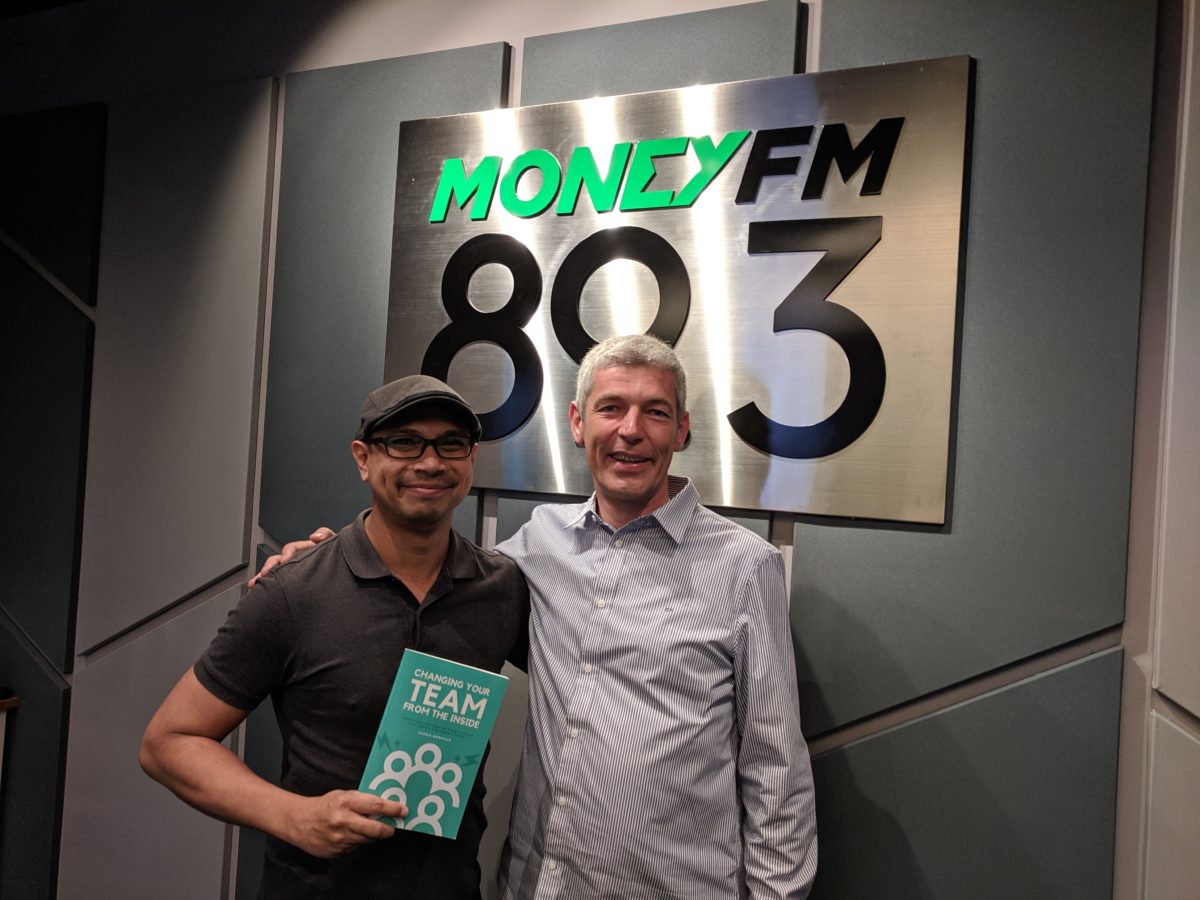
    While I was travelling to Singapore, I have been invited to discuss innovation with Eliott Danker on MoneyFM.

    Thanks to Eliott interviewing talent, we touched on a lot of different aspects:

    • Innovation fatigue
    • Sustainability
    • Burnout
    • Innovation and customer experience
    • Team organization preventing people to innovate
    • Inclusivity of different perspectives
    • Management of talented individual
    • Manager role and manager discomfort
    • Creating the conditions for great work
    • Hiring, onboarding, training, mentoring
    • Empathy and personas
    • Understandgin the Flow of work
    • Bottleneck and constraints
    • More effort is not the solution
    • Measure the impact of the work from a customer perspective, not the work itself

  • Open Innovation

    Open Innovation

    Ce 12 juin 2014, une annonce d’Elon Musk, le CEO de Tesla Motors, est venue secouer l’écosystème automobile.

    L’annonce titrée : All Our Patent Are Belong To You, déclarait que toute la technologie développée et brevetée par Tesla,  était à présent disponible pour qui voudrait l’utiliser, de bonne foie, dans l’esprit des projets Open Source.

    Je n’ai pas encore vu si cette annonce allait être suivi d’une ouverture plus forte des travaux de Tesla, avec peut-être des possibilités de contributions d’autres acteurs du domaine, sur une plate-forme ouverte, avec la mise en place de licence Open Source… Mais ce premier pas est déjà énorme.

    Cette annonce a reçu une pluie de commentaires positifs et attiré aussi des détracteurs expliquant que l’intérêt de Tesla n’était pas qu’altruiste puisqu’ils tireraient bénéfices de cette ouverture en faisant émerger leurs solutions comme des standards.

    J’apprécie évidement que ces commentaires fassent ressortir un des bénéfices d’une approche Open Source. Celui de faire que les contributeurs à une solution, plutôt que de gaspiller de l’énergie à se combattre à coup d’incompatibilités, fassent émerger des standards permettant de mutualiser les ressources.

    En tant qu’utilisateur, je serai très heureux de pouvoir brancher mon auto sur n’importe quel système de n’importe quelle marque.

    J’en profite pour mettre en avant deux articles, le premier du CEO de Red Hat tirant son chapeau à Tesla, le second dans OpenSource.com revenant sur les réactions variés suite à l’annonce.  Et dans le premier, Jim Whitehurst parle aussi d’eNovance


    Le choix du titre de l’annonce est plutôt drôle n’est-ce pas ? Si vous vous demandez pourquoi, jetez un oeil à cela : All Your Base Are Belong To Us.

  • Prenons de l’avance sur notre temps

    Prenons de l’avance sur notre temps

    semaine-innovation-marques-2014J’ai eu le plaisir d’être invité par les élèves de l’ISEG Marketing et Communication (MCS2) à débattre sur le thème de l’innovation avec Céline Patrier, fondatrice de OriginBy. Ce débat clôture la semaine innovation et marques organisée à Bordeaux.

    Je souhaite remercier l’ISEG et les élèves pour l’organisation et pour l’accueil chaleureux. Un grand merci également aux animateurs

    Clarisse Bodineau et Phillipe Rozier pour leurs prestations et leurs excellentes questions !

    ideatweet Sévanne

    Première question donc : il s’agissait de définir l’innovation, ou plus tôt de se positionner par rapport à la définition donnée par ce petit film diffusé en lancement de la conférence. Le tweet de @sevanneheaven résume bien mon propos : « L’innovation n’est jamais solitaire, on observe le monde autour de soi, on travaille ensemble pour aller plus loin ».

    La question suivante se référait aux ressources nécessaires pour l’innovation outils ? machines ? méthodes ? interrogeaient les animateurs… Ce que nous avons besoin d’avoir pour innover, ce sont une grande diversité de personnes, regroupées dans des conditions favorables. Pour expliquer ce que peut signifier des conditions favorables, j’utilisais une caricature : enfermer quelqu’un dans un bureau et menacer le d’une sanction si il n’a pas innové dans l’heure…

    Cela me permettait également d’expliciter l’organisation nécessaire pour favoriser la collaboration entre les personnes, la libération et le développement des talents, permettant la créativité et l’innovation… et donc de parler de mon rôle de Chief Agility Officer chez eNovance.

    Tweet @GuillaumeCo

    Une question sur les cycles d’innovation et les secteurs permettait d’évoquer quelques acteurs venant innover dans des différents secteurs comme le résume le tweet de @GuillaumCo : « @alexismonville nous a cité entre autre @enovance, @TeslaMotors, @ulule, @XeroxCorp, 1083 denim #innoviseg #Bordeaux » (Je précise que 1083, ce sont des jeans et des chaussures fabriquées en France, dont le démarrage a été financé en crowdfunding sur ulule)… Et j’ajoute que j’ai oublié de parler de Favi, une fonderie française qui innove dans la Somme depuis plus de 30 ans…

    Capture d’écran 2014-02-13 à 08.25.32Une dernière question sur les innovations à venir, me permettait de pointer que le début d’année est une période propice aux classements, que cela pourrait être une bonne source pour observer ce que les autres trouvent innovant, avec le classement de FastCompany par exemple positionnant Google en tête probablement à cause de son investissement dans : « la fin de la mort »…

    innovation-alexis-monville-celine-patrier

    La photo est de @isabelmonville et l’idée de parler de la fin de la mort m’est venue car ma fille Emma a répondu candidement à ma question sur ce qui était important pour elle : la vie, la famille, les amis… C’est donc bien les domaine où il faut innover pour la prochaine génération 🙂

  • Libre vs Privateur

    Libre vs Privateur

    Un titre en guise de clin d’oeil à mes amis les Gnus (http://www.gnu.org) ! Beaucoup auraient dit “Libre VS Propriétaire”, mais cette formulation impropre n’aurait probablement pas été plus explicite.

    De quoi parlons-nous dans cette conversation
    avec Nick Barcet ?

    Nous parlons de la comparaison entre logiciel libre et logiciel privateur en terme de nombres de fonctionnalités disponibles. Si l’on observe la période de 1990 à 2010, on peut dire que les fonctionnalités qui apparaissent en logiciel libre sont majoritairement du rattrapage par rapport à des fonctionnalités existantes ou se créant en logiciel propriétaire.

    Le point de bascule survient en 2010, où la majorité des innovations dans le domaine logiciel, apparaissent dans le logiciel libre (comme Hadoop (http://fr.wikipedia.org/wiki/Hadoop) ou Openstack (http://fr.wikipedia.org/wiki/OpenStack) par exemple). La tendance est alors inversée et l’on voit des sociétés éditants des logiciels privateurs essayer de s’accrocher aux innovations provenants des logiciels libres.

    Et plus loin ?

    Le modèle d’innovation ouverte du logiciel libre ayant démontré son efficacité, on est tenté d’annoncer le décrochage du logiciel privateur et sa progressive disparition, que nous fixons pour des raisons plus esthétiques qu’autres choses à 2030 sur ce schéma…

    J’avoue publier cela avec un sourire aux lèvres… Et j’aimerais bien savoir ce que vous en pensez, peut-être pour voir si il serait intéressant de continuer !


    1
    Nick Barcet est un acteur important du logiciel libre, il vient de rejoindre eNovance (
    http://www.enovance.com/) après avoir été pendant 5 ans responsable du produit Ubuntu Cloud chez Canonical.

  • Conférence 2012

    Conférence 2012

    Un regard sur mon planning de ce début 2012 et sur la sélection de conférences auxquelles je souhaitais participer… Pas vraiment compatible pour le 1er trimestre…

    Aussi, je suis impatient de lire, d’échanger avec vous sur ce que vous aurez appris lors de :

    Bonnes conférences à tous 😉


    La photographie est de Irum Shahid

  • D’où viennent les bonnes idées

    Une belle histoire pour motiver encore d’avantage l’existence de réseaux d’espace de coworking !

  • Lift11 : première journée

    Arrivée à Lift juste avant le déjeuner, première impression très positive, les gens que je croise sont tranquilles et accueillants. Je déjeune avec une partie de l’équipe qui fait la régie, ce qui me permet d’apprendre pourquoi les micro-casques c’est si compliqué… et pourquoi il n’y en a pas en standard dans les salles de conférence (micro-omnidirectionnel, grande sensibilité, larsen, mauvaise qualité difficilement admissible, fragile…)

    Je me promène dans l’espace démo, des étudiants sont en train de faire de la balançoire dans au milieu de l’espace de présentation des projets, distrayant 😉

    Entrée dans la salle de conférence, pénombre, décors et éclairage de la scène coordonnée avec le slide de présentation des intervenants qui tourne sur une musique électronique. Les participants (Lifters) sont installés confortablement dans des fauteuils et disposent de tables pour poser leurs ordinateurs, de micro pour intervenir et de casques pour la traduction simultanée. Je me présente à mes voisins qui sont très accueillant eux aussi (ONU et Banque… pas ce que j’imaginais en venant… Il faut que je dépasse vite les idées préconçues ! ).

    La session d’accueil des “participants venant pour la première fois à Lift” commence. Le fondateur et 4 liftosaures (des dinosaures de lift) viennent présenter pourquoi ils viennent et reviennent à Lift : la qualité des conférences bien sur, mais surtout l’ambiance la grande diversité de personnes que l’on peut rencontrer, que l’on doit rencontrer, en choisissant de partager avec ses voisins ses impressions. Lift apporte ainsi de nouvelles idées et de nouvelles rencontres ! Cela correspond parfaitement à mon objectif ! Parfait !

    En route pour la conférence !

    Don Tapscott commence la keynote d’ouverture en évoquant les récents événements en Tunisie et en Egypte pour montrer à quel point le monde a changé : les révolutions n’ont plus de leader, elles sont auto-organisées grace à la technologie permettant les interactions directes entre les personnes. Nous sommes à présent à un âge d’intelligence en réseau et il alors temps d’inventer les modèles permettant à cette intelligence en réseau de gouverner le monde !

    Je retiendrais de l’intervention de Jean-Claude Biver sa suggestion de récompenser par une prime les erreurs, car l’innovation ne peut se produire qu’en prenant le risque de faire des erreurs.

    David Galbraith a ensuite présenté le rôle des personnes dans l’évolution de l’Internet, présentant l’avantage des recommandations des personnes sur celles des robots, et montrant comment les évolutions des consommations produisaient un risque sur l’évolution du net et de sa neutralité.

    Explain, not complain.

    Ben Hammersley, probablement mon intervention préférée jusque là, engage la génération intermédiaire, à traduire aux plus agés ceux qu’ils ne peuvent comprendre de cette évolution des modèles d’organisation rendues possibles par l’Internet. Cette évolution que les plus jeunes, les digital natives, ont totalement intégré comme normale… Eux, ils ne comprennent pas que les plus vieux ne puissent comprendre ! Expliquer plutôt que se plaindre, car en Europe la majorité est constituée de ces plus agés, contrairement à d’autres pays ou les digital natives forment la majorité. Inspirant et drôle, bravo !

    Open Stage pour Matthias Lufkens sur la twitplomacy, comment les dirigeants du monde utilisent twitter et interagissent entre eux, excellent !

    Et premier break ! Go !
    Café, pomme, discuter, jouer avec les détecteurs de mouvement, regarder des robots se promener !

    Et c’est reparti avec Alexander Osterwalder et une présentation sur la structuration de la création d’entreprise par la systématisation d’exploration de business model. C’est une présentation de son livre Business Model Generation…

    Dorian Selz est ensuite venu présenter l’application qu’il a fait lors de la création de plusieurs sociétés de modèle d’organisation dépassant le modèle classique du command and control, amusant cela rejoint une discussion que je viens d’avoir lors du break avec quelques lifters, je suis en terrain connu pour la cible, le chemin pour y parvenir me passionne…

    Birgitta Ralston et Alexandre Bau sont ensuite venu présenter leur expérience de la création de la plate-forme de création Transplant en Norvège.

    Yasmine Abbas enchaine avec une présentation sur les néo-nomades, et j’ai du un peu décrocher car je ne suis pas sur d’avoir bien compris le sens de son propos : un monde ou la mobilité choisie ou subie produit du stress et du gachi ? un monde à changer ?

    La transformation d’organisation pour dépasser le modèle du commande et contrôle est évidement un terrain connu pour moi, une question dans les conversations “off” m’était posée. Cela doit être difficile à vendre car il faut trouver un client qui est réellement envie de changer et pas un qui ne veut se contenter que de cosmétique pour prolonger le status quo ? Hummm avec ce que j’ai appris aujourd’hui je dirais qu’il faut continuer à expliquer que l’on peut changer… et ne surtout pas rester à se plaindre de ceux qui ne veulent pas changer 😉

    Les lifters se retrouve ensuite pour une soirée fondue très sympathique au cours de laquelle j’ai apprécié à nouveau les échanges et l’enthousiasme (et la fondue aussi oui 😉 )

  • CoworkingCamp

    Venez inventer de nouveaux espaces de travail, de rencontre, de partage, d’innovation partagée ! Le CoworkingCamp se tiendra à Bordeaux le 19 novembre 2010 de 10h30 à 18h aux Terres Neuves à Bègles.

    Ce sera bien sur l’occasion de rencontrer les autres personnes motivées par faire exister un espace de coworking à Bordeaux. L’occasion de découvrir ce qu’est un tel espace et ce qu’il peut apporter comme innovation et comme développement pour la région.

    Un espace de coworking permet de disposer :

    • de bureaux personnels pour 1 mois, 2 mois, 3 mois, 5 mois, 8 mois, 13 mois…
    • de bureaux de passage pour une demi-journée, 1 journée, 2 journée…
    • de salles de réunion à la demande,
    • d’un espace de repos confortable entre 2 rendez-vous ou entre 2 sessions de travail favorisant les rencontres et l’émergence de nouvelles idées,
    • d’un espace pour organiser des événements rapidement et facilement,
    • d’une infrastructure permettant de diffuser ou capter des contenus en temps réel ou différé,
    • d’une connexion très haut débit à Internet,

    Quels sont les bénéfices d’un espace de coworking ?

    Le premier bénéfice apporté par un espace de coworking est la réduction de coût à supporter pour chaque personne utilisant l’espace apporté par la mutualisation de l’infrastructure, des bureaux, de l’accès Internet.

    Le deuxième bénéfice est l’amélioration de la qualité de l’environnement qui peut être plus sympathique, plus grand que si chacun devait financer l’intégralité seul.

    Mais au delà de ces premiers bénéfices, un espace de coworking permet de rompre la solitude des indépendants, des créateurs et des dirigeants d’entreprises, des spécialistes ou experts d’un métier qui peuvent se trouver isolés dans leurs organisations. Les rencontres fortuites, lors des pauses, des événements, ou par les mises en relation effectuées par les animateurs de lieu, permettent le partage d’expériences et l’émergence de nouvelles idées par le croisement de personnes exerçant le même métier, ou au contraire exerçant un autre métier, dans le même domaine, dans un domaine connexe ou dans un domaine inconnu.

    Inscrivez-vous !

    http://barcamp.org/w/page/coworkingcamp2

  • Lift11

    Je participerai aux conférences Lift en 2011 du 2 au 4 février à Genève ! Le programme des années précédentes m’avait à chaque fois intéressé mais je n’avais jamais pu m’y rendre.

    Pour en savoir plus sur les conférences Lift, vous pouvez visiter le site Lift ici : http://liftconference.com/lift11

    Vous pouvez surtout réserver votre ticket et obtenir 25% de réduction grace au code suivant : IXDTENZT. En effet, un système de promotion virale a été mis en place, jusqu’à 5 personnes peuvent utiliser ce code et je bénéficierais également d’une réduction sur mon ticket lorsqu’elles le feront.

    Le tarif Super Early Bird est disponible jusqu’au 31 aout, le Early Bird jusqu’au 30 septembre !

    Au plaisir de vous retrouver la-bas !