Category: General

  • The DevOps Opportunity

    The DevOps Opportunity

    Capture d’écran 2015-02-11 à 11.01.27In the beginning was the session of John Allspaw and Paul Hammond during the 2009 Velocity Conference, showing how cooperation between Dev and Ops at Flickr allows 10 deployments a day (Header image of this post is extract from this presentation, and it shows how Leonard Nimoy was important for us even if I started this post on February 6th and forget about it after…).
    Following that, there was the first DevOpsDays conference in Gent at the end of 2009.
    Behind the promise of reconciliation between evolution and stability objectives, reconciliation between devs and ops, some saw technological solutions enabling to shorten the lead time of go lives, and even to go live without human intervention.
    Others saw the opportunity to realize the promise of the last 20 years of the agile movement (yes I start to count at the beginning of the discussions about the lightweight project management method and the emergence of XP… already 20 years…).

    Capture d’écran 2015-02-11 à 10.58.37

    Others questioned the skills that sys admin will need to acquire to be able to consider infrastructure as code.
    Others imagined that the devs will need to change and acquire a good understanding of the behavior of their code in production, that they must integrate exploitation constraints into their code, like the ability for their apps to react to failure, to scale in or scale out, the ability to update or upgrade without services interruption…
    Others thought that the change should be from the entire system, that we need to reconsider the way we envision software evolution, and information system evolution, looking at it feature by feature – using not only the idea of Minimal Viable Product (MVP) at the beginning of a project but the idea of Minimal Marketable Feature (MMF) during all the lifecycle of our information systems.
    Others thought that cloud technologies was an enabler to our way to envision information systems, and obviously others are working on those technologies to enable those transformations.
    Others argued that if they want to recruit new people in their team they need to transform their organization because new generations will not accept the constraints of silos that prevent collaboration.
    All those point of views demonstrate the complexity of the devops subject and the impact on different domains in the organization: tools, method, organisation and culture.
    It was really interesting to observe the diversity of all those views during the Devops CIO’s breakfast organized by Red Hat in Paris on February 6th, my role was to shed some light on the subject and to facilitate the discussion between participants.
    Now that eNovance is part of Red Hat, the challenge to transform organization’s culture (internally and externally) continue with the Red Hat Cloud Innovation Practice and the size effect and open source culture allows exiting discussions with my peers.
    Red Hat Cloud Innovation Practice
  • Club de Lecture

    Club de Lecture

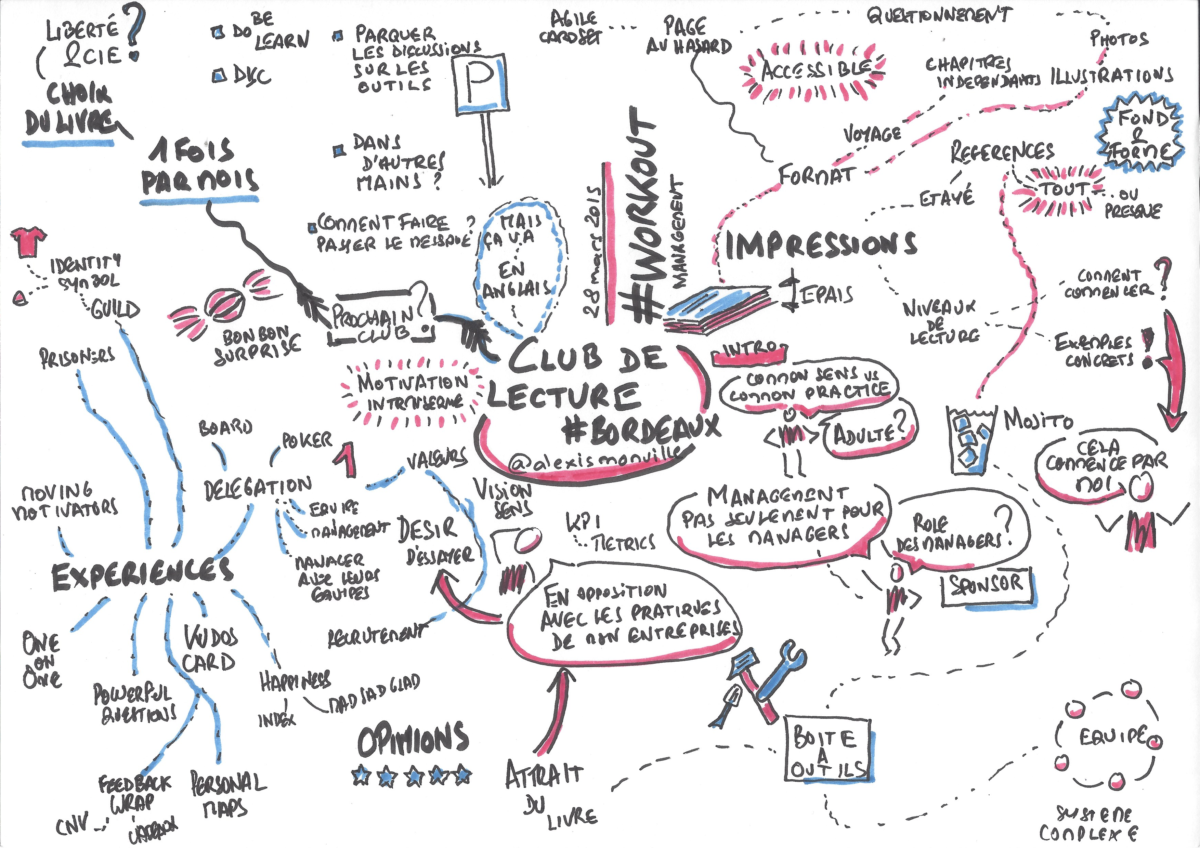
    Une session du Club de Lecture de Bordeaux s’est déroulée ce samedi 28 mars 2015, de 10h30 à 12h00. L’idée de proposer cette session m’était venu suite à la participation au club de Toulouse que j’ai raconté ici.

    Isabel, Claire, Guillaume, Olivier, Patrick, Philippe se sont joints pour raconter leurs impressions, opinions, expériences en rapport avec #Workout, le dernier livre de Jurgen Appelo.

    20150328-Club-De-Lecture-Workout

    J’ai trouvé cette heure et demie très courte. Les échanges étaient très riches. Le format, la qualité d’impression, le choix des illustrations contribuant autant à la forme qu’à la réflexion sur le fond, sont des points communs remarqués par l’ensemble des participants.

    Les notes de lecture de Claire
    Les notes de lecture de Claire

    Ils ont également notés que ce livre sur le management est accessible à tous… et même à mettre dans toutes les mains pour transmettre le désir d’essayer d’envisager les choses autrement.

    Les idées proposées dans le livre sont étayées (ce qui permet de les transmettre plus facilement), illustrées d’exemples, associés à des références qui font dire aux participants qu’il y a tout (ou presque tout) dans ce livre (agile, coaching, management, communication…).

    La possibilité d’adopter une lecture linéaire, en fonction du sujet recherché ou même en laissant faire le hasard fait de ce livre une référence à long terme.

    Les participants avaient tous expérimentés au moins une des pratiques proposées dans la livre : guild, identity symbols, motivators, delegation poker ou board, powerful questions, feedback wrap, personal maps, happiness index, feedback door… Certaines pratiques restent “à essayer” : formule pour le salaire par exemple.

    La suite du Club de lecture ?

    Pour choisir la date : http://doodle.com/k7nfnwtchnzzz8zs

    Un board Trello pour proposer et choisir les livres: https://trello.com/b/FIsc7Xf7/club-de-lecture-bordeaux

    Le principe est :

    • de proposer des livres dans la colonne idée,
    • les livres recevant plus de 3 votes sont sélectionés
    • le livre ayant le plus de vote au moment du choix est retenu comme prochain livre du club


  • World Happiness Day

    World Happiness Day

    March 20th, it is World Happiness Day.

    I am writing this short post listening to Happiness Sounds Like playlist.

    What recommandation for this day?

    dayofhappinessMaybe follow some of the suggestions of The Year of Happy and learn things about happiness that can surprise you? Or maybe follow on your pace the UC Berkeley course about Science of Happiness? Or one of those of the DayOfHappiness website summed up on the image on the right?

    Or even simpler, smile to those your will cross today?

    I close with an announcement, I am happy to announce that I will deliver a keynote on happiness during the Drupal Developer Days at Montpellier on April 18th.

    The header image came from here.

    This post in French

  • Le Bonheur au Travail

    Le Bonheur au Travail

    Au mois d’octobre 2013, je vous avais proposé de devenir producteur du film “Le Bonheur Au Travail” de Martin Meissonnier.

    150194_image_61960-cropLe film a été diffusé hier, mardi 3 février 2015, dans les locaux d’eNovance (Red Hat) à Paris pour une avant-avant-première (c’était la contrepartie pour notre contribution au financement du film sur touscoprod.com).

    Le film est passionnant et regorge d’exemples excellents montrant ce qu’il est possible de faire lorsque l’on commence par la confiance. Certaines entreprises sont évoquées dans le livre d’Isaac Getz, Liberté et Compagnie, conseiller scientifique du film.

    Les échanges avec le réalisateur qui ont suivi la projection était très intéressant. Un grand merci à lui de nous avoir offert ce moment !

    Je ne vous en dirais pas plus pour l’instant, mais je vous encourage à participer aux journées du bonheur au travail les 12, 13 et 14 février.

    Et bien sur, à noter dans votre agenda de regarder Arte le 24 février à 20h50 pour la première diffusion du film en France.

  • Assess Me If You Can

    Assess Me If You Can

    A friend asked some help with an HR assessment spreadsheet he had to fill in. This spreadsheet was intended to prepare the budget for next year raises and bonuses.

    In one of the columns, he must write if the person was underachieving (C), on average (B), or above average (A). He obtained the following result: 11 A, 15 B et 4 C. The next instruction was to split the people equally into those categories (10 for each in his case). So 1 person in A should go in B, and 6 from B should go in C.

    The problem was that the budget will probably be reduced for the people in B and C categories, and he will have some troubles to give compensations according to his own evaluation.

    Moreover, he wanted to have a transparent evaluation system to help the skills development of his team, and he anticipated that the transparent system would reveal the iniquity of the system.

    The trick was there, calculate the global budget needed for the team, and twist the information in the spreadsheet to obtain the budget.

    Toward another system?

    The initial intent of “human resources” to anticipate compensation problems that could lead to people departure is good. The initial intent to encourage the managers to assess the skills of their teams is also good. But the instruction to divide the team by third leads to falsification. Combined with the idea of a fixed budget for the year it can leads to numerous other problems.

    We can design another system where the budget and individual assessment are two different things.

    Some companies decide to allocate a part of their results to raises. They compare the compensation and benefits of their employees to others in similar industries. And then, they will decide the evolutions according to those datas and people desiderata. (Poult goes further with a compensation committee… I will write something about it in the future).

    Peer evaluation

    I experiment with a team a system that combine a self-assessment and a peer-assessment. There were only three criteria: Technique, Method and Behavior.

    Each team member evaluate himself and the other team members on a scale from 1 to 10 for each criteria. He indicates in comments the observables facts sustaining his evaluation.

    Those comments were reviewed with the manager and the coach to improve observation and feedback skills, and to reinforce the team talent development ability.

    Then, each team member reviewed all the evaluation collected with the manager and the coach, defined one or several improvement actions that were displayed on the team board. An improvement time was allocated during each sprint to each person.

    One of the team member was known to react very negatively to some news affecting the product development. All the team was down in a negative spiral and experienced troubles to get out of it. This exercise helped this person to be aware of her behavior and the effect on the team, she asked for help to other team members that should told her if it was happening again. The first time I hear one of the team members, rather shy usually, ask her: “How could you view this differently?” I feel that we were really starting to change.

    5150606275_0e573fc6b2_b

    Header picture is from Wikipedia.

    Picture “Measure Your Life In Love” is from Quinn Dombrowski (Creative Commons).
  • Un changement bon

    Un changement bon

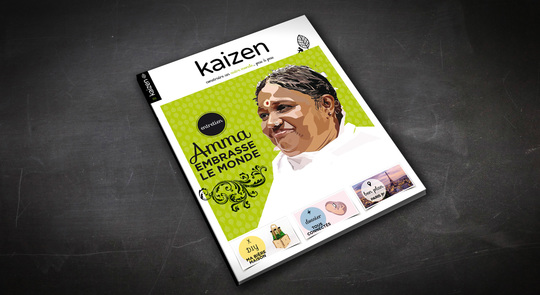
    L’idée de Kaizen, est de publier un magazine permettant de diffuser des idées positives pour permettre de changer le monde pas à pas.

    Ce magazine existe depuis 3 ans et réuni une petite communauté de 70000 lecteurs.

    Le projet de financement auquel je vous invite à participer permettra de financer ce nouveau Kaizen.

    A vous de jouer !


  • Spotify engineering culture

    Spotify engineering culture

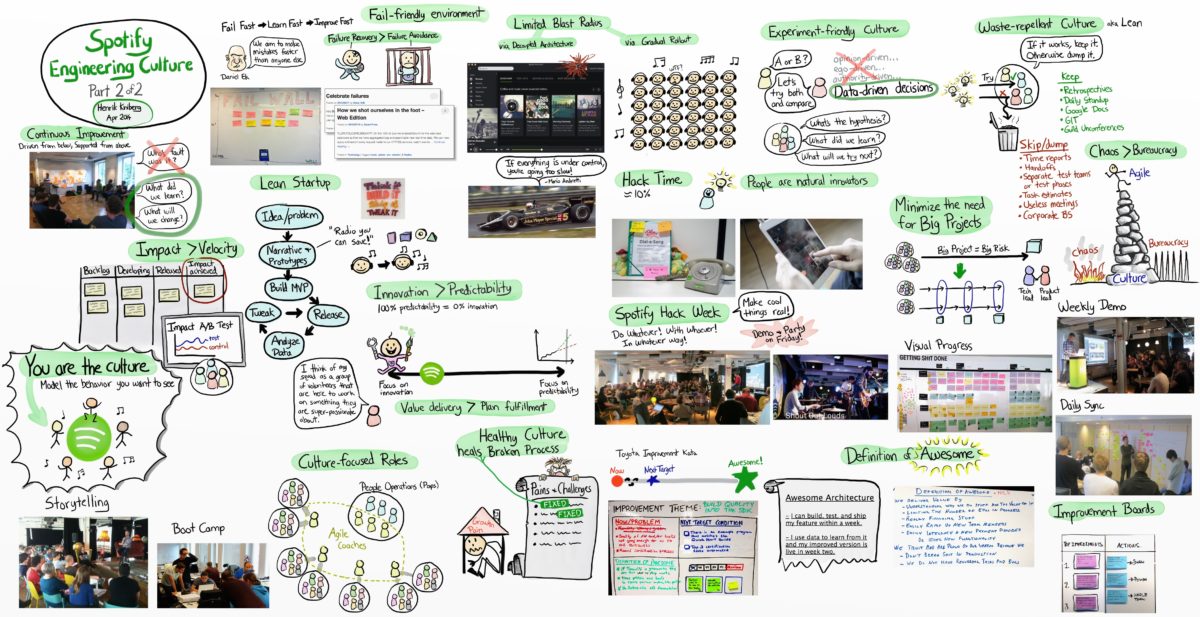
    Henrik Kniberg shared two 15 minutes videos explaining Spotify Culture.

    First part covers mainly teams organization.

    Second part covers failure and learning culture, that fosters innovation.

    30 minutes to study the way of working of a company that live with agile values and principles since the beginning (for the pleasure of their 30+ millions of users, yes, I am one of them…).

    PS: I had the chance to met another Crisp coach working with Spotify a few month ago, see this article: Agile est agile à grande échelle (in french).

  • The Science of Happiness

    The Science of Happiness

    The Science of Happiness is presented as the first MOOC to teach positive psychology. An opportunity to learn science-based principles and practices for a happy, meaningful life.

    I announced this in this previous article about The Happiness Advantage, I followed the ten-week course on edx.org until last week.

    The most important finding, according to me, is that our happiness depends by 40% on our activities, and not on our genes or circumstances. So we can learn things that will change our day-to-day life, improve our relationships, and our health.

    I want to thank the course instructors, Dacher Keltner and Emiliana Simon-Thomas for all the learnings that I put into practice, and that I try to transmit to others.

    You can see them introducing the course in the video below.

    I recommend this great course. If you are interested, a new “self-paced” session starts on December 1st: The Science of Happiness.

    This course is proposed by the Greater Good Science Center of University of California, Berkeley.

  • Améliorer la collaboration

    Améliorer la collaboration

    396208-slack-logoJe profite de mes vacances pour terminer un vieil article…

    Il s’agit d’un article pour faire la promotion d’un outil permettant de faciliter la collaboration pour une équipe distribuée, ou disons pour une équipe qui n’est pas toujours colocalisée.

    Ayeba utilise cet outil depuis son apparition sur le marché afin de remplacer l’utilisation de l’irc et de bot, qui au delà de la maintenance n’étaient pas facile d’accès pour des utilisateurs classiques.

    Slack nous permet d’avoir plusieurs canaux de discussion, permanents ou éphémères, pour échanger des informations entre les membres de l’équipe.

    Jusque là, un outil de messagerie instantanée quelconque pourrait faire l’affaire…

    Alors j’ajoute à cela que le partage des photos, vidéos, liens web est très bien fait et que vous verrez les éléments directement dans le flux.

    Cela ne suffit peut-être pas encore ?

    Slack dispose d’une multitude d’intégration avec d’autres outils, comme par exemples Trello, Dropbox, Github, Twitter, Google Drive ou simplement un flux RSS. Cela permet de centraliser toutes les notifications à un seul endroit et de les partager pour tous les membres de l’équipe concernés.

    Un outil agréable et utile que je vous encourage à essayer !

    Grace au programme “Give $100, Get $100” vous pouvez bénéficier d’une réduction à la souscription. Pour se faire, cliquez sur ce lien : https://slack.com/r/024fsncy-02542bu6


  • Little Brother

    Little Brother

    Little Brother est un livre de Cory Doctorow a recommander à tous et particulièrement aux ados autour de vous. Cela vous fait donc une bonne idée de cadeaux qui contribuera à leur faire passer un bel été en s’intéressant à ce roman qui met en scène un ado de 17 ans aux prises avec la sécurité intérieure de son pays.

    cory-doctorow

    Bien sur, je vous recommande de le lire également, vous y trouverez des explications très simple sur ce qu’est la cryptographie et comment vous pouvez (ou plutôt devez) l’utiliser.

    Une bonne lecture pour s’interroger sur nos libertés sur Internet et au delà.

    La photographie de Cory Doctorow est de Joi Ito (Creative Commons).
  • 360°

    360°

    I am currently studying solutions around skills development and assessment. Doing this, I found SurveyReport. Video presentation is very attractive. I decided to test the solution because of the peer to peer review.

    My first intent was to send the survey to one of my contacts to obtain his feedbacks.

    Mishandling (yes… I am very tempted to blame the UX) I sent the survey with the default “Corporate Survey” message to more than 1,000 of my contacts.

    This has led to several interesting effects.

    First, I got many responses and I will take advantage of these responses to derive improvement actions. A big thank you to all who responded!

    Then, I had many requests from contacts who clearly associated the survey with imminent professional change. A big thank you for their support!

    Without going into the details of this test, I think it could be a good idea to perform this kind of test during the initiation phase of work with a team. However the solution I am looking for should provide more regular opportunities for interaction.

    To be continued!

    If you wonder why this picture? It’s probably because you do not know 360 🙂

  • Joy

    Joy

    jpeg

    Douglas McGregor presented his theory Y by stated this belief: “work can be as natural as play and rest.” Richard Sheridan, co-founder, and CEO of Menlo Innovations, explains that the Joy, he is talking about in his book Joy, Inc. is this kind of joy.

    Joy, Inc. is the best advocacy for “pairing” I read so far. By pairing, I mean two persons working at the same desk with the same computer. I would love to say that Pair Programming popularized the approach in other fields. However, the efficiency of this shortest learning loop that is pair programming is not yet as popular as it should be. The parallel with pairing in surgery is interesting to re-use.

    Richard Sheridan presents the practices in place at Menlo. Agile practitioners would indeed recognize some of them, or discover another to implement the same values and principles. To give some examples:

    • No frontier in the space, and easily reconfigurable working space to enable the persons to bring their desk together to work on the same project
    • Stand up with the whole company every day at 10 (this means 70 person circle…)
    • Walkies, a ritual to break the afternoon, have the entire company walk together
    • Show & Tell, the Sprint review, in an opposite way, the customer show to the team what have been done during the week
    • Interviewing, Hiring and Onboarding process that shows the culture and help both parties to check if they are compliant. There’s no referral system at Menlo
    • Deep understanding of user’s goals, persona’s use… before we were speaking about them in software, with a funny job title: high tech anthropologist
    • Make mistakes faster as a way of growing people and business
    • Babies, children at the office, in the office space

    A leader is best when people barely know he exists. When his work is done, his aim fulfilled, they will say: we did it ourselves. Lao Tzu

    • A culture that grows leaders not bosses
    • Planning with story cards proportional to the effort (and space for weeks proportional to the capacity)
    • Color to differentiate maintenance and new products
    • Test-driven development
    • Delivering working software every week to the client
    • Colocated teams only, no technology will replace the fact of being there
    • Fixed time (40 hours a week) flexible times is not so flexible, if people need times away, they are totally away (or Menlo find a specific arrangement for a limited time to make work from home possible)
    • Importance of checklists, of knowing to repeat something again and again, enablers of improvement
    • Accountability, with an example of the estimation process. No fear in the process to avoid bias in the system, transparency internally and externally
    • Communication aligned internally and externally. You have to tell the truth to the world, and if you can’t, you have to change your culture
    • 50% cash deferral on invoices in exchange for equity or royalty (huge and big success on this)
    • Flexible deadline discount (25%) invented during 2008 recession
    • High impact of getting things done on employees happiness

    You’ve understood with all that list that I think the book is worth to read, even if I would continue to work to prove that asynchronous and distributed teams can also bring efficiency and joy.


    Menlo Innovation office pictures is from article of J.D. Booth for Corpmagazine.com