Author: Alexis

  • Black Box

    Black Box

    The black box in this article are those installed in planes. Those black box allows to analyze what happens during a more or less dramatic incident. Setting an organization where facts are analyzed to improve the system is a defining characteristic of airlines industry. A characteristic that enables an incredible improvement of security.

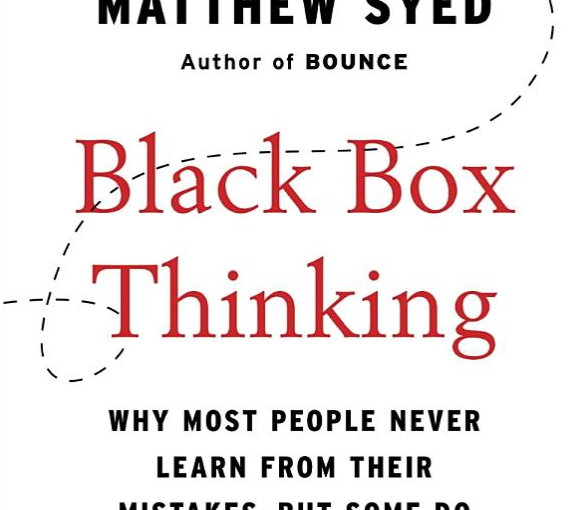
    Matthew Syed starts by showing this fundamental difference in his book: Black Box Thinking – Why Most People Never Learn from Their Mistakes–But Some Do.

    Compared to the health-care system where the culture is to blame people that made mistakes. A culture that leads to the dissimulation of mistakes and to no improvement of the systems, causing 400,000 deaths per year in the US (third cause of mortality before traffic).

    Matthew explains the anthropological and psychological root causes that leads us to avoid recognition of mistakes, and then to incapacity to conduct improvements.

    One main aspect is the mindset in which we look at the development of our skills. As stated by Carol Dweck there’s two types of mindset: fixed mindset, where we think our skills depends of our gene, and growth mindset, where we think our skills depends on practices.

    The book presents transparency approach from people and organization that allows experimentation avoiding our natural biais.

    One approach is marginal gains, the fact to change small things to correct a small weakness, that will lead at the end to high performance.

    Another approach is to avoid closed loop thinking that leads to deny mistakes reallity, and then to reproduce those mistakes over and over again.

    As stated before, avoid the blame culture is necessary to create the conditions that allows people to reveal their mistakes.

    So we can try and try again a lot of times to finally succeed.

    A must read!


  • The Search for Happiness

    The Search for Happiness

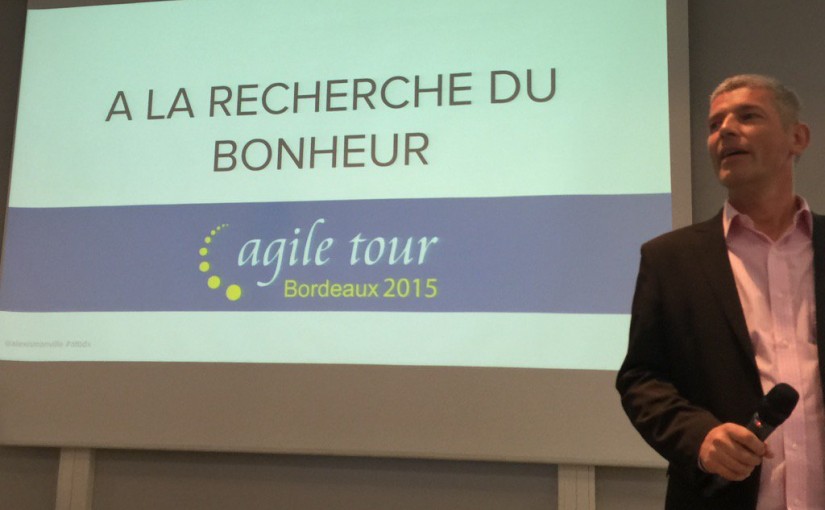
    During the past days, I had the opportunity to give two conferences. One in Raleigh, North Carolina, on October 20, 2015, for the Red Hat Agile Day. The other, in Bordeaux, France, for the closing keynote of AgileTour Bordeaux, on October 30, 2015. I adapted the content according to the feedback received after my opening keynote of the Drupal Developer Days.

    Agile

    The first sentence of the Agile Manifesto is often ignored:

    We are uncovering better ways of developing software by doing it and helping others do it.

    Studying this sentence helps to understand the state of mind of the manifesto writers, continuous improvement, mutual aid, listening. We could apply the same way of doing things to other areas than software development ones. And, of course, there’s no reason to restrain the application to one team. Some practices and tools proposed by some framework limit the application to a team.

    Culture

    Culture is the immerse part of the iceberg. When you observe an organization, you will be able to see the tools and practices. The principles and values that define the culture are seen through the actions of the organization members. When you try to introduce practice and tools that will not fit the organization culture, even if there’s an improvement at the beginning, things will be back to “normal” after some time.

    That’s why Peter Druker said:

    Culture eats strategy for breakfast, technology for lunch, products for dinner and soon thereafter everything else too.

    An agile company

    Some years ago, I was facilitating a meeting with the leadership team of a small company, they were around 20 at that time. We were working on the organization principles of the company. The team knew the company will need to grow fast, and they wanted to keep the creativity and innovation that made the success. Long story, short : we ended up with 6 principles organized on a main one:

    Employees Happiness

    Those principles were: autonomy, responsibility, trust, transparency, communication, and the conviction was that growing agile would be the way to achieve it.

    how-do-feelAs the company was growing fast, we wanted to know if we were heading in the good direction, and if employees were really happy. And the best idea we found to get this information was to ask people on a day to day basis, using 3 simple buttons and a form to collect feedbacks so we can know what we could continue doing, what we could change or stop doing.

    When I start explaining that idea, during one of the new comers breakfast session, one person asked me a simple question:

    What do you mean by happiness?

    A simple question, I was not able to give an answer to. Everybody knows what is happiness, but I was not able to define it. That leads me to follow the Science of Happiness Berkeley course of Dacher Keltner and Emiliana Simon-Thomas. I learned a lot on what is happiness, differences between happy and unhappy people, and mainly how to become a happier person.

    « Happiness is the meaning and the purpose of life, the whole aim and end of human existence. »
    Aristotle

    Why be happy?

    Scientific study shows what we may be able to guess. Happy people feel good, have a stronger immune system, are physically healthier, live longer, are more sociable, better liked by others, more resilient, more cooperative, more productive, more energetic, have more social support, are better leaders and negotiators, have a richer network of friends, earn more money, are more charitable, demonstrate more flexibility and ingenuity to solve problems

    What makes us happy?

    circumstances-daily-activities-set-pointAnswer may not surprise you, it’s not a new car, even a fancy one. Circumstances like that will have an effect on our happiness level, but we will go back to our set point soon or later. The most important finding, according to me, is that our happiness depends by 40% on our activities, and not on our genes or the circumstances. We can choose to have an impact on our happiness level.

    How?

    Being positive. Trying to look at situations from other angles in every day to day life situation and relationship with others.

    Optimism

    Being optimistic. Investing time as an individual and as a team to define what could be our best possible future. Working to create the conditions that help people to do their best. One of the proposed exercises is for example to write your self portrait, your best possible self. Taking 10 minutes a day to write and refine this portrait during 10 days will learn you a lot on yourself and what you can do.

    Gratitude

    Expressing gratitude. Creating the conditions that help people to do the same. In organizations, Retrospectives are good opportunity to do so, you can organize Kudos Box, or distribute Wow cards. It could be done using a diary, encouraging people to do the same, especially interns and new comers, so they can keep a trace of their surprises and learnings that could be useful in the future.

    Kindness

    Practicing kindness. Kindness letters are a simple way to do so. There’s even a world kindness day on November 13th, that could be a good opportunity to do something as a team.

    Forgiveness

    Forgive, a practice simpler to say that to do, especially when it’s our turn to forgive. A practice that, like gratitude and kindness, is the more beneficial to the sender than the receiver. Practices that work even in the absence of the receiver.

    Carpe Diem

    Seize the day, an idea simpler to understand, harder to practice. I will cover several different notions around time management. Flow from Mihaly Csikszentmihalyi that helps to understand those time when time flied and when we were incredibly focus and efficient as an individual or a team. We can enjoying those kind of moment when we maximize the focus and minimize interruptions. I even seen a team synchronize the work around pomodoros cycles to avoid interruptions.

    As recommended by Philip Zimbardo “the optimal temporal mix is what you get from the past — past-positive gives you roots. You connect your family, identity and your self. What you get from the future is wings to soar to new destinations, new challenges. What you get from the present hedonism is the energy, the energy to explore yourself, places, people, sensuality.”

    Celebrate

    Savoring life’s joy is a way of life. Celebrate success, our own successes or the successes of a team or an organization, is an important, not so usual, activity. There’s several ways to celebrate success and we need to find our own, a way to do it is to set up a work expo as proposed in Workout from Jurgen Appelo.

    Goal

    Celebrate success supposed to define goals. Several scientific studies on this subject demonstrate that goals must be intrinsic and not extrinsic (like money). Defining goals, prefer approaching ones to avoiding ones. That’s why I like the OKR approach (Objectives and Key Results). Because the objectives and key results are created through the conversation of all stakeholders and not hierarchically imposed. This is also an excellent opportunity to look at objectives in more shades than the binary black and white, and to consider each steps in the good direction as a partial success that we could celebrate.

    Nurturing relationship

    Contribute to a goal bigger than self, with people you appreciate. Create your tribe, troop, group in which you will be able to connect, share, learn. Your surrounding will have a dramatic influence on your ability to deliver. Surround yourself with passionate people will give you a lot of energy. You can also provide this energy to the people that surround you.

    Soul and body

    « A sound mind in a sound body.»

    This quote from Juvenal has been repeated for a long time, is there to remind us that we have a body and that when we take care of it, it has an influence on our mind… and so the opposite. And more than sport, ideal activities to practice with personal or professional relationships, meditation can be an opener on the happiness journey.

    Balance

    Happiness at Work implies that we could be happy or not depending on where we are. Work life balance separates two worlds in where we will not be the same person. Maybe it’s time to behave as only one person, without any professional mask? Maybe it’s time to be happy in life? Maybe it starts with us, with our smile?


    Thank you for your feedbacks at the end of the conferences and your messages on Twitter.


    Some links to go further:
  • 50 Quick Ideas to Improve your User Stories

    50 Quick Ideas to Improve your User Stories

    Gojko Adzic and David Evans starts a series of books with efficient catchy titles: 50 Quick Ideas
    I only read the one about User Stories for the moment, but you could be also interested in the ones on Tests and Retrospectives.

    50quickideasIllustrations of ideas are great, it helps to remember them.
    Even if I already knew and used some of the ideas, the way it’s explain give sometime a better way to deliver the message to a team.

    The structure of each ideas are: a short explanation of the idea, key benefits and a part on how to make it work.

    The authors also created card decks with the same content (Start-up idea: I would like a digital card deck that I can carry in my phone please 😉 )

  • Reinventing Organizations

    Reinventing Organizations

    Reinventing Organizations a book from Frederic Laloux, is structured in 3 main parts:

    • The first one describes the evolution of organizations
    • The second one presents the practices of evolutionary organizations
    • The third one the emergence of those organizations

    2015-09-18 19.11.51

    History

    The author uses color coding and starts the story with the first groups of human (Infra-Red) who where evolving in groups of around 12 people. The group cannot scale above this size. Then came a period when explanations of what is happening are provided through magic (Magenta) the group is lead by elders wisdom and chamans (in a dangerous world, being alive is a proof of wisdom).

    The next stage (Red) enables the organization to grow, the organization depends from a chief with all powers, and those chiefs will demonstrate theirs powers at every opportunity. Examples of those kinds of organizations are regularly finger-pointed: gangs, mafia…

    The next stage is the “Command & Control” conformist organization (Amber), human groups can settle and start agriculture and first forms of civilization, they can start to plan for long-term and the group can continue to grow. Those organizations are often described from their tendencies to polarize: good versus evil, us versus them… One of the examples given by the author to illustrate those kinds of organizations is the Catholic Church.

    Another stage further is the “Predict & Control” achievement organization (Orange). Those organizations use Management by objectives, process, projects. They have a lot of staff functions that define how the others in the organization must work (HR, Marketing, Finances…). Organization is seen as a machine. The organization is rational, hierarchical, ego is absolute there, social inequality rules.

    The Pluralistic organization (Green) is described as a family. Respect, fairness, community, stakeholders interest are important things. Those are value driven culture organizations that work for an inspirational purpose.

    Every evolution leads to look at the previous stage as retarded ones… And it will happen probably for the next stage.

    The last current stage (Teal) is describe as living systems. Ego is not absolute but a variable, they are looking for wholeness. Those organization are built on principles like self-actualization, building on strengths, wisdom, peers relationships. They have no hierarchy, and few staff as advisory.

    Practices

    The part 2 presents practices of teal organization discovered during research conducted by the author in several organizations. Those organizations don’t know each others, are from several sectors and sizes, and share a lot of practices.

    Those practices are grouped by 3 principles:

    • self-management
    • wholeness
    • evolutionary purpose

    The comparison between Orange and Teal organizations is really interesting. You will find below comparative charts that you will find in the book.

    Emergence

    Frederic Laloux describe in the last part the emergence of teal organizations and the impact on the whole society.

    The author gives ideas to start a new company and transform an existing one, with teal organization’s principles.

    This book was discussed during the session of Saturday September 19th of the Bordeaux Book discussion club. Passionate discussions that lead me to tell you to read this book.

    2015-09-21 16.41.46

    To taste what you can find in the book, you can have a look to a conference given by the author:

  • Manage it!

    Manage it!

    Manage it! is a book by Johanna Rothman published by Pragmatic Programmers. You probably know already Pragmatic Programmers, they published Agile Retrospectives by Esther Derby and Diana Larsen, and also Agile Coaching by Rachel Davies and Liz Sedley that my friend Fabrice Aimetti translated into French. If don’t know Pragmatic Programmers yet, I recommend a visit to their book shelf.

    When I started the book, I have been surprised, badly, by the classic project management tone, and at the end, it is something I really appreciate in this book. Why ? Because it means that you can recommend this book to project managers and managers that are used to classic methodologies and classic work environments. And they will not think that you are trying to enrolled them into a sect.

    Well, this book will not cover principles and values that make the culture of an organization, principles and values that can be reinforced or hustled during an agile adoption.

    This book covers project management, as seen by project managers, program managers or managers, sometime as seen by team members. It covers the start of a project, the planning, life cycles, scheduling and scheduling games, estimation, creation of teams, steering, rhythm, meetings, dashboards, multisite projects, multiple projects, test integration, programs and portfolios, and of course project completion. With this short view of all the chapters, you can see what you can expect from this book. Recommendations are simple to understand, and argumentation could be useful to enrich your existing range.

    I really like the way powerful questions were introduced, like :

    • What does success look like ?
    • Why are these results desirable ?
    • What is the solution worth to you ?
    • What problems does this system solve ?
    • What problems could this system create ?

    I appreciate also the recommendation to introduce retrospectives in the project life cycles (and the way to insit not to call this a postmortem at the end, cause we hope that nobody will die during the project).

    This book can be read fast (I read it in the plane on my way back from Red Hat Tech Exchange) and I believe that it can be a useful reference when you are ready to start a new project and to work on an existing one.

  • Listening exercises

    Listening exercises

    I used, once again, listening exercises during the Devops Masterclass that I delivered with one of my colleagues in Ho-Chi-Minh-City for the APAC Red Hat Tech Exchange. I committed this time to publish a short description of those exercises.

    I set the stage for the exercises with a short warm-up exercise 1-2-3-Go ! That helps to understand we are not probably using only our ears in the listening process 🙂

    Then, I asked the group to form pairs.

    First Rule

    I explained to them that we will start with one listener and one talker and that we will have the opportunity to switch role later.
    The talkers will have to speak for 60 seconds and deliver a story on any subject that is really important to them.
    The listener will have to respect a first rule : Don’t talk.

    I then facilitate a debriefing session, asking the listeners how they found the exercise, and then how the talkers felt about the listening of their counterpart. I insist on how they felt 60 seconds was, long or short ? I insist also that asking question may derail the talkers from their path, and that it may lead them on something that is important to you, but not them.

    Second Rule

    When the group is ready. I propose that we switch the role of listeners and talkers and that we introduce a second rule : Don’t even think about talking.
    And we start again for 60 seconds on a story that really matters.

    The second debriefing session is even more interesting about how difficult it is to not let the mind wander on something else. There’s obviously questions on the importance of questions that are here to clarify what the talkers are saying, or that demonstrate the interest of the listeners.Usually, I don’t need to answer those ones, a part of the audience gets it very fast and is able to answer that. What is the goal of your question if we are not listening to the answer but are working on preparing questions ? Our questions will probably be answered if we let the person continue their speech, or this question may have a small interest at the end.

    Variants

    There’s a lot of variants possible for this simple exercise:

    • you can propose to the person to prepare their speech fixing the topic on introducing themselves. You will need to add more time for this (probably go for 90 to 120 seconds…)
    • you can propose the persons to add a small bar on a paper each time they have a question during the first phase, and to tick this bar when the question is answered. And ask them to consider the bars that are still there at the end and to measure the importance of those questions.
    • you can propose to the group to work in group of 3 people, with one observer each time

    I first heard of this exercise from Paul Klipp in ALE2014. Another time, I attended a session with Olaf Lewitz and Michael Sahota during the Scrum Day in Paris in 2015. And one more time with a session delivered by Oana Juncu during Agile France 2015. Each time, there was variants, and each time it was really powerful. I had the opportunity to test it on different occasion, and it is a good eye opener to ease the following conversations.

    When will you try it ?

    Header photo Listen to ME! by Jonathan Powell under Creative Commons

  • ALE15 best conference this year

    ALE15 best conference this year

    I am just back from ALE15, the fifth edition of the self organized conference from the Agile Lean Europe network. As usual, I feel really good when I am back, as if this edition was the best edition ever… I am started to get used to this feeling, as I only missed one edition, in 2013, since the beginning of the adventure.

    Why is it so special ? And what happens there ?

    Well, there’s a lot of things that I can highlight.

    First of all, it’s self-organized. It means that anybody can contribute to the organization of the event. For each event several people gather on a sofa, and those people will work together to achieve the mission of this particular sofa.
    For example, I (with others) was involved in the program sofa, some others where involved in the finance sofa, others in the marketing sofa, and others in the spouses and kids sofa.
    When you choose to contribute to a sofa, you can contribute with 5 minutes of your time with a suggestion, or invest a lot more, the choice is yours, just know that when your drop the ball, the others must know it so they can handle.
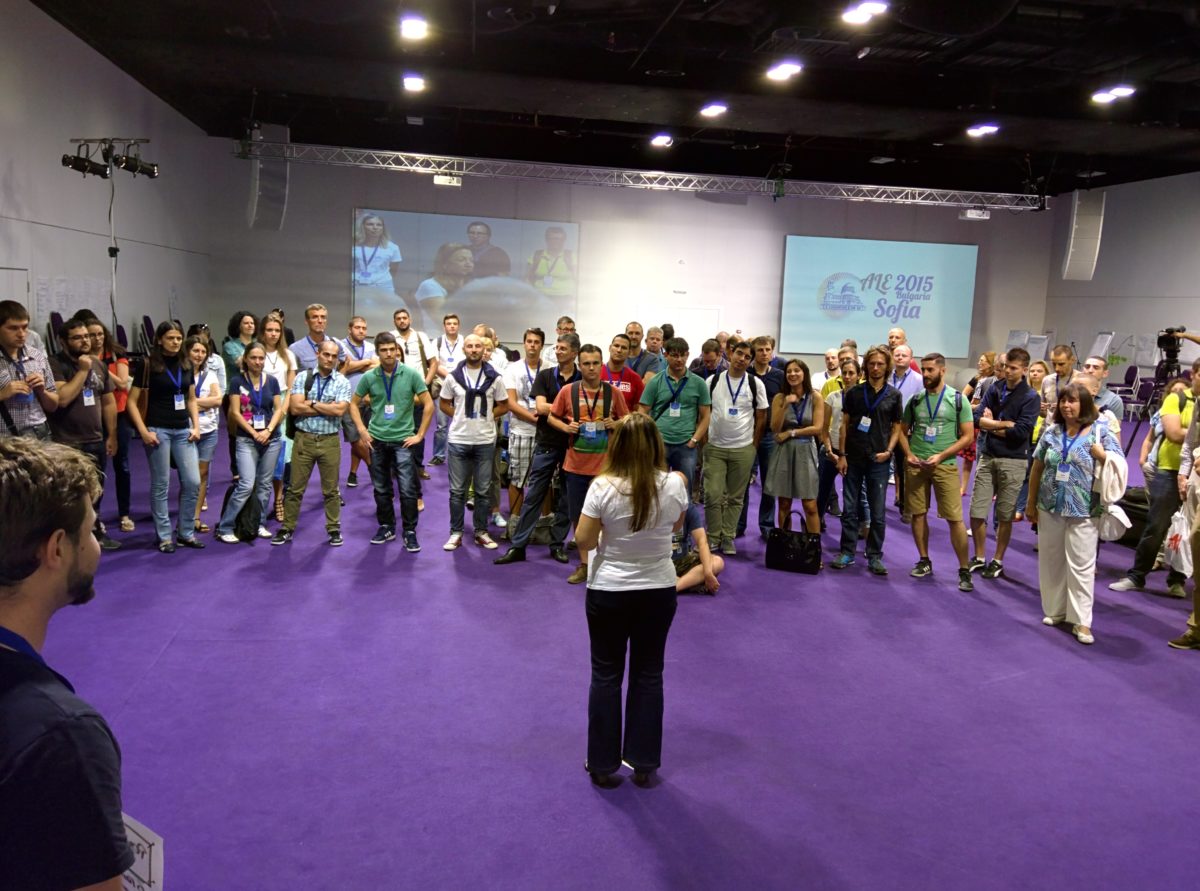
    On this picture, you can see the list of the organizers of this year event. A big up to my peers ! It was great to do this with you !

    Second, there’s a spouses and kids program, it means that you will see kids running in the conference venue alley, attending conferences, playing games, and even speak on stages. It means that it’s a conference where you can be yourself among your peers and your family. Kids love this, as my daughter ask each year if we are going the next one. The conference is planned end August, just before the kids are back to school, especially for this purpose.

    Third, a part of the program is reserved to the open space format, so that the program of the conference is defined by the most important thing for the participant at this particular moment. This year, I had the pleasure to facilitate the open space with my friend Pablo. It was great and our experiments worked quite well.
    Experiment One, as there’s people from all over Europe (and more) we asked them to demonstrate the babel opportunity by pitching their topics first in their mother tongue and then in English. This was amazing to see the difference in body language between the two pitches, and it was a lot more energizing and fun to hear some language your are not used to hear (not at all for some).

    Experiment Two, as we were around 180 people for the open space, we knew that there will be 12 groups (at minima) in parallel and we wanted all those groups to share their findings with the whole. We asked them to prepare a restitution of their work on a flip board paper, and to summarize it with a tweet with #ale15 hashtag. We organized 20 minutes global restitution after each of the 40 minutes sessions. It worked well, it was interesting and it helped for sure to improve the participation and the quality of the work done. You can see the result if you look for the #ale15 hashtag on Twitter.
    Experiment Three, as we think with Pablo that one of the big benefit of the open space in enterprise was that the group has a common purpose, we tried to propose a common theme to the ALE15 Open Space… and it didn’t work at all… But we survive as it was a survivable experiment 😉

    And then, obviously some magical content from great speakers and from great discussions.

    Putting some words on weird feeling like Chris Matts in his opening speech on day 1, when he explained how the agile movement evolution using the adoption model and others and why all the « scale agile » thing was ahead in time suggesting framework before the stories where really there. In this blog post from Chris you can discover more in detail the idea behind.

    Or the integrating talk by Olaf Lewitz, where we experiment memorization exercise : « options have value, options expires, never commit early unless you know why » that was twitted several times, when he demonstrates that balance and polarization was wrong and that we should look for integration.

    Inspiration for our future work that we should bring slowly back in our day to day work as advised by Rachel Davies in her closing keynote speech.

    I also had the great pleasure to play once again the Deming Red Bead Experiment, great experience and great conversation. Deming Principles are still so relevant!

    What’s next ?

    ALE16 of course, you will be able to contribute to the organization of the next event by sitting on one of the sofas. Stay tuned and follow :
    Agile Lean Europe (ALE) on linkedin and/or on Twitter

    PS : This edition was quite hard on a personal level as my loving partner Isabel (in life and also in business) endured a devastating medical episode. I thank her for her support as she asked me to go for the commitment I had made to the ALE community and also to let our daughter have fun with her peers in the kids program.

  • The goal of an enterprise is to make money… or not

    The goal of an enterprise is to make money… or not

    Last week, I rehearsed a session around the evolution of organizations, methodologies and IT with some people of the Red Hat Montreal office. Thank you to them for their valuable feedback! Even if the title of the presentation was Devops and Bimodal IT, I presented some roots of the evolution of organizations and methodologies, and their short term and long term impacts on businesses.

    timeline

    I used a timeline and zome out to show previous moves, and “selected” important events, like Deming involved in the Japanese reconstruction, the new new product development game by Takeuchi and Nonaka, or The Machine That Changed the World : The Story of Lean Production by Womack and Jones.

    At the end of the presentation, there was a discussion thread around clarity of vision and goals of enterprises. One question arose that foster an animated conversation : “What is the goal of agile enterprises?”.

    This question led to a definitive answer from one attendees : “The goal of enterprises is to make money.”

    And the discussion starts…

    There was opinions like: “the others purpose are only things to hide the main goal of making money…” or “good intentions, but if we look at what enterprises are measuring, we know that money is the main driver”… and so on…

    I tried to push my opinion that money was only a by-product of a higher purpose for enterprise that operate on a different model than “making money” ones. And that it worked for those companies… People seemed not really convinced… Still some work to do on this 😉

    Featured image by Jericho [CC BY 3.0], via Wikimedia Commons

  • The dream begins now

    The dream begins now

    The first time I explain that to enable collaboration, we need to create the conditions of this collaboration between people, people approved… But I feel like it’s not really understood.

    The idea that a meeting needs to be facilitated to help participants to achieve their goals is seen as animation… Like if it was only entertainment…

    I lived an interesting experience that can illustrate this idea of “creating the conditions”. We joined friends for a weekend in an holiday village. It was a real discovery as we didn’t know the kind of village and the place.

    When we arrived by car on the car park, several employees was waiting for them with big smiles on their face. They took care to explain to the three of us that they will take care of the luggages, indicates us where to park, and how to find our room.

    The simple fact that they were smiling, welcoming, benevolent enable in a snap a total deconnection from the week. I was on holiday! Nice weather and nice place probably count also… But I am sure that it was their behavior that makes a real difference.

    The last sentence pronounced by one of them reveal their intention : “The dream begins now”.

    And it works, I was instantly on holiday, and those one and half day spend there was really restful.

    This can makes us think of the behavior we will adopt during our next appointment or meeting?

  • We trust you

    We trust you

    During Red Hat Summit in Boston this week, a documentary video was showed during the keynote sessions. This video describes the way Penn Manor school district used open source in their education project.

    Charlie Reisinger is the IT director that lead this openness strategy, also delivered a TEDxTalk in Lancaster to tell the story.

    I hope this can inspire a lot of schools to give their trust to the students and help them to develop their self-esteem and self-confidence.

    More details here: http://summitblog.redhat.com/2015/06/24/open-source-stories-penn-manor-the-power-of-open-in-education/

  • Liberté et Cie par le club de lecture

    Liberté et Cie par le club de lecture

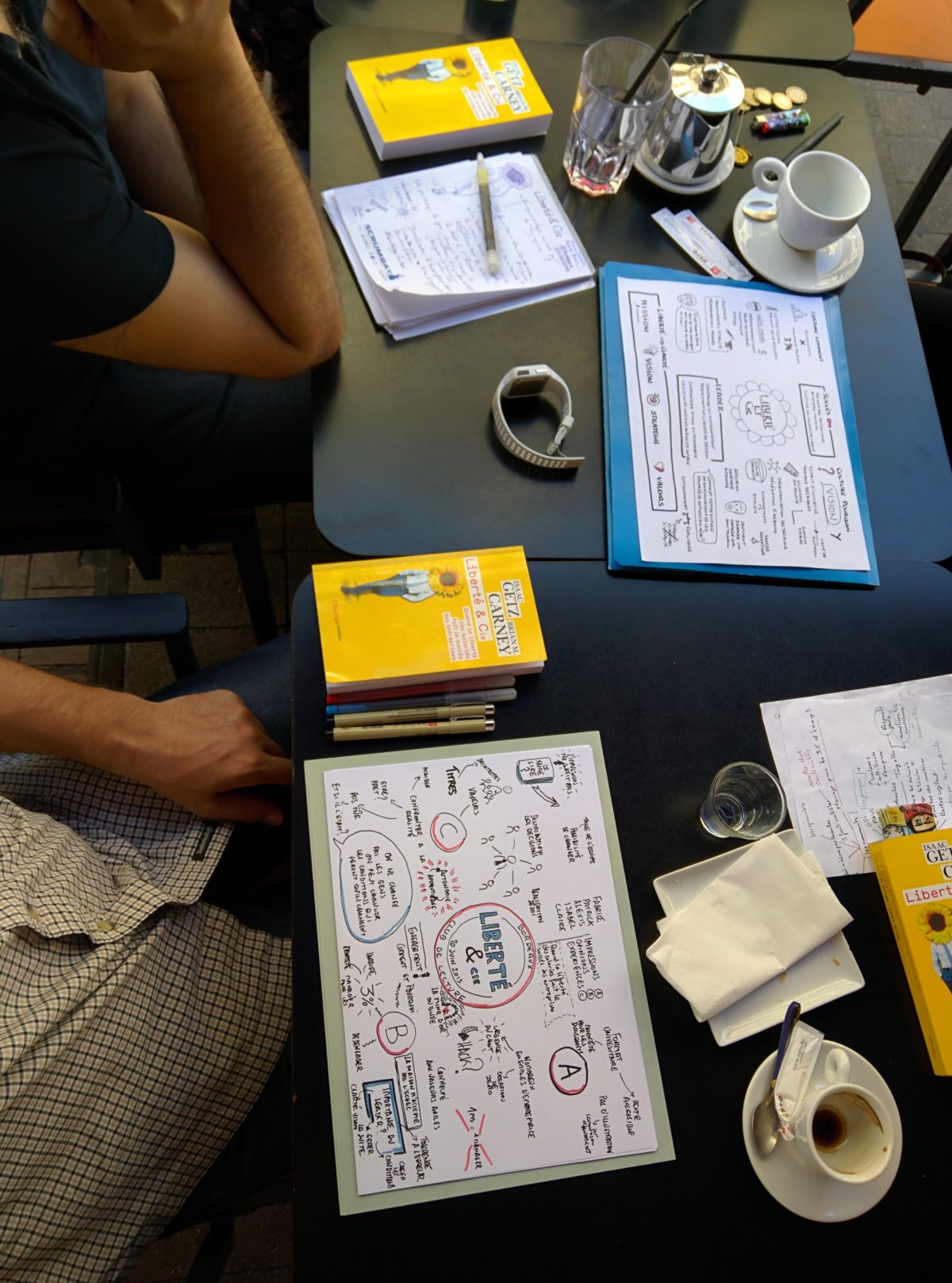
    Une nouvelle session de notre nouveau club de lecture à Bordeaux se déroulait ce samedi 20 juin 2015. Cette fois ci, un peu moins de participants que prévu (était-ce du à un ciel trop bleu ?) Claire, Isabel, Fabrice et Patrick se joignait à moi pour échanger autour du livre Liberté & Cie. Le contraste avec le livre discuté lors de la précédente session est relevé d’entrée par les participants, le format est plus universitaire, peu d’illustrations, photos, schéma…

    Ci-dessous, la prise de notes au cours de la session :

    2015-06-22 09.30.34Les nombreuses entreprises étudiées provenant de nombreux secteurs d’activité est un aspect important pour cette mine d’or (parfois oubliée…). Le livre donne envie d’être partagé, mais il n’est pas si simple d’en provoquer la lecture et les échanges initiaux ne suffisent pas nécessairement à aller au delà de l’impulsion.

    Les points qui ressortent sont la nécessité qu’un leader déclenche la transformation, ou créé une organisation avec des principes d’organisation différents. Une organisation qui ne créée pas des règles pour les 3%, une organisation du pourquoi et pas une organisation du comment…

    Oui, je sais, il est probable que pour comprendre cela, il faille lire le livre… ce que je vous encourage à faire.

    Je termine donc avec une citation d’Isabel :

    On ne change pas les gens, mais on peut changer les conditions qui feront qu’ils changeront

    Et par l’enregistrement graphique de Claire, effectué lors de sa lecture du livre: 2015-06-20 11.07.45

  • Agile France et Le Bonheur au Travail

    Agile France et Le Bonheur au Travail

    J’ai eu le plaisir de donner une conférence sur le bonheur lors de l’édition 2015 de la conférence Agile France à Paris. Il s’agissait d’une version raccourcie et en français de la keynote que j’avais donné en ouverture lors des Drupal Developers Days : Happiness is Coming.

    J’avais choisi de couper beaucoup de contenu pour pouvoir tenir dans les 25 minutes, et il aurait fallu en couper encore…

    Un grand merci pour les feedbacks et les sourires !