Author: Alexis

  • Listening exercises

    Listening exercises

    I used, once again, listening exercises during the Devops Masterclass that I delivered with one of my colleagues in Ho-Chi-Minh-City for the APAC Red Hat Tech Exchange. I committed this time to publish a short description of those exercises.

    I set the stage for the exercises with a short warm-up exercise 1-2-3-Go ! That helps to understand we are not probably using only our ears in the listening process 🙂

    Then, I asked the group to form pairs.

    First Rule

    I explained to them that we will start with one listener and one talker and that we will have the opportunity to switch role later.
    The talkers will have to speak for 60 seconds and deliver a story on any subject that is really important to them.
    The listener will have to respect a first rule : Don’t talk.

    I then facilitate a debriefing session, asking the listeners how they found the exercise, and then how the talkers felt about the listening of their counterpart. I insist on how they felt 60 seconds was, long or short ? I insist also that asking question may derail the talkers from their path, and that it may lead them on something that is important to you, but not them.

    Second Rule

    When the group is ready. I propose that we switch the role of listeners and talkers and that we introduce a second rule : Don’t even think about talking.
    And we start again for 60 seconds on a story that really matters.

    The second debriefing session is even more interesting about how difficult it is to not let the mind wander on something else. There’s obviously questions on the importance of questions that are here to clarify what the talkers are saying, or that demonstrate the interest of the listeners.Usually, I don’t need to answer those ones, a part of the audience gets it very fast and is able to answer that. What is the goal of your question if we are not listening to the answer but are working on preparing questions ? Our questions will probably be answered if we let the person continue their speech, or this question may have a small interest at the end.

    Variants

    There’s a lot of variants possible for this simple exercise:

    • you can propose to the person to prepare their speech fixing the topic on introducing themselves. You will need to add more time for this (probably go for 90 to 120 seconds…)
    • you can propose the persons to add a small bar on a paper each time they have a question during the first phase, and to tick this bar when the question is answered. And ask them to consider the bars that are still there at the end and to measure the importance of those questions.
    • you can propose to the group to work in group of 3 people, with one observer each time

    I first heard of this exercise from Paul Klipp in ALE2014. Another time, I attended a session with Olaf Lewitz and Michael Sahota during the Scrum Day in Paris in 2015. And one more time with a session delivered by Oana Juncu during Agile France 2015. Each time, there was variants, and each time it was really powerful. I had the opportunity to test it on different occasion, and it is a good eye opener to ease the following conversations.

    When will you try it ?

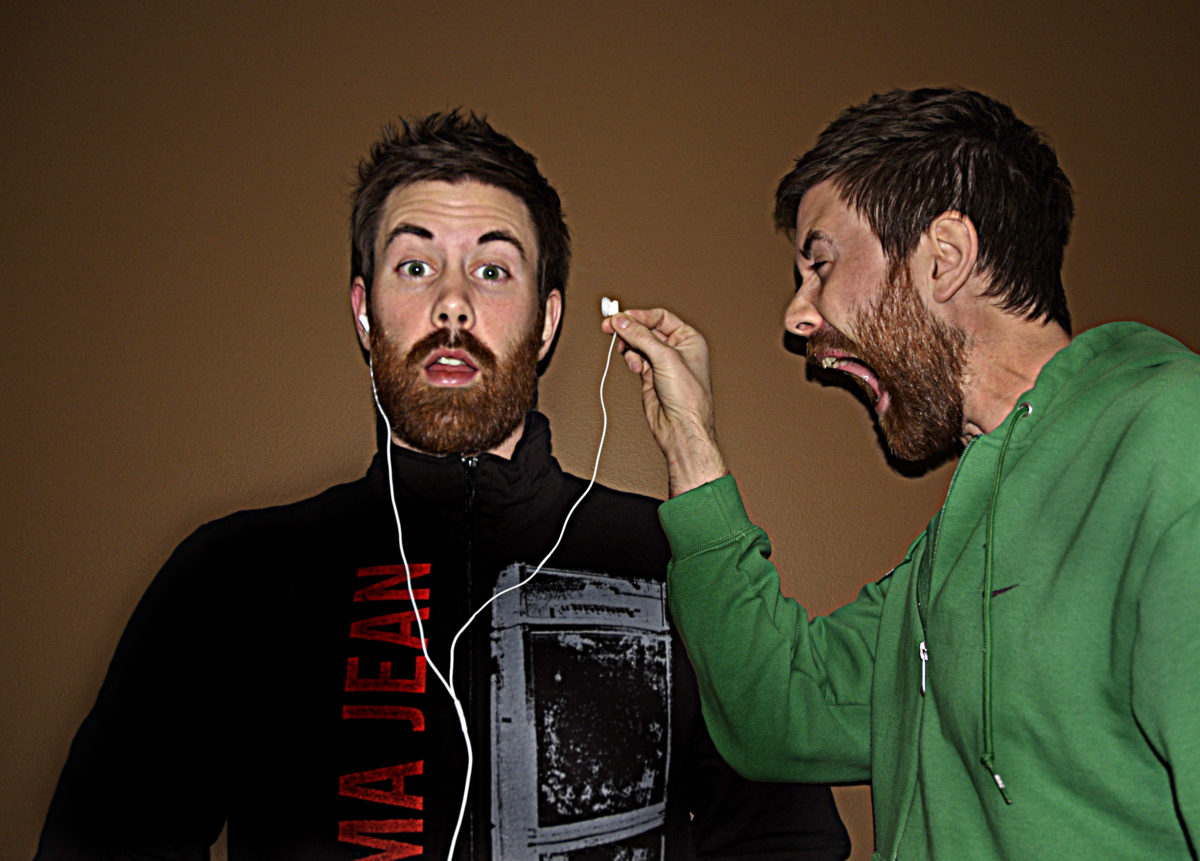
    Header photo Listen to ME! by Jonathan Powell under Creative Commons

  • ALE15 best conference this year

    ALE15 best conference this year

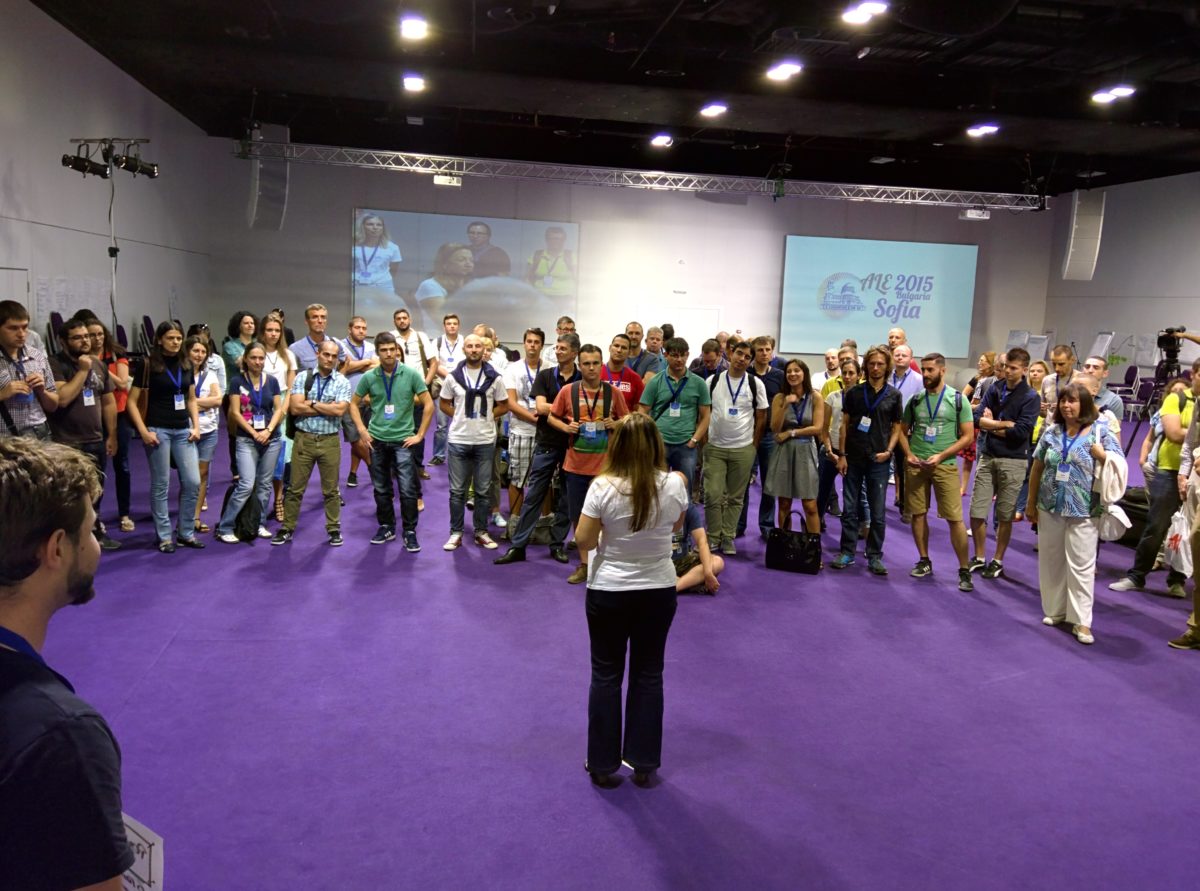
    I am just back from ALE15, the fifth edition of the self organized conference from the Agile Lean Europe network. As usual, I feel really good when I am back, as if this edition was the best edition ever… I am started to get used to this feeling, as I only missed one edition, in 2013, since the beginning of the adventure.

    Why is it so special ? And what happens there ?

    Well, there’s a lot of things that I can highlight.

    First of all, it’s self-organized. It means that anybody can contribute to the organization of the event. For each event several people gather on a sofa, and those people will work together to achieve the mission of this particular sofa.
    For example, I (with others) was involved in the program sofa, some others where involved in the finance sofa, others in the marketing sofa, and others in the spouses and kids sofa.
    When you choose to contribute to a sofa, you can contribute with 5 minutes of your time with a suggestion, or invest a lot more, the choice is yours, just know that when your drop the ball, the others must know it so they can handle.
    On this picture, you can see the list of the organizers of this year event. A big up to my peers ! It was great to do this with you !

    Second, there’s a spouses and kids program, it means that you will see kids running in the conference venue alley, attending conferences, playing games, and even speak on stages. It means that it’s a conference where you can be yourself among your peers and your family. Kids love this, as my daughter ask each year if we are going the next one. The conference is planned end August, just before the kids are back to school, especially for this purpose.

    Third, a part of the program is reserved to the open space format, so that the program of the conference is defined by the most important thing for the participant at this particular moment. This year, I had the pleasure to facilitate the open space with my friend Pablo. It was great and our experiments worked quite well.
    Experiment One, as there’s people from all over Europe (and more) we asked them to demonstrate the babel opportunity by pitching their topics first in their mother tongue and then in English. This was amazing to see the difference in body language between the two pitches, and it was a lot more energizing and fun to hear some language your are not used to hear (not at all for some).

    Experiment Two, as we were around 180 people for the open space, we knew that there will be 12 groups (at minima) in parallel and we wanted all those groups to share their findings with the whole. We asked them to prepare a restitution of their work on a flip board paper, and to summarize it with a tweet with #ale15 hashtag. We organized 20 minutes global restitution after each of the 40 minutes sessions. It worked well, it was interesting and it helped for sure to improve the participation and the quality of the work done. You can see the result if you look for the #ale15 hashtag on Twitter.
    Experiment Three, as we think with Pablo that one of the big benefit of the open space in enterprise was that the group has a common purpose, we tried to propose a common theme to the ALE15 Open Space… and it didn’t work at all… But we survive as it was a survivable experiment 😉

    And then, obviously some magical content from great speakers and from great discussions.

    Putting some words on weird feeling like Chris Matts in his opening speech on day 1, when he explained how the agile movement evolution using the adoption model and others and why all the « scale agile » thing was ahead in time suggesting framework before the stories where really there. In this blog post from Chris you can discover more in detail the idea behind.

    Or the integrating talk by Olaf Lewitz, where we experiment memorization exercise : « options have value, options expires, never commit early unless you know why » that was twitted several times, when he demonstrates that balance and polarization was wrong and that we should look for integration.

    Inspiration for our future work that we should bring slowly back in our day to day work as advised by Rachel Davies in her closing keynote speech.

    I also had the great pleasure to play once again the Deming Red Bead Experiment, great experience and great conversation. Deming Principles are still so relevant!

    What’s next ?

    ALE16 of course, you will be able to contribute to the organization of the next event by sitting on one of the sofas. Stay tuned and follow :
    Agile Lean Europe (ALE) on linkedin and/or on Twitter

    PS : This edition was quite hard on a personal level as my loving partner Isabel (in life and also in business) endured a devastating medical episode. I thank her for her support as she asked me to go for the commitment I had made to the ALE community and also to let our daughter have fun with her peers in the kids program.

  • The goal of an enterprise is to make money… or not

    The goal of an enterprise is to make money… or not

    Last week, I rehearsed a session around the evolution of organizations, methodologies and IT with some people of the Red Hat Montreal office. Thank you to them for their valuable feedback! Even if the title of the presentation was Devops and Bimodal IT, I presented some roots of the evolution of organizations and methodologies, and their short term and long term impacts on businesses.

    timeline

    I used a timeline and zome out to show previous moves, and “selected” important events, like Deming involved in the Japanese reconstruction, the new new product development game by Takeuchi and Nonaka, or The Machine That Changed the World : The Story of Lean Production by Womack and Jones.

    At the end of the presentation, there was a discussion thread around clarity of vision and goals of enterprises. One question arose that foster an animated conversation : “What is the goal of agile enterprises?”.

    This question led to a definitive answer from one attendees : “The goal of enterprises is to make money.”

    And the discussion starts…

    There was opinions like: “the others purpose are only things to hide the main goal of making money…” or “good intentions, but if we look at what enterprises are measuring, we know that money is the main driver”… and so on…

    I tried to push my opinion that money was only a by-product of a higher purpose for enterprise that operate on a different model than “making money” ones. And that it worked for those companies… People seemed not really convinced… Still some work to do on this 😉

    Featured image by Jericho [CC BY 3.0], via Wikimedia Commons

  • The dream begins now

    The dream begins now

    The first time I explain that to enable collaboration, we need to create the conditions of this collaboration between people, people approved… But I feel like it’s not really understood.

    The idea that a meeting needs to be facilitated to help participants to achieve their goals is seen as animation… Like if it was only entertainment…

    I lived an interesting experience that can illustrate this idea of “creating the conditions”. We joined friends for a weekend in an holiday village. It was a real discovery as we didn’t know the kind of village and the place.

    When we arrived by car on the car park, several employees was waiting for them with big smiles on their face. They took care to explain to the three of us that they will take care of the luggages, indicates us where to park, and how to find our room.

    The simple fact that they were smiling, welcoming, benevolent enable in a snap a total deconnection from the week. I was on holiday! Nice weather and nice place probably count also… But I am sure that it was their behavior that makes a real difference.

    The last sentence pronounced by one of them reveal their intention : “The dream begins now”.

    And it works, I was instantly on holiday, and those one and half day spend there was really restful.

    This can makes us think of the behavior we will adopt during our next appointment or meeting?

  • We trust you

    We trust you

    During Red Hat Summit in Boston this week, a documentary video was showed during the keynote sessions. This video describes the way Penn Manor school district used open source in their education project.

    Charlie Reisinger is the IT director that lead this openness strategy, also delivered a TEDxTalk in Lancaster to tell the story.

    I hope this can inspire a lot of schools to give their trust to the students and help them to develop their self-esteem and self-confidence.

    More details here: http://summitblog.redhat.com/2015/06/24/open-source-stories-penn-manor-the-power-of-open-in-education/

  • Liberté et Cie par le club de lecture

    Liberté et Cie par le club de lecture

    Une nouvelle session de notre nouveau club de lecture à Bordeaux se déroulait ce samedi 20 juin 2015. Cette fois ci, un peu moins de participants que prévu (était-ce du à un ciel trop bleu ?) Claire, Isabel, Fabrice et Patrick se joignait à moi pour échanger autour du livre Liberté & Cie. Le contraste avec le livre discuté lors de la précédente session est relevé d’entrée par les participants, le format est plus universitaire, peu d’illustrations, photos, schéma…

    Ci-dessous, la prise de notes au cours de la session :

    2015-06-22 09.30.34Les nombreuses entreprises étudiées provenant de nombreux secteurs d’activité est un aspect important pour cette mine d’or (parfois oubliée…). Le livre donne envie d’être partagé, mais il n’est pas si simple d’en provoquer la lecture et les échanges initiaux ne suffisent pas nécessairement à aller au delà de l’impulsion.

    Les points qui ressortent sont la nécessité qu’un leader déclenche la transformation, ou créé une organisation avec des principes d’organisation différents. Une organisation qui ne créée pas des règles pour les 3%, une organisation du pourquoi et pas une organisation du comment…

    Oui, je sais, il est probable que pour comprendre cela, il faille lire le livre… ce que je vous encourage à faire.

    Je termine donc avec une citation d’Isabel :

    On ne change pas les gens, mais on peut changer les conditions qui feront qu’ils changeront

    Et par l’enregistrement graphique de Claire, effectué lors de sa lecture du livre: 2015-06-20 11.07.45

  • Agile France et Le Bonheur au Travail

    Agile France et Le Bonheur au Travail

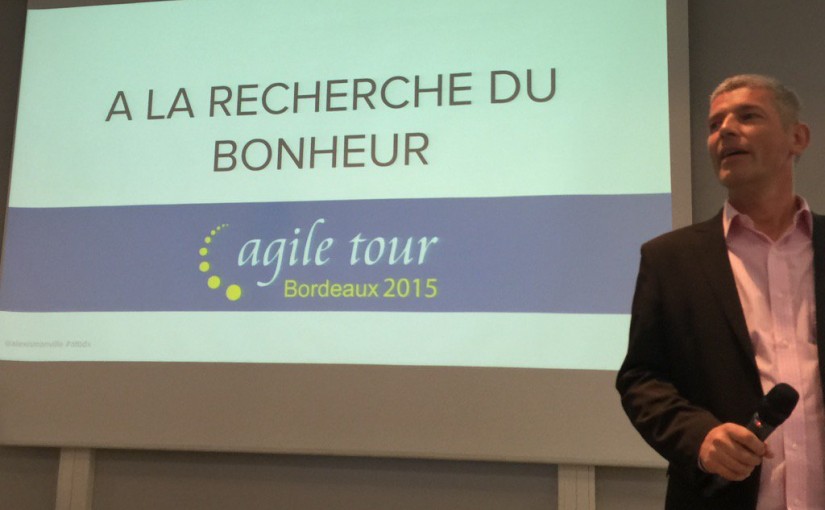
    J’ai eu le plaisir de donner une conférence sur le bonheur lors de l’édition 2015 de la conférence Agile France à Paris. Il s’agissait d’une version raccourcie et en français de la keynote que j’avais donné en ouverture lors des Drupal Developers Days : Happiness is Coming.

    J’avais choisi de couper beaucoup de contenu pour pouvoir tenir dans les 25 minutes, et il aurait fallu en couper encore…

    Un grand merci pour les feedbacks et les sourires !

  • ScrumWine #15.2

    ScrumWine #15.2

    Une nouvelle édition du ScrumWine s’est déroulée le jeudi 4 juin 2015. Nous étions pour l’occasion accueilli par CDiscount. Je remercie au passage Isabel pour l’organisation et adresse toutes mes félicitations à Damien Tourette, papa depuis la veille ! Notre hôte, Lionel Richer, expliquait dans son introduction que malgré une découverte récente de l’agile, 60 personnes travaillaient à présent en agile et que le bénéfice du rapprochement des métiers et des équipes de développement était remarquable.
    Les actualités ont permis ensuite de mettre en avant les prochains événements consacrés à l’agile. Agile France bien sur, programmé pour les 18 et 19 juin, et pour lequel j’aurais le plaisir de donner une version courte et en français de ma conférence sur le bonheur au travail (Happiness is Coming). ALE 2015 qui se déroulera cette année à Sofia, toujours au cours de la dernière semaine d’aout, évènement remarquable puisqu’il inclut époux et enfants, ce qui augmente le niveau d’énergie positive de l’événement. Je termine par une mention pour AgileTour Bordeaux qui a annoncé la date de la prochaine édition pour les 30 et 31 octobre 2015.
    Olivier Patou a relevé avec succès le challenge de la présentation en 5 minutes avec une présentation sur les histoires utilisateur : Comment faire de bonnes User Stories ?
    Le programme proposait ensuite 2 sujets en parallèle :
    – de l’OODA loop à l’innovation collaborative par Emmanuel Henriot, session qui a reçu un très bon accueil, et j’ai donc essayé de convaincre Emmanuel de la proposer pour AgileTour Bordeaux, car je n’ai pu y assister… puisque je proposais aux participants de jouer à :
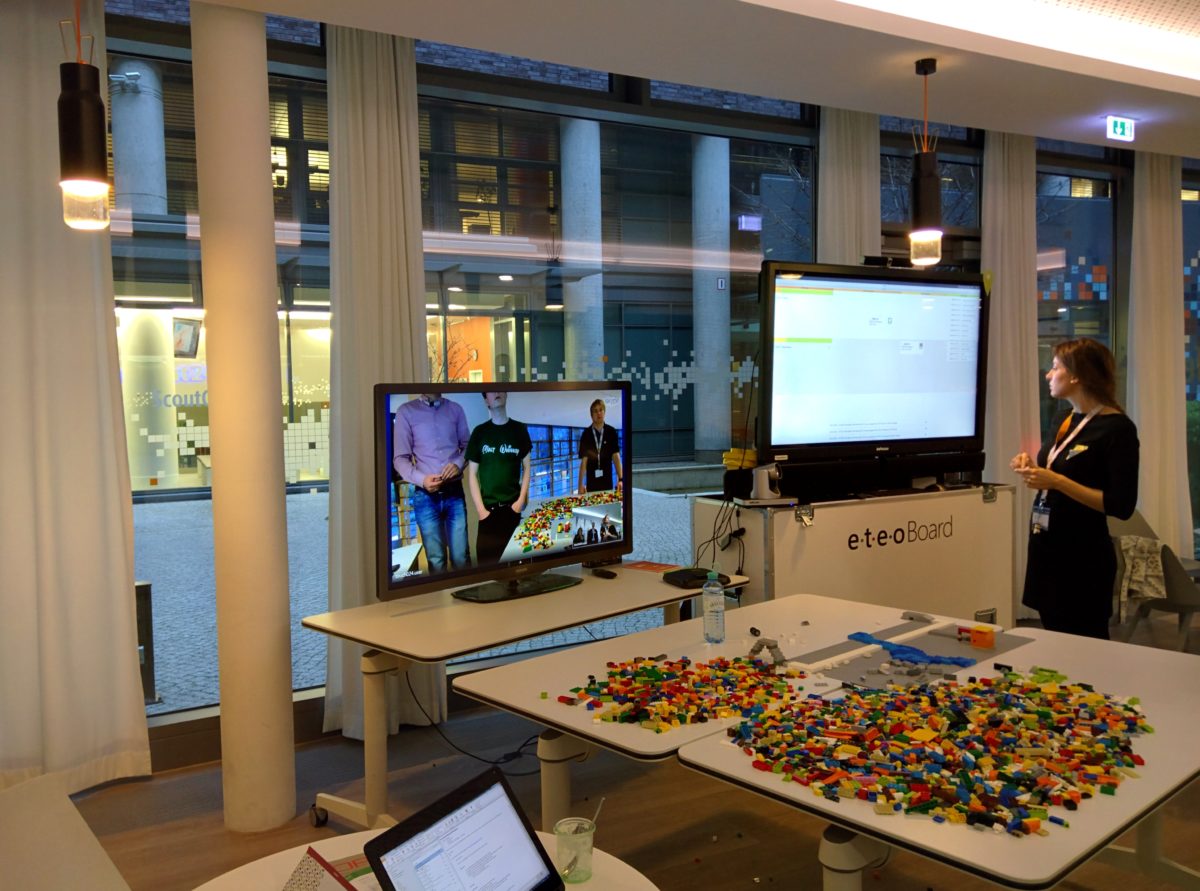
    Lego4Devops, un jeu simulatif utilisant les mêmes boites de Lego que le célèbre Lego4Scrum et dont j’avais participé à la mise au point lors de la dernière édition de Agile Games France. La version 1.0 est donc bien jouable sur un temps court, moins de 60 minutes, mais il semble préférable de pouvoir y consacrer plus de temps afin d’être moins pressé pour les explications initiales et avoir l’opportunité de réaliser plus d’itérations. Nous avons eu la possibilité d’avoir 2 équipes de 7 joueurs en parallèle, ce qui nous a également permis d’identifier de nombreuses possibilités d’amélioration. Nous sommes en train de compiler de façon collective ces idées d’amélioration afin de les proposer pour une prochaine version. Merci à Christophe Héral pour avoir contribué à la facilitation du jeu, et bien sur merci à tous les participants !
    Rejoignez le groupe pour poursuivre la conversation et construire la prochaine édition :
    https://groups.google.com/forum/#!forum/sug-bordeaux

    2015-06-04 18.26.30Et merci à Emma pour son aide 🙂

  • Happiness level during your last quarter

    Happiness level during your last quarter

    Two weeks ago, I facilitate a quarterly meeting of a distributed team. They met in person only once a quarter during this meeting.

    I chose to start the meeting with an exercise to share their feeling about the last quarter. I asked:

    Can you draw a line representing your happiness level during this period?

    The levels are represented by weather symbols that make them more understandable for the people of this team who are coming from several countries in the world. They almost all chose to comment the drawing when they were drawing the line, and when they were not, I asked them to comment, and after that I thank each of them for sharing.

    I was amazed by the amount of information shared during this simple exercise about their general feeling about their work, what make them tick from holidays to specific achievements, learnings, relation established with other people and so on…

    I feel also that the state of mind of the whole group was best prepared to review the results achieved during the last quarter.

    On the second day, in front of the drawing, I start by thanking them again to have shared their feelings about the last quarter and I asked them to use one or two post-it notes to answer this second question:

    What are you proud of?

    Once again, a good question to understand what’s important for the individuals in the team, and a good way to set the stage for the day.

    If you try this, I would appreciate your feedbacks.

  • Self-driving cars and basic income

    Self-driving cars and basic income

    In 10 to 15 years, self-driving cars will be a reality in our world. It means that, people transportation and goods transportation will be done by those self-driving cars and trucks. The positive consequences are numerous and will be highlighted by manufacturers and service providers, like the possibility to order your vehicle from your phone and your computer. We will be able to remove traffic lights, and there will be no more (or less) traffic jam, less car accident…

    We have seen with the emergence of Uber and other apps that can help you to order a car with chauffeur that the market was disrupt heavily. Imagine just one second that the car you will order with Uber will be self-driving ones in a few years from now.

    In one article published on Medium, Tanay Jaipuria, questioned the decisions that will be made when it will come to the programmation on those robots. Isaac Asimov covered a lot of complex cases in his novels, now it’s reality…

    One of the consequence of those self-driving cars will be unemployment of millions of people that are taxi or truck drivers. It’s not so easy to find the exact number of truck drivers in the world. More that 3.5 million in the US, so I suppose that there are more in Europe and Asia, as the number of truck registrations is 50% higher in those areas.

    Millions of unemployed people that will not so easily find a new activity.

    We can say (or think) that it’s not our fault or our responsibility. I believe that we should care about this problem and put in place an unconditional basic income for every people that will cover the basic needs, and give time to people to find an activity that can suit them.

    A basic income is an income unconditionally granted to all on an individual basis, without means test or work requirement. More information can be found here.

  • Don’t change my mindset, I am not that open

    Don’t change my mindset, I am not that open

    Nick Barcet and I were schedule for the last talk session of the Openstack Summit in Vancouver (Of course, design sessions will continue on Friday).
    When we submitted the proposal for this session we were looking for a way to help our co-contributors to the openstack project.
    The way we think it can be the more helpful was to share our way of working together to foster change in the organizations of the customers we work with.

    The recording of our session has already been published by the Openstack Foundation, and is available here:

    Our slides are available there:

    Your feedbacks are welcome to continue the conversation!

  • Bridges and Hierarchy

    Bridges and Hierarchy

    Mark McLoughlin delivered the Red Hat Keynote, on the morning of the second day of the Openstack Summit in Vancouver.

    During the afternoon, he delivered a more intimate talk about the governance of the Openstack project.
    The main idea is that, the new Big Tent organization model will allow the emergence of new projects, and it can be the time to redefine the main values that will help the project contributors to take the good decisions.

    Mark started his talk refering to the Keynote Eben Moglen gave in Auckland at LCA 2015. In this keynote, Eben Moglen explained that the hierarchical organization model that we all know very well, is the model of the 20th century, and that the organization of the 21st century will be based on transparency, participation and non-hierarchical collaboration, like it is in free software.

    Mark continued his introduction with a reference to Andy Hunt’s blog post, The Failure of Agile. Andy Hunt is one of the original writer of the agile manifesto, so when it came to discuss agile, we can at least consider him seriously. The main point of this article is that a lot of people lot’s the agile way by focusing on a set of practices, forgeting the agile values and principles. They are focused on doing agile, and they forgot that depending on your experience, if your are a beginer in a practice, you need clear directives to learn how things work, and more and more your skills are developing you will need coaching on the go, and then you will need some support, and then you will be fully autonomous and during this journey you will have adapted the initial set of practices living the agile values and principles.

    That reminds me the stickers I had printed for an agile conference:
    sticker-agile-tour-2013-v2
    When I recieved the stikers at this point, I was thinking… humm I should have crossed also “be” and put “learn” instead… because this is really what we are doing here…

    So Mark proposed those 4 high level ideas that can become the high level principles we can refer to as an Openstack contributor :

    diverse interests, but a shared vision, based on consensus
    individuals and interactions over processes and tools
    leadership through empowerment, empathy and trust
    every advance must ultimately iterate from the bottom up

    And I encourage you to watch the talk to understand the details of his proposal.