Author: Alexis

  • Team Agreements

    Team Agreements

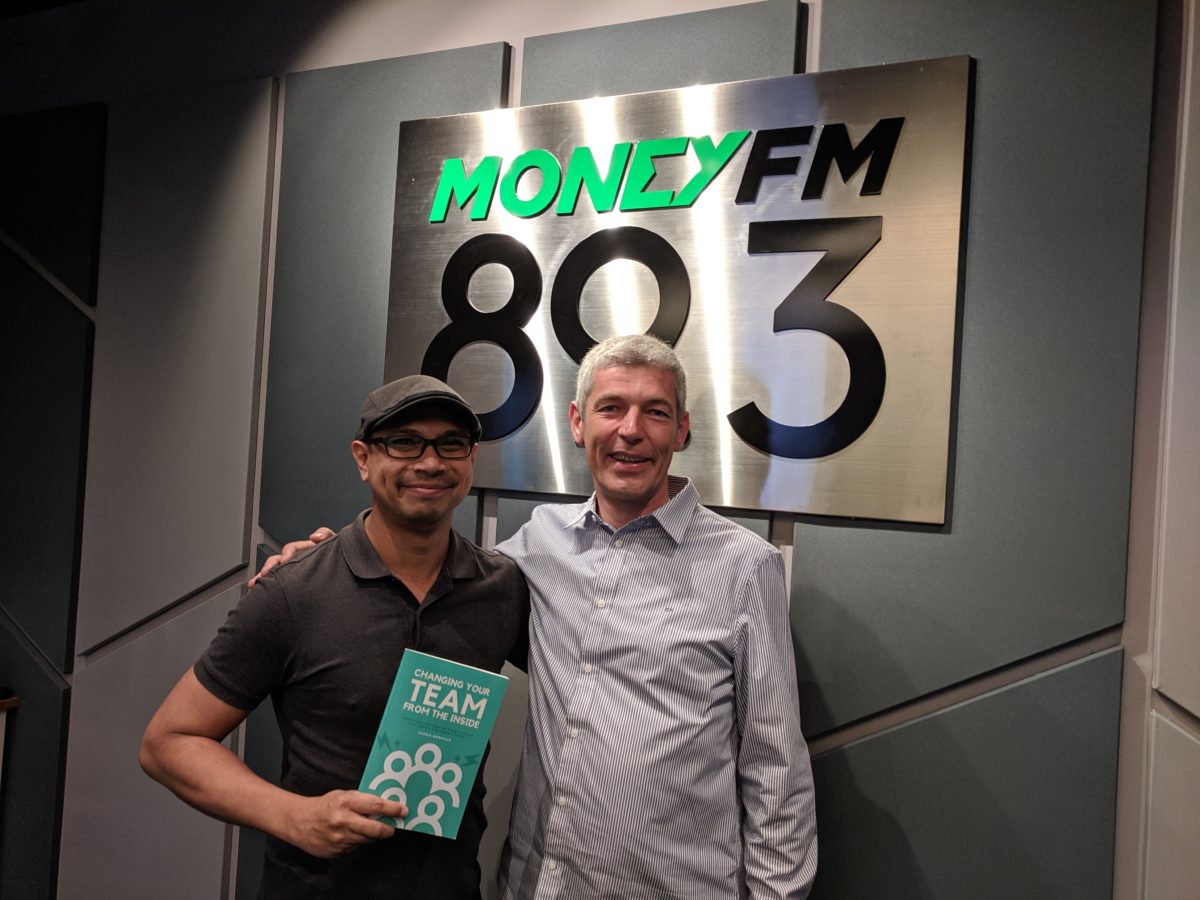
    In the book, Changing Your Team From The Inside, I touched several times the notion of Team Agreements.

    Team Agreements are critical to the success of a team. By writing your team agreements, you define your standard. You set the baseline that you will improve in the future.

    In the team agreements, you answer the question: How do we behave?

    What aspects do you want to cover in your team agreements?

    How do the team handle information?

    • What kind of information do we need to achieve your work?
    • How do we share the information inside and outside of the team?
    • How do we know what everybody is doing?

    How do the team communicate.

    • What are the tools the team uses to communicate?
      • Phone or video conference: why do we prefer phone calls or video conference for some conversations?
      • Instant messaging: for what kind of message, what time of the day…
      • Email: do we use emails inside the team or do we communicate using the tool we use to track our work? Do we use bcc?
      • Do we always reply to all calendar invitations?
    • When do we want not to be interrupted? How do we signal that to others? How do we handle external interruptions? Do we nominate an interruption handler?

    How do we collaborate.

    • How do we produce documents, code…
    • When do we use pair programming or mob programming?
    • Why do we have meetings? What are their purposes?
    • How do we behave in meetings? How do we handle devices? How strict are we on time? On attendance? On multitasking? On side conversations?

    How do we provide or receive feedback.

    • Do we have a specific time, setup, tools… to provide or receive feedback?

    How do we handle conflict?

    How do we manage performance?

    How do we hire new team members?

    The list of questions could be infinite. The practice is beneficial when you start small and when you review your agreements regularly. This is a place for the team to experiment with various approaches and to improve.

    For example, with a team in which half the people are collocated and the other half distributed all over the world, we change our way of handling meetings. The agreement is now that we behave as if everybody was remote and join the video-conference from our offices. Why are we doing that? Because we noticed that when the conversation become passionate in the meeting room, we were ignoring the “remotees” that were enabled to have a say in the discussion.

    It is also very useful to define team agreements for meetings that will gather people from different teams or organizations. To do that, try the Social Contract, shared on the Open Practice Library.

    Featured image is by

  • Can we be offended by change?

    Can we be offended by change?

    I woke up one morning, and there was a heated conversation on my favorite mailing-list. Someone had made a point that for the annual donation, and among other possible charities, we should pick Sandy Hook Promise.

    Sandy Hook Promise (SHP) trains students and adults to know the signs of gun violence. SHP develops and delivers community programs that help identify, intervene and help at-risk individuals; promotes gun safety practices that ensure firearms are kept safe and secure; and advocates for state and federal laws and policies in the areas of mental health & wellness and gun safety that result in the reduction of gun-related death and injury.

    The foundation is named after the elementary school in which in 2012, a 20-year-old man shot 20 children between six and seven years old, and six adult staff members.

    If you don’t live in the US, it is hard to understand why the topic is controversial. I think I still don’t really understand.

    The basic reasoning for people outside the US could be summed up as:

    • Guns are designed to kill people,
    • So if we want to avoid people to be killed,
    • We need to control the possession of guns strictly.

    Those kinds of policies are adopted all over the world.

    We adopted similar kinds of policies for other technologies that could be harmful to others.

    We adopt strict policies and regulations for cars. You need to learn how to drive, pass an exam to get a license to drive, contract an insurance to be able to drive a car. The car has to respect certain norms to be allowed on public roads and needs to be registered in the state where you live.

    This sounds really simple. And you could say that we could adopt exactly the same mechanism for guns.

    But it is not what happens.


    Why was the conversation heated?

    Because someone said, he was offended by the proposal to have someone advocating for something that was going against his values.

    Offended? Really?

    My first reaction was to say that you cannot be offended! You can disagree with financing that foundation, but you cannot be offended! By the way, that foundation is not advocating for gun control, even if it is true that a second Sandy Hook foundation is doing precisely that. But even if it was a foundation advocating for gun control, you cannot be offended. You can disagree and not vote for that choice. You can even advocate for people to give money to the NRA. But I still don’t see how you can be offended.


    I reflected on that notion of being offended when a suggested change conflicts with what you consider is who you are.

    I realized that I found myself in situations similar where the conversation became suddenly emotional because I was trying to explain to managers that our goal was to aim toward self-organization. Of course, it was less dramatic, and no lives were at risk in that context. But it seems the mechanism was similar.

    From my perspective, it was a progressive change in which managers and employees will have to learn to work differently. I had presented all the rationale to support the idea. It will be better on all the aspects that we cared about: for people, for innovation, for the quality of our delivery and so on.

    For some managers, the proposal attacked who they were. The proposal attacked how they defined themselves.

    They did not say it that way, but I guess they were offended.


    To overcome that, we worked with the whole team on defining the roles that people adopt. Our goal was to separate the people from the role or roles they could play in the organization. You can achieve your goal with other means.

    What is your goal as a manager? What are your motivations? There were multiple goals and multiple motivations expressed. We used the Moving Motivators to surface the differences between people. Globally they wanted to have an impact on the success of their teams to generate success for the company.

    The proposal was made to achieve exactly that. They could achieve exactly that by changing the mean, their way of working, their way of managing and still achieve their goals.

    Some managers were already operating in the proposed way, some embraced the change immediately, some were skeptical and took more time, and unfortunately, some left the company. It was not possible for them at that time to accept that change.

    You can read more about how their roles could evolve in that post: Could your team be managing itself?

    (and you will be able to read much more in the upcoming second version of the Chapter 10 of Changing Your Team From The Inside)

    When we are exposed to opinions, propositions, ideas, that are conflicting with our current set of knowledge, it is difficult to take a step back and exercise our critical thinking in a rational way.

    Why should we continue to do something the same way?

    Can we change the mean and still achieve our goal?


    Can we apply that approach to the more dramatic problem of guns?

    Maybe. The Legal Information Institute of the Cornell Law School explains:

    The Second Amendment of the United States Constitution reads: “A well regulated Militia, being necessary to the security of a free State, the right of the people to keep and bear Arms, shall not be infringed.” Such language has created considerable debate regarding the Amendment’s intended scope.

    The goal is the security of free State.

    Can we ensure that without guns? Or does treating guns like we treat cars change anything in achieving that goal?

    The warning of the existence of “considerable debate” is speaking loud about other underlying goals. I know that I will not solve that massive problem in a single blog post.


    I hope that I will have helped you consider not only the rationale aspect of a proposed change but how the proposed change can trigger reactions that could be difficult to understand, and even to express for the people involved. As an agent of change, you want to consider that.


    Your thoughts are welcome as usual!

    Thank you!


    Featured image is by

  • A live coaching session with John Poelstra and Michael Doyle

    A live coaching session with John Poelstra and Michael Doyle

    A few months back, I was on The John Poelstra Show to discuss my book Changing Your Team From The Inside. A few weeks back, I also advertised how John Poelstra and Michael Doyle, discussed Ego is the Enemy during one of the episodes of the show.

    I love working with John and Michael. They are both great coaches. We are well distributed over the globe, Michael is in Brisbane, Australia, and John is in Portland, Oregon, USA. They helped me reviewing my book to prepare the version 2.0 that should be available soon. In whatever form you bought the book, you have unlimited access to the updates of the electronic version. If you don’t know how to access it, drop me a note at alexis@monville.com. A side note to say that we can do meaningful work even when we are a few timezones away (I am based in Boston).

    This week John and Michael did something crazy!

    Have you ever wondered how a coaching session could work? How could it be beneficial to someone?

    They recorded one coaching session focused on finding your values.

    The result is amazing. In the episode, you will find why value matters and how to find them.

    You will also notice the value of the coaching process. When the coachee think he has a good understanding, he believes he is now ready to do some work by himself. John finds his way to go just a step further to create a commitment that will ensure that the coachee will be able to make productive work on himself after the session.


    Featured image is by

  • I still have feedback

    I still have feedback

    I continued to think about feedback and had multiple discussions triggered by the article from the Harvard Business Review: The Feedback Fallacy and my post about it. Thank you, for all those discussions, they are precious.

    In addition to last week post that you can find below, I would like to add that, yes you can provide improvement feedback. There is, at least, one condition. The person needs to know how to handle negative feedback.

    If I can take all feedback as “inputs,” whether they are positive or negative, thank the person that gave me the feedback. And then, create a space in which I can digest the feedback, acknowledge the emotions associated with that feedback, think about it. Then, I can probably act appropriately.

    I feel that it is easier when you have an existing relationship, and you trust the person.

    When I receive feedback from people I don’t trust, or that I think manipulative and insincere, it is harder not to react, it is harder to create the space needed to acknowledge emotions, and to think about what is going on.

    What are your thoughts about this?

    As usual, comments, email, Linkedin, Twitter, or even phone, your preferred means of communication is perfect for me.

    Featured image is by

  • I have some feedback

    I have some feedback

    The fifth chapter of Changing Your Team From The Inside is titled: Care Personally. Why that? Because, at the time I was reviewing the book to prepare its first publication, I read Radical Candor a book by Kim Scott.

    I changed the quote starting the chapter with this one from Kim Scott:

    “The meaning of Radical Candor is care personally, challenge directly, and when you do both at the same time, that’s good.”

    You can’t give any valuable feedback to someone you don’t care about. Furthermore, it is extremely difficult, to receive feedback and use them effectively, when they come from people with whom you are not connected enough.

    The March-April 2019 issue of the Harvard Business Review displays a catchy title on its cover: Why Feedback Fails.

    The article, The Feedback Fallacy, explains that focusing people on their shortcomings doesn’t enable learning; it impairs it.

    Instead, the authors, Marcus Buckingham, and Ashley Goodall recommend to:

    Look for outcomes.
    Excellence is an outcome. When you see a colleague do something excellent, stop her or him and say it.

    Replay your instinctive reactions.
    Say it by expressing your personal reactions to what just happened. You are not trying to fix them, you make them realize the impact of what they just did.

    Never lose sight of your highest-priority interrupt.
    Looking for excellence should be your highest-priority interrupt. Mine is naturally precisely the opposite. I can see instantly what is not going well… Some personal work to catch me before reacting too fast.

    Explore the present, past, and future.
    If colleagues come to you with a problem, put them in the right mindset by having them state three things that are working well for them now.
    Then explore the past: “When you had a problem like this in the past, what did you do that worked?”
    Finally, turn to the future: “What do you already know you need to do? What do you already know works in this situation?”

    I realized when I read the article, that the most efficient feedback I gave in the past is in fact following exactly that pattern. As I am reviewing the book for the second edition right now, I added to my list to review the chapter to take into account those findings.

    What are your thoughts about this?

    As usual, comments, email, Linkedin, Twitter, or even phone, your preferred means of communication is perfect for me.


    Featured image is by

  • What Spectre and Meltdown teach us about change.

    What Spectre and Meltdown teach us about change.

    Spectre and Meltdown are among the famous microprocessors vulnerabilities. Researchers spend their days to find those vulnerabilities in the very complex systems we build.

    The day before the micro-architecture workshop related by Hugh Brock in this post, he organized a lunch and learn with the speakers Daniel Gruss and Daniel Genkin, who are among the ones who uncovered Spectre and Meltdown.

    The complexity of the systems comes from continuously adding more features. The systems become so complex that we are not able to understand fully how they work.

    In the session of questions and answers, Daniel Gruss was asked if one particular processor was condemned and if it could be better to restart from scratch. I capture two important learnings from his humoristic answer.

    He said first something along those lines. Just imagine that you go to see your doctor. You are sick. It is bad. Would you prefer your doctor to try to fix you or to tell your parents that they should start again from scratch?

    Change is not necessarily easy or hard. It is the only reasonable thing to do.

    First learning is that you should probably accept that what you build, either an organization, a product or a service, is not perfect. And so, that, you have to put the feedback mechanism in place to learn and adjust.

    Second learning. It is not only one processor or one manufacturer. They are all working with the same approach of incremental optimizations. But each optimization also comes with potential flaws. They are also all conducting their work behind closed doors which prevent other pairs of eyes from detecting the problems before it is too late. A good incentive to use an Open Source Way.

    I hope you will have a great month of March! Last month of winter for those in the northern hemisphere! Yeap, I am done with snow, and yeap, it is snowing right now 🙂

    A friend or colleague forwarded you that email? You can subscribe to the mailing-list here.

    A few more things to share:

    I had the pleasure to speak at Boston Spin and UQAM in Montreal in January. I used an evolution of the talk used several times in Europe at the end of last year. I am working on the keynote talk I will use for an upcoming event. If you want to have me deliver it for your event, let’s discuss!

    To make a connection between the Management 3.0 practices and the Open Practice Library, I published the practice recommended in chapter 3 of my book. What about you try that practice?

    You have to listen to the latest episode of the John Poelstra Show in which he is exploring the ego with Michael Doyle.


    Header photo by

  • How to keep up with your 2019 resolutions!

    How to keep up with your 2019 resolutions!

    Last year, I opened a brand new gym club on January 2nd! That was an immediate success with thousands of people showing up every day! At the beginning of February, I remodeled the place into a cocktail bar to satisfy the needs of my customers…

    Yes, it is a joke. But, what makes keeping up with our resolutions so hard?

    Kelly McGonigal has an answer to that question. Kelly McGonigal, a Stanford University psychologist, taught the course “The Science of Willpower” for years, and she also published a book, The Willpower Instinct, that explains the science of self-control and how it can be improved.

    We don’t keep up with our resolutions because we don’t pick the right ones for us. We choose things that we don’t want to do. Our “longer-term self” and our “shorter-term self” conflict the next day. We skip the day. We are then harsh our ourselves. It triggers guilt. Which in turn means that our “shorter-term self” seeks immediate comfort. The chances are that it finds it in the exact thing we want to stop doing or quit.

    Her practical tip is to change the questions we ask ourselves. At the end of 2019, on January 1st, 2020, looking backward, what are you going to be grateful that you did? Is there a change you know that you’re going to be glad you made? What would that feel like?

    The answers to those questions are better resolutions that you really want to keep.

    As hope is not a strategy, you still need to put in place a system that will help you keep with that new habit. One good strategy is outsourcing some of the willpower by involving a friend or a family member to do the activity with you. Another one that I particularly like is to put a calendar in a visible place and tick the day each time you succeed. And remember, don’t be hard on yourself when you miss a day. Accept it with self-compassion and go for it the next day!

    I wish you a Happy New Year with success in keeping up with your resolutions!


    A few more words:


    Featured image is by

  • Happy holidays

    Happy holidays

    I guess that a lot of you are getting ready for the upcoming holidays. I wish you will have some good time with your families and friends.

    Six months after the first publication of Changing Your Team From The Inside, I counted the published versions. There are 14 versions of the book published so far. I continue to work on improving the book to take into account your feedback. So, keep them coming and thank you!

    Two fantastic coaches are reviewing the book chapter by chapter right now. I will tell you more about them next year. Our goals are to produce an incrementally improved version and to collect the improvements needed for a second edition. And, of course, whatever the version you bought, you always have access to the electronic latest version. Drop me a note if you don’t know how to get it.

    I chose to end all the chapters of my book, Changing Your Team From The Inside, with a section titled “Summary and Action”. The goal of those sections is to give you keys to act immediately on your environment. Learn more about one of the key practices and how readers are using it in this article.

    Another book discussion club chose my book for their monthly discussion, and they even took the time to send me detailed feedback. Thank you very much!

    If you want to do more to spread the message of the book, a review on goodreads would be great! I suggest a five-star rating 🙂

    I will give conferences in Boston and Montreal in January, more details in the next newsletter.

    Happy holidays!

    PS: If a friend forwarded this to you, you can sign up to get the email yourself here.


    Featured image is by

  • Discovery One on One

    Discovery One on One

    I chose to end all the chapters of my book, Changing Your Team From The Inside, with a section titled “Summary and Action”. The goal of those sections is to give you keys to act immediately on your environment.

    I regularly received feedback about how great it was to have exercises to practice directly and impact your “day-to-day.” Some of the answers to the question I asked immediately after receiving those feedbacks still surprises me.

    The kind of question I asked: “have you tried some of the exercises?”

    The answers I received were along the line of: “no, oh well, not yet, but I will.”

    Some people told me they were not ready to act when they read the book and added the exercises to their backlog of things to try. Some others told me they were too curious to read the next chapter to take action immediately.

    The great thing is that a lot of people told me how great it was because they tried one exercise with great success!

    Mario Esposito tried the exercise from chapter 5. The practice is a way to guide one-on-ones when meeting new people. Mario worked that with his team with great success. He even printed the cards and adapted the experience section to cover past, present, and future, see the picture below.

    Mario told me: “I used it once again today, for the onboarding of a new collaborator who had just joined the team… I tell you only that after 40 minutes we were already like two best friends! Really powerful this workshop!”

    Let me tell you more about the exercise.

    When you don’t know where to start in creating a relationship with people, you can use the help of a structure like what Portia Tung proposed in her book: The Dream Team Nightmare.

    I used the approach when I was the new person in a company. I was tasked with creating and nurturing an agile culture. Of course, some people were enthusiasts, whereas others were a bit skeptical. I planned one-on-ones with all the team members.

    To prepare the agenda for the meeting and to make the work visible, I wrote on three mini sticky notes the three headings that give a structure:

    • To Do
    • In Progress
    • Done

    The headings are at the top of the three columns of a virtual kanban board that you will form on the table of the meeting room that you will use.

    Then, as advised by Portia, I wrote the topics, one per sticky note:

    • Ice Breaker
    • Professional Background
    • Agile Experience
    • 3 Wishes
    • ???

    The sticky notes are the proposed plan for the conversation. We start the meeting with all the notes in the To Do column, progressively move the card to In Progress, and finally to Done when we covered the topic.

    Let’s begin with the Ice Breaker. Move the note to In Progress. The Ice Breaker is a game in which we take turns asking each other questions. We only have three questions each, and each person has the right to ask a different question. To start with, Portia Tung proposes those three questions:

    • If you could do anything in the entire world other than your current job, what would it be?
    • What do you spend most of your spare time doing?
    • What’s your favorite holiday destination?

    Those are great questions, and you will see that you will learn really fast new great questions, thanks to the questions your co-workers will ask you. You will also learn a lot about yourself and the first impression you have on people because of the questions people are asking.

    Over the years, I have asked, or I have been asked, questions like:

    • Have you recently thought, “I wish I had done that?”
    • Are you afraid of anything?
    • How do you measure your success?
    • Are there things you don’t know that you feel you should know?

    Once the Ice Breaker is Done, you pick the next note in the To Do column and move it to In Progress: Professional background. You will now share your work history that led to your current role.

    In the context of my mission, the next note on Agile Experience was crucial to assess the level of experience and understanding of the other person. I had once, in another context, an engineer, specialized in quality assurance, who told me in that section: “My last experience with agile is simple; the agile guru explained that our way of working, separating development and quality assurance, was the root cause of all the problems.” I waited a second before saying anything. I tend to think that separating people in silos is a quite common cause of problems in an organization. The engineer continued: “And then our manager fired all the quality assurance engineers, and that’s how I moved to this company, and so I guess that your mission will be to fire us.” You can see that investing some time in that exercise could be wise. It has always helped me. And I regret each time that I cut corners and don’t invest enough time in getting to know the people I will work with.

    Time for the 3 Wishes! You end with another game, asking a question: “If you could have three wishes for transforming your daily work and/or workplace, what would they be?” Once again, what the people say here will teach you a lot about the organization and their current mindset.

    The last note, with the three question marks, is a wild card to allow the other person to propose any additional topics to discuss. People will sometimes have nothing more to say, and sometimes they will suggest a topic that could be useful to cover in another meeting, not necessarily one on one.

    I am delighted to hear your feedback about the book, and especially about the exercises! I think I will put your stories about the activities in the next edition of the book!

  • Time flies and I wanted to tell you a few things about success

    Time flies and I wanted to tell you a few things about success

    One of the last chapters of Changing Your Team From The Inside is about success. Specifically about measuring success. In that chapter, I relate how a team started to adopt OKRs. While I was reviewing that chapter, John Doerr published Measure What Matters, and I rushed to read the book as I wanted to check my knowledge with someone who inspired Google and a lot of other companies to use OKRs.

    One of the readers of the book told me that I should have started the book by that chapter, and I have to admit that I hesitated to change the order to have the opportunity to figure the quote from Clayton M. Christensen which is coming from How Will You Measure Your Life?

    Last month, someone recommended me to read Radical Focus by Christina Wodtke. The book starts with a business novel and goes through the process of defining and using OKRs. This is a very short book that I recommend if you are interested in achieving your goals with your team. I also suggested the book to one book club, and we start the discussion on that book tomorrow! I am eager to hear what are the perspectives of the other readers.

    Focus is one of the key factors highlighted by Richard St John in his 3-minute TEDTalk from 2007.

    After The top requirement for high-impact teams, and Could your team be managing itself? I published What a Coding Dojo taught me about agile on opensource.com. In the article, I go back to why It’s essential to value individuals and interactions over processes and tools, also known as the first value of the agile manifesto. The article made it to the top 10 this week. Thank you for your support, I really appreciate your comments, likes, and shares!

    I want to finish that newsletter with a big thank you to John Poelstra and Lisette Sutherland. I enjoyed the podcasts recorded with them!

    As usual, I will be happy to hear from you, please answer to that message, or send me a message on Twitter or LinkedIn. I will be glad to answer your questions or read your feedback.

    If a friend sent you this message, you could subscribe to the mailing-list following the link, yes you will have to scroll a little bit.

    PS: I will be traveling to Germany, Switzerland, and France starting at the end of the week. I will speak at a meetup organized by the CARA in Lyon on November 12, and at agile conferences: Agile Grenoble on November 14 and 15, and at Agile Rennes on November 23 and 24. Add the sessions to your agenda!

  • Could your team be managing itself?

    Could your team be managing itself?

    I was engaged recently in a passionate conversation ignited by a simple comment: “A team has to be managed.” The comment made me think I wasn’t on the same page as my interlocutor.

    I was discussing the importance of designing organizational roles that won’t become bottlenecks (roles that won’t prevent the organization from delivering efficiently or to adapting quickly to changes). In classic organization design, we tend to think that designing boxes on an organizational chart and putting great people in charge will solve all our problems. That approach could work in static environments, where what you have to deliver is defined once and for all.

    But if your environment is continually changing, you need to adapt your value proposal to those changes. Your organization needs to be adaptable.

    My interlocutor was on the path to designing the boxes of a new organization. On his radar were managers that will have full responsibility for certain groups and team leaders with full responsibility of the teams making up those groups. Static groups, static roles, static functions.

    But you can’t achieve a capacity for adaptability in your organization if you rely on overloaded people dealing with multiple responsibilities. I suggested an alternative: Self-organizing teams designed around roles that are not bottlenecks, roles that team members could take either full-time or for a portion of their time.

    Unfortunately, my interlocutor jumped to the conclusion that my goal was to remove all managers and team leaders from the organization—as if self-organizing teams and management were somehow mutually exclusive.

    Not exactly.

    Managing the self-organizing team

    The Open Organization Definition lists five characteristics as the basic conditions for openness:

    • Transparency
    • Inclusivity
    • Adaptability
    • Collaboration
    • Community

    I’ve recently discussed the importance of making work visible when attempting to achieve transparency and collaboration at scale. Here, I’m more concerned with adaptability—creating teams without single points of failure, teams better able to adjust to changing conditions in dynamic environments.

    I agree that a team has to be managed, and I think many of the activities we see as the sole responsibility of the managers or the team leaders could, in fact, be delegated directly to the team—or to team members that could effectively deliver the activities serving the team.

    So from my perspective, a team has to be managed, but a large part of that management could be done by the team itself, creating a self-managed team.

    Let’s review some of those activities:

    • understanding the business and the ecosystem the organization evolves in
    • understanding why we provide solutions, products, features, services and formulate a clear vision
    • defining what needs to be delivered and when it should be delivered
    • determining how it will be architected
    • identifying how it will be implemented
    • defining how it will be documented, demoed, tested
    • distributing the work between the team members
    • delivering the work
    • implementing the documentation, testing
    • presenting the demo
    • collecting the feedback from users and stakeholders
    • ensuring that the result of the work is continuously flowing to the customers or users ensuring that testing is automated and triggered for each and every change
    • improving the way the team is working and increasing its impact and sustainability
    • improving the efficiency of the larger system formed by the different teams
    • supporting customers and partners who use the product
    • fostering collaboration between users, customers, and partners in the defining and implementing the product or service
    • defining the compensation of team members
    • controlling the performance of team members
    • supporting and developing people in the team
    • hiring people

    When I look at those activities, I see some that could be delegated to a system put in place by the team itself—like the distribution of work, for example. The distribution of the work can be made obvious for team members by simply making the work visible to everyone.

    I also see activities that are difficult to move away from managers, like managing the compensation of team members (because it would require building a compensation system that’s more transparent, which is difficult when you don’t start from scratch due to preexisting discrepancies in the compensation of people).

    I see activities that are focused on users and the why and what the team is delivering. On some teams with which I’ve worked, those activities are delegated to a team member taking, for example, the role of User Advocate or Product Owner (to use the Scrum terminology).

    I see activities that are focused on how the team is working. Those activities are delegated to a team member taking, for example, the role of Team Catalyst or Scrum Master.

    In both cases, their role will be to ensure that the activities are done by the team, not necessarily to handle everything by themselves.

    By looking at the activities in more detail, I can envision many of them being handled by team members as part of their current role, or in a new role.

    Giving managers or team leaders the ability to consider the activities for which they’re accountable and the activities they can delegate to the team can remove the bottlenecks and single points of failure that currently exist in some organizations.

    Which activities in your organization could a self-organized team handle best? What have I left off my list? I’m interested interested in hearing from you.


    The post was originally published on opensource.com on August 14, 2018.

  • The top requirement for high-impact teams

    The top requirement for high-impact teams

    What is the top requirement for high-impact teams? When I was recently asked this question, I started making a list.

    • You need to know why you are doing what you are doing, and everyone on the team needs to know what that is.
    • You need to trust the people on the team. Trusting them is connected to personally caring for each member of your team.

    Assuming your team has a great purpose and people who trust and care for each other, will that guarantee a high impact? Maybe not.

    From my perspective, the one thing that is essential on a high-impact team is for everyone to understand the workflow—from the beginning to the end. And not only to have a clear, shared understanding of all the steps but to have the workflow visible to all team members at all times.

    How to make your work visible

    If you build software or do other work in the virtual world, it’s not easy to make your workflow visible at each step. Here’s a process I came up with some time ago when working with a team that was in charge of delivering a website for a luxury products company. The expectations for the user experience were incredibly high. Some would say ridiculously high.

    We started to investigate our team’s workflow by beginning at the end. On the upper far-right side of a large whiteboard, I wrote the word DONE in large letters and asked two questions:

    • How do we know that our work is done? The website is behaving as expected by the customer on all the defined platforms.
    • What changed between now and before? We implemented a new feature or a fix to an existing feature, and the result of this implementation is that the website is behaving as expected by the customer on all the defined platforms.

    These questions gave us information about the steps that had to happen before considering a work item “done.” We need to test the website on all of the platforms. And we need to implement a feature or a fix.

    On the whiteboard, I wrote TEST to the left of DONE, and IMPLEMENT to the left of TEST.

    In the whiteboard’s upper-left corner, I added a new column called INBOX. I explained to the team that we would use cards on the whiteboard to represent all the work items we had to do. When a new card (i.e., work item) enters the workflow, we would place it in the INBOX column.

    • What needs to happen between the INBOX and the IMPLEMENT column? Before we begin working on the issue, we need to assess its severity. We need to understand the new feature and how it will affect our personas.

    I added an ASSESSED column between the INBOX and IMPLEMENT columns.

    • How do we know what we need to implement? There are two types of work: planned work and unplanned work.
      • Unplanned work is the fixes that are detected by the users, the customers, or our teams. We are committed to delivering the fixes in a defined timeframe according to the severity of the issue.
      • Planned work is the new features that are defined with the representatives from the customer teams.

    To distinguish between the types of work, I added a horizontal line across the columns to create an area in each column for Fixes (unplanned) and Features (planned) work.

    Here’s what the whiteboard looks like:

    High-impact teams workflow

    We identified another issue we needed to address: The list of defined platforms had changed regularly, so we decided to make that list visible on a wall in the team room and use it as a checklist for the implementation and test activities.

    How it works

    A card enters our workflow in the INBOX column:

    • If the card describes an issue to fix, the team assess its severity and places the card in the ASSESSED column of the FIX swimlane. The card is timestamped and assigned a due date, then all the cards are sorted by due date and severity.
    • In the case of a feature to implement, the team evaluates what the ask means, discusses the implementation approach, and places the card in the ASSESSED column of the FEATURE swimlane. The customer and the team agree on the relative importance of the feature compared to the other features already in the column.
    • On the list of defined platforms posted on our team room wall, the team also discussed and displayed the assessment criteria for bugs and features on each platform.

    What’s the benefit?

    This example walked you through how we identified our workflow and made the work visible. In the interest of brevity, I simplified what was a multi-day planning process.

    The fundamental principles to make work visible are: Start with the desired end state, ask questions to understand what needs to happen to reach that state, and iterate to reach the beginning of the workflow. This must be a team activity because each team member will have his or her own view of the different steps.

    The immediate benefit for the team is it is obvious what needs to be worked on next, so each team member can pick the next card knowing that he or she is doing the right thing for the project. The indirect benefit is that it shows where in the flow we are overinvesting–we can see it because the cards are pilling up in the column just to the right of our overinvestment. In this case, we must limit that space according to the capacity of the team and focus on keeping a continuous and even flow of cards.

    What do you think?

    By making the work visible, the team knows where to invest its energy to have the most impact. This is why I think making work visible is the top requirement for high-impact teams. What do you think is the #1 factor in a high-impact team? Please post your answer in the comments or tweet @alexismonville or @opensourceway with the hashtag #ChangingYourTeam.

    The post was first published on opensource.com on July 31, 2018.