Category: Le Podcast – Season Six

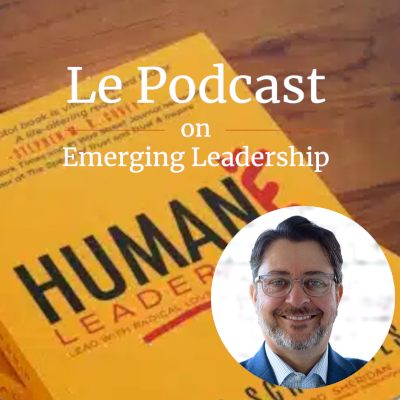
  • From Boss to Leader: The Power of Human-Centered Leadership with Marcel Schwantes

    From Boss to Leader: The Power of Human-Centered Leadership with Marcel Schwantes

    In this episode of Le Podcast on Emerging Leadership, host Alexis Monville sits down with Marcel Schwantes, a renowned speaker, executive coach, and author. With over two decades of experience helping executives transform their cultures, Marcel breaks down why the traditional top-down “boss” mentality is fundamentally broken.

    Together, Alexis and Marcel explore what it actually takes to become a human-centered leader, how to foster deep psychological safety, and why practicing “love in action” translates directly to exceptional business performance. Whether you are leading a remote team, navigating the integration of AI, or simply trying to influence change within a rigid corporate structure, this conversation provides a practical roadmap for leading with authenticity and courage.

    Authenticity doesn’t mean that you have a license to just tick people off. Authenticity is being emotionally honest about things, about people, about what’s going on in the business.

    What You Will Learn in This Episode:

    • The Paradigm Shift: The core differences between a traditional “boss” and a 21st-century “leader.”
    • Love in Action: What agape love looks like in a corporate setting and why it is a critical driver of employee engagement.
    • Removing the Mask: How to leverage vulnerability and emotional honesty as an untapped leadership strength.
    • Leading Through Change: Practical advice for maintaining human connection in remote/hybrid environments and during the rollout of AI.
    • Bottom-Up Influence: How emerging leaders can build human-centered micro-cultures that eventually transform the entire organization.

    Connect with Marcel Schwantes:

    Listen & Subscribe: If you found value in today’s conversation, please take a moment to share this episode with a friend or colleague on their own leadership journey.

    Keep learning, keep adapting, and keep leading!

    Transcript

    Alexis: This is Le Podcast on Emerging Leadership. I’m your host, Alexis Monville. Today, I am joined by Marcel Schwantes, a speaker, executive coach, and author who has spent over two decades helping managers evolve from being mere bosses to true servant leaders

    Alexis: hey, Marcel how do you introduce yourself to someone you just met?

    Marcel Schwantes: I would say it like this. I’m a leadership coach who teaches leaders to become more human. And if you’re a CEO of an organization, it’s to teach your management team or your executive team how to [00:01:00] become more human

    Alexis: Human leadership is more about being human than title or rank. In your observation, what is the biggest barrier that stops leader from making that shift today?

    Marcel Schwantes: Yeah, I think a couple of things. On on a, more, sh- on a more personal or personal interaction basis it’s, ego, We wanna be in control of our destiny, our outcome. And I think exter- externally is that we have so much pressure now to actually produce short-term results we are not thinking how to create an environment, whether it’s in, in your workplace in your [00:02:00] business, environment that actually is sustainable for human beings to do really good work. those… I think that’s the the, the, two reasons that I can think of. There are many, more, but those are the ones that really surface for me

    Alexis: So this is this is very interesting because what would that mean for people to do their best work in a sustainable way? What do they need? What kind of environment they need?

    Marcel Schwantes: I have tracked so much research, Alex, that that points to workplaces that are led by people that don’t put people first. So managers that don’t, value people as, as much as they should because the focus, the, the pressure to [00:03:00] please shareholders or other stakeholders who whatever business you’re in, if you’re government, education, private p- or, non-profit, you’re going to ha- you’re going to have pressures to to serve other people that may, write your check or pay your bills, right? And and so I, think that we lose sight of, We lose sight of what it means to lead in the 21st century. Leaders need to provide an environment where people are connecting with one another. I know this is a very, overused buzzword, but they have to create psychologically safe workplaces so that people are more open [00:04:00] and more open to collaborate and, more open to express uncertainty and and maybe even concerns about direction, and we’re not sure about this.

    So in these environments, these human-centered environments it’s safe for people to, know, their humanity in that sense, and that they’re not going to be reprimanded by a boss who does not welcome opinions feedback. And so for me, that, that is that’s really flipping the script on a lot of these toxic workplaces where people have no voice, they have no say, they are not heard, are not seen. And and I point, the all the reasons this is happening right back up to the top so that [00:05:00] we have to understand that it starts with leadership, right? Everything relies on having a strong leadership team that has a vision for putting their people first. And when you that in place, then you can create the conditions necessary for people to do their best work

    Alexis: And some people currently live in high-pressure environments with tough competition and all those things, and they, want high performance. Do you see that on the opp- opposite scale, or does high performance can coexist with all what you said before?

    Marcel Schwantes: Yeah, I think high performance can definitely coexist with human-centered human-centered workplaces because you’re not… Y- you’re still holding people accountable. You’re still holding them accountable to excellence and to performing at a high [00:06:00] level, right? But you’re not, at the expense of leaving them to their own devices and no- with- that without support and without being heard, right?

    So I think that there’s a really good balance of leadership, and I’m borrowing from servant leadership, where you have the servant part of leading, which is to take care of the people first, but not at the expense of making sure that they are still held accountable for results. Because at the end of the day, we still want results, But I think that when you invest enough in people and, grow and develop them and take care of them, going to translate right down to their performance. And to me, know, that’s not the reason why you do it, but that’s gonna naturally create some really good business outcomes, I think

    Alexis: Ellen’s, [00:07:00] You have you also, you are also the host of a podcast. Can you tell us the name of the podcast and why you picked that name?

    Marcel Schwantes: Yeah. And by the way there is a, a There is some news here because I just changed the name. So let me tell you the name used to be. So between 2019 and just literally a month ago, I hosted the Love Action podcast. So how do I get that name? Number three on the show was Ken Blanchard, who’s written a gazillion books on management and leadership and and, I asked Ken, he’s a big servant leadership guy, right? And I said, “Ken how, would you describe servant leadership?” [00:08:00] And I’ll never for- forget the line. He says, “Marcel, servant leadership is love in action.” That really stuck with me. And so I borrowed from Ken, I, I give him full attribution the name of the, the title of my, previous podcast. So I took Love in Action. And love in this sense for those of us that might, be misinterpreting what does that mean there’s no place for love in, the business world. Love here is borrowed from agape love, in the Greek sense of the word. It’s backed by action. It’s not a squishy feeling or emotion. It’s not love for maybe your partner, or your children or your dog or your favorite sports team, right? It is love that is backed by action. And so that I know I’m jumping forward a little bit here, but that’s the… that’s how I created the framework [00:09:00] for my book. Yes. So last month decided to rebrand the podcast, so now it’s just called The Marcel Podcast. But we still bring thought leaders, authors, scholars, and leadership experts to talk about love principles.

    Alexis: Okay. Okay I didn’t pay attention to that, my bad. But I wanted to touch on love because for a long time I was trying to help people see that if they are reacting from fear, they are in survival mode they are missing those connection between people. They are defensive. They, want to prove their point.

    They cannot build together. They are alone, basically. And what, I was looking at is, okay, the opposite of that, what [00:10:00] it is. And in my head it was always, “Okay, that’s love.” That’s, what, wants to happen through you. And and when you are there, then you can be curious, then you can ask questions, learn about other people, learn about other perspectives, build shared results, and so on.

    But I was always afraid to use love in a business setting, so I was trying to go around that saying, “Ah, we speak about appreciation, appreciate what is here, and being curious.” and I was always a little bit shy about it. With some people they told me, “Oh, that’s love.” And I said, “Oh, cool.” With some people it does not work as well, so I was very curious how you get there.

    So that’s … Thank you for

    Marcel Schwantes: yeah. And, by the way if you look at Amazon book titles there are close to now 50 books by business authors that about love as, love in, [00:11:00] business, love in leadership. So th- I think the topic is starting to enter the business lexicon, where people are less afraid to use the word love, and I think that’s great.

    That’s why we need to start, keep creating conversations like this to kinda also dispel fact from fiction. There’s a lot of mis- misconceptions and misinformation around leading with love, right? People jump to all kinds of different wrong conclusions and bring religion and, things that really aren’t applicable to the day-to-day environment in our workplaces,

    Alexis: and so if we, are a few kilometers apart, a few miles apart, if you prefer in on two different continents how does it work for teams who are also remote or hybrid [00:12:00] when there’s no physical proximity? How they build that connection you mentioned before?

    Marcel Schwantes: In a remote sense, I don’t think the, I don’t think the I don’t think the the requirements for leading with love or becoming a more human-centered leadership changes because you’re working remotely. it just means that you may have to work a little extra hard to make sure the, conditions that you would to get high engagement and to make people feel valued in a face-to-face environment, you need to figure out how to bring that into a remote setting. But the point is to, of the distance and because we’re so dispersed geographically and things are so digital these days, n- never to [00:13:00] forget that human beings still need to be valued, seen, heard.

    They need to feel like they belong. They need to feel connected. Okay? know I’m giving you cliches, but it’s true. It’s true. We are wired, I believe, at the core of our humanity, to be around other people, to connect with others. So in a remote sense, how are you gonna make that happen, right? What kind of rituals and norms do you wanna start, practicing and implementing as as a culture to make yourselves unique when people are… I don’t know about France, but here in America, we have a really big loneliness problem, and here we are connected to our devices more than ever before, and yet we still feel lonely. We still have a mental health crisis. [00:14:00] And and so we need to reimagine what does it look like in a remote setting to actually not forsake humanity, but to bring humanity closer together when the only means to do it is over a computer screen

    Alexis: Yeah. And I– maybe that’s also when you’re already distributed or remote, maybe you need to acknowledge that we will need time together in a physical setting.

    Marcel Schwantes: Oh, yeah.

    Alexis: that’s true. That’s one, one of those ways.

    Marcel Schwantes: They do get together. Absolutely. And they’ll have they’ll have their offsites three or four times a year. And that should be a requirement of the job for people to make sure th- that they know that you’re not gonna be hiding behind your screen all the time, right?

    Alexis: One part of your work is, was trying to help people to go from boss to leader. Can you tell us a little bit more about that?

    Marcel Schwantes: [00:15:00] Yeah. So many of us are Boy, now I’m really gonna speak the truth here. There is, there’s a shortage in leaders rising to, know, rising to the top and moving up corporate ranks. Younger generations before me now are, we’re talking about the the Gen Z-ers and maybe young Millennials are less and less inclined to wanna be leaders. we’re gonna, in, in another 10, 15 years, we’re gonna be in trouble. So we need to start identifying leaders and developing leaders early on, not just we’re talking about developing leaders to understand what it takes to … What are the metrics of great leadership, right? You … We have the, [00:16:00] the business metrics that every leader is responsible for, right?

    You got top line, bottom line, customer retention, or whatever your metrics is that, for your business, your KPIs, that’s im- still important. But where we fall short is we are promoting individual contributors to leadership roles who don’t have the mindset or the typology even, to lead other human beings. And so you’ll, you might get an, a great individual contributor, a rock star promoted to a management role, and and then people systems start to break down, morale starts to go down, downhill, engagement goes downhill, right? And so I and that again, and so we have to look at, okay, who are we not only identifying, but what’s the [00:17:00] criteria that gets people to get promoted these days, right?

    So we need to flip the script from boss to leader, because boss is no longer relevant or it’s, no longer sustainable in, today’s human-centered workplaces. Because bosses, if you look at bosses historically, they’ve been all about themselves, right? Do as I say. They’ve, been command and control.

    They’ve been micro-managers. They have been only thinking about the, the shareholders if, you’re in one of those companies, and at the expense of people. And so I think from boss to leader is really, revising your inner script of what you feel leadership is and what it [00:18:00] takes to be a good leader. Okay. So it’s a good balance. You still need management principles to succeed as a leader in the business world, but too many people have maybe the, the intellect, the drive or the charisma to and maybe that’s why they’re promoted to the job, to the role of a leader or a manager. then they, start to show their true colors and, that’s when you see sys- systems break down and the lack of engagement, et cetera, is the people side of the business suffers. And so we, need to develop the people side of the business in others to truly understand human performance, human development. I think that’s my very long answer to from boss to leader. We need to create less bosses and more leaders

    Alexis: Yeah. And I [00:19:00] love that means looking at other things that, that simplification of what a business is, that is returning value to shareholders because it’s a simplification. It’s fairly new and it’s not what a business is about. A business is to create value to their clients or their customers and and probably to do that you need the people to be able to do their best work and to love what they are doing.

    And, then the, the rest is a byproduct in a way.

    Marcel Schwantes: It’s… And wouldn’t you agree, it seems like common sense, right? You wanna do y- you want your, business to do well financially and, have greater customer loyalty. Why wouldn’t you take care of the, your [00:20:00] people first who are doing the work that’s going to create more value for your customers and for your brand reputation, right?

    Take care of the people inside first, because, And by the way, here’s a correlation, a l- research. You probably know this, that it’s a known fact that when you take care of employees doing the work, that’s gonna create more impact on the, customer retention side. So the experience is gonna be that much more, more positive, and that’s evidence-based.

    The, the better the employee experience, the better your customer experience is gonna be. It’s dir- directly linked

    Alexis: So basically we are in a lot of organization doing things in the opposite direction, and we are basically– we want to get the best return. We want to get the best customer [00:21:00] experience at the expense of the employees. And, it’s basically taking the things completely backward

    Marcel Schwantes: Right. And then leaders wonder why is our turnover so high? Start with first who do you have as immediate managers and how are they treating their employees? And and sometimes it’s not the middle manager’s fault, right? Because they are being told what they’re getting their orders from above. So the whole reason why people systems and break down m- may be because of who’s sitting in the C-suite

    Alexis: But when you enter a place where the– this is not there, we are still with bosses and we [00:22:00] don’t have that kind of thinking how would you enter that space trying to

    Influence? I don’t know. I don’t know what is the right word, towards a more human leadership

    Marcel Schwantes: yeah yeah. If you are oriented to, to be more of a human-centered leader and you happen to be in a, business environment where the people at the top don’t welcome that, you can start with your own team. If you have a team of three or five or 10, and you want to and, you wanna influence up, start being a human-centered leader within your own sphere of influence, right?

    Your own team. And here’s what I found, is that it… I’ll just share with you one client organization that I coached. It was [00:23:00] exactly that scenario. Let’s say that I had that one manager that totally was bought in, belief was there that human-centered leadership or servant leadership was the way to go But nobody else bought into it because you had the wrong people at the top who were constantly fighting and pulling in different directions and only, thinking profit, not people. And and so I said, “Okay don’t wait for anybody. Go ahead and start being a human-centered leader.” So he did. And the r- results were very noticeable because his engagement scores went up, his retention went up. There was less absenteeism because people absenteeism is basically “I don’t wanna go to work today ’cause I hate my job and I hate my boss,” right?

    “So I call in sick.” there was less of that because people wanted to be there and because they were, they appreciated [00:24:00] the environment they’re in, and there was synergy, engagement, right? And that’s because the boss, that one started the chain. And guess who took notice of his, numbers? When his retention went up and w- in his department were performing people in the executive team started to take notice, and they wanted to find out, why is this manager’s numbers so much different than o- other managers, right?

    The and so they began to question and and then that created new conversations about, “Oh, what, what’s happening in that person’s department?” he does things a little differently.” And so senior leaders took notice. And and so talk about influence, right? Yeah, you influence the people around you, but about influencing people up? And and so that created more [00:25:00] opportunities for other departments to jump on board as well and welcome a human-centered approach. That’s because that one person that was courageous enough to start on his own without waiting for approval from the top.

    Alexis: This is inspiring. I, I love it, and I, have to admit it’s it’s inspiring, and it’s very important because as you said you spoke about loneliness, you spoke about mental health. You mentioned psychological safety earlier. Yeah, it’s probably can start with your– the, the people who are close to you in the organization.

    How do you approach those topics in the, in in, the organization you’re working with?

    Marcel Schwantes: How I approach it? Usually they come to me first. And, then so [00:26:00] have to be open to the idea of putting people first order to create value and results. And, so it becomes easier when the, the leader, manager, or CEO is already a champion for human-centered leadership. Because what you don’t want is having to convince somebody that is comp- oriented completely the opposite direction. Having to convince that person is to adopt a human-centered approach when perhaps they have been a boss of a top-down autocratic boss for so long, it’s a tough transition. Really tough transition. And I don’t, Know, I pick my clients carefully to make sure that they are– they have an understanding of what they’re getting into when they [00:27:00] talk about, “We wanna create a culture that is more human-centered.”

    Okay what does that mean to you?

    Alexis: 嗯。

    Marcel Schwantes: And ’cause I wanna be able to listen to to make sure that they really know what it’s gonna take so that this thing doesn’t blow up, right? they if, they have a misconception of what that is, right? Because a lot of times, know, you read about it in the media, and you listen to a podcast, you watch a, a TEDx Talk, and you’re like, “Hey, this is cool.

    I’m… We need to bring this to our organization.” And yet inner orientation your natural tendencies is still to squash people, right? So it’s it’s like I wanna make sure that it’s not surface-level ideology

    Impressions that they’re having that competitor is a human-centered workplace, therefore we need to be as well. It takes [00:28:00] belief first, right? Why do you want to be a human-centered leader or organization? That’s the first question I always ask, and I really tune in to make sure that they that that they have the right priorities

    In place.

    Alexis: It’s it’s, fascinating because the- then we have that idea of they need to believe, and they will probably need to change the way they behave. So as you mentioned before, it’s it’s not only about managing others it’s about, about managing oneself.

    So do you feel it’s it happens often that they realize that it start with them, or at least they are part of the picture, it’s not only the other people?

    Marcel Schwantes: Yeah, I think that once, once they realize that, [00:29:00] okay, what has worked in the past no longer sustainable. What I picked up from previous bosses no longer work in this this age of connection, belonging, and o- once they kinda get past that I, think it’s a, it’s an easier transition. These leaders point back to their values, their value system. And so many of ’em realize that all the, their outer success, of the output no longer congruent with who they are internally, their inner, self, their values basically. And so that’s a real shift, and I’ve seen it. It’s it’s a big aha moment for a lot of leaders to realize, I’m no longer living or, working or leading [00:30:00] through my core beliefs and values.” And so they… That there is that disconnect. And so they begin to reinvent themselves through self-leadership.

    What does it look like for me to live through more honesty, more integrity? What does it mean to to work in places where I may have to be the bad guy because I’m speaking the truth to power, right? And it, may not be… I may not be the most popular person when I speak my truth, right?

    And, that’s very human-centered, right? You like, you don’t beat around the bush, and I’m using all these American cliches by the way. You just have to your truth and people know where you stand, and this is where we’re headed even though it’s uncertain times, but I’m gonna be there with you every step of the way.

    We’re gonna figure this out together, right? These are all things that, that I think [00:31:00] brings you back to your own humanity. And and, so operating from your value system is really key to make that shift others. To to start leading yourself first, right? By your values in order to then make an impact on o- on others,

    Alexis: so in a way some people realize that for some time, maybe years they were wearing the mask of the boss or the… And at some point they realize if they really want to shift the whole organization, they need to remove the mask and be themselves. That’s what you’re saying?

    Marcel Schwantes: Yeah, and it’s funny that you use that removing the mask I I use that a lot in my courses as well, because one of the, one of [00:32:00] the things I teach is authenticity. How do we become more as leaders? Talk about being human-centered. First you need to remove your mask, so it’s s- so many of us walk into a, a, a work- workplace, and we check our real selves at the door and put on the mask to portray somebody that may not be who we truly are. And and and authenticity doesn’t mean that you’re, you have now license to just tick people off and say whatever is on your mind and… No, that’s not authenticity. That’s being a jerk. Authenticity being emotionally honest about things, about people, about what’s going on in the business. So you communicate emotionally honest about good things that are happening so that [00:33:00] you celebrate as a team, also the uncertainties, the things that may bring people fear.

    Y- you wanna be there to calm the waters and not, Don’t w- don’t, give all of these ambiguous speeches and messages. Tell people what’s really going on, right? That’s being authentic. They’re going to earn your trust, or you’re gonna earn their trust, I should say, much more when you just tell them what’s really going on instead of don’t know, f- for whatever reason, because you wanna save your reputation, or maybe you fear your boss that, ” Hey, if we tell our people what’s really gonna going on, it makes us look weak.”

    No. The vulnerability is a leadership strength that is untapped, [00:34:00] and if we can figure out, if more leaders can figure out how to exercise this authentic vulnerability, especially in times of change, transition, uncertainty, God forbid we have another COVID, but that’s when it happens, That’s when we need to rise up and become more authentic. And and even today there’s a lot of struggles going on, challenges going on, know?

    Alexis: I have one for you. I have definitely one for you. You will love it. Or I already know that. I will drop just two letters because you spoke about fear high expectations, AI. What does it mean for leaders, human-centered leaders? What does it mean?

    Marcel Schwantes: Yeah. We have to learn to embrace and adopt AI. [00:35:00] Absolutely, we need it. It’s here to stay. But we also have to empower the people with the technology. And so as we have more AI initiatives w- leaders have to understand that the people need to also… W- We need to take care of… If we’re, if we want them to use AI, you need to set the right expectations for why they’re doing it, and remove the fear that, oh gosh, my company’s bringing AI, there goes my job And i- if that’s your ulterior motive for bringing AI this is the wrong podcast to l- to listen to, okay?

    So you’ve very Already made up your mind that you’re going to, you’re going to get, let go of 30% of your workforce because of [00:36:00] AI? Yeah. The human-centered conversation is worthless here. But if you’re going to bring AI, you’re going to have to help the people adapt to it, know how to use it and build this, idea that you’re not going anywhere.

    We just wanna make you more effective, make you m- make you more productive, and make you a better human being with the use of AI. gonna teach you everything that you need to know. We’re gonna upskill We’re gonna and even give you the freedom to create, experiment with prompts and and r- redesigning your own work if it makes business sense, and then tell us, teach us leaders, how do we do it?

    How do we become more effective, right? So that that’s, creating, think, more value [00:37:00] and bringing humanity together with technology

    Alexis: And, we still have a lot of problem to tackle as, as human beings on the planet. There’s not a shortage of problems to solve, so maybe that, that’s a good thing. Okay, we are– That was my AI question. I’m not going back to it. What is one question I should have asked you that I did not?

    Marcel Schwantes: Yeah. I would say, boy, if I wanted to start a… If I wanted to build a human-centered and I’m a firm believer that this is gonna work, I wanna be a champion this, what’s my first step? That’s the question because a lot of leaders, and I’ll answer that in a minute, a [00:38:00] lot of leaders don’t fully know what we, get so caught up in strategy, big picture stuff we forget about what’s going on in the trenches.

    Are people experiencing? So the first step is to gather the data that you need to first understand your current reality. are people experiencing? Go ask them. your managers ask them. Bring in a consultant if you have to, one of us, right? And to, first understand here, okay, what are we dealing with? What are our barriers, our obstacles? Because you’re gonna find them. As soon as you start poking around, you’re going to get themes rising to the surface, and that’s your starting point [00:39:00] right there. ‘Cause now you can go from, “Oh, okay, yeah, here’s problems A, B, C, one, two, three. Now here’s how we create a human-centered culture to address those problems.”

    Alexis: I love it. Thank you for that really good question.

    Marcel Schwantes: You’re welcome

    Alexis: And of course thank you Marcel for having joined the podcast today. I really appreciate it

    Marcel Schwantes: been a pleasure and I was looking forward to it.

    Alexis: Thank you for listening to this episode of Le Podcast on Emerging Leadership. I hope you found today’s conversation as insightful and inspiring as I did. If you want to dive deeper into the topics we discussed today, you can find the full episode transcript and all the references by visiting alexis.monville.com.

    Leadership is a [00:40:00] continuous journey, and it is one best shared with others. So if you took away something valuable from today’s episode, please take a moment to share it with a friend or two who might also benefit from these insights. This is really appreciated. Until next time, keep learning, keep adapting, and keep leading.

    I’m Alexis Monville, and this has been Le Podcast on Emerging Leadership.

  • Agile, AI, and Engineering Pragmatism with Jon Kern

    Agile, AI, and Engineering Pragmatism with Jon Kern

    In this episode of Le Podcast on Emerging Leadership, I sat down with Jon Kern, aerospace engineer turned software architect and co-author of the Agile Manifesto.

    Jon shares his fascinating journey from testing jet engines for the Defense Department to pushing back against heavyweight, bureaucratic software processes.

    We explore the original intent behind the Agile Manifesto, the misconceptions that led to overly rigid frameworks, and how leaders can embrace the concept of “being lazy” to deliver true business value.

    Finally, Jon dives into the frontier of “Vibe Coding,” sharing how he uses AI to automate rigorous testing, compliance, and architecture without losing the foundational discipline of software engineering.

    🔑 Key Takeaways:

    • The Origins of Agile: Jon’s contribution to the Agile Manifesto stemmed from a deep frustration with one-size-fits-all, heavyweight processes (like MIL-STD-2167) that hindered research and development. The manifesto was born out of a desire for a pragmatic, lightweight defense mechanism against bureaucratic lunacy.
    • The Biggest Agile Misconception: Agile is not a recipe or a simple step-by-step framework. Jon warns against the industry’s reliance on rigid frameworks, emphasizing that true agility must be experienced and tailored to a team’s specific context, rather than simply memorized for a certification.
    • The Power of “Being Lazy”: In software development, being “lazy” means finding the smartest, smallest possible thing to build to get immediate feedback. It is a rebellion against doing too much work, too far in advance, and instead treating requirements as hypotheses to be tested with actual customers.
    • Purpose is Paramount: If a team doesn’t understand their core business purpose, they become mere order-takers. Starting with a clear, 25-word purpose allows everyone on the team to exercise micro-judgments, empowering them to propose smaller, faster, and cheaper ways to deliver value.
    • Leading in the Age of AI (Vibe Coding): AI is a game-changer for software development, but it requires strict engineering discipline. Jon shares how he uses AI platforms like Replit to build applications, but notes that developers must learn to “coerce” AI into following best practices like Behavior-Driven Development (BDD) rather than letting it write unchecked code.
    • Agile is Necessary, But Not Sufficient: To build great products, an agile mindset must be paired with solid engineering fundamentals: a clear purpose, a shared domain language, sound architecture, and relentless consistency.

    References

    Transcript

    Alexis: This is Le Podcast on Emerging Leadership. I’m your host, Alexis Monville. Today, I’m joined by Jon Kern, an aerospace engineer turned software architect and a co-author of the Agile Manifesto. Jon is currently an agile consultant at The Adaptavist Group How do you introduce yourself to someone you just met?

    Jon Kern (Adaptavist): Like in a, let’s say formal busi- like a business setting or at a party at a friend’s house?

    Alexis: Let’s say, let’s say in a business setting

    Jon Kern (Adaptavist): Okay. Typically, like I was just in Nuremberg at the Business Agility Conference last week, could probably ask people there. I generally [00:01:00] Introduce myself probably as just a guy, just a developer, software engineer. Love to help build awesome products, help teams build awesome products. So probably mostly as a, just a guy, an engineer. I try… I will only reluctantly mention that I’m a co-author of the manifesto. If there’s a, some sort of pressing, I don’t have time to be in my humble, I have to, like I have to im- which is pretty ra- rare that I have to impress, impress somebody.

    Yeah I, tend to be just, I, ’cause I really am just another, person the good fights, [00:02:00] working, trying to help people. all

    Alexis: I, love that. And yeah, I, agree. I’m I, met, I met you a few years back at the Agile conference in in Dallas, I believe. And yeah, it felt like a, a normal interaction then. And I, I know a lot of people knew who you were, but that, that felt completely completely normal and completely cool.

    And and I felt you were very curious about what other people had in their, had in their mind. So that was very interesting to me. So you mentioned the Agile Manifesto. W- can you tell us what led to your contribution to the Agile Manifesto?

    Jon Kern (Adaptavist): I think my experiences [00:03:00] having a really a blessed career starting with Defense Department jet engine testing, working in, a job that some wonderful mentors. I still get together with Rich Thaler and every, pretty much every year. One of my first mentors, I would say. And also some really interesting, what you might call signposts of… I’m early 20s, right? So, you know, somebody in their 40s I’m, I remember thinking, “Yeah, don’t wanna be like this person that far into my career,” not liking my… So I had these great, wonderful opportunities to, see mentored and to see things I didn’t wanna [00:04:00] do, to be able to grow from there as an engineer. So I, four or five years of jet engine, cruise missile engine testing and, discovering a- the awesomeness of software to help do a job a three-hour job down to a few minutes I was bitten by the bug early on. And then went with another one of my former bosses, moved to a Defense Department contractor comp- company, and then I started a whole another that was about a 10-year career there with flight simulation and, again, heavyweight MIL- Standard-2167. So I started to get brush up against these heavyweight processes that made no sense with the kind of work we were doing. They might make sense for other types of work, but it was a one-size-fits-all big heavyweight process. So that led me down the path of [00:05:00] my personality is the kind where If it’s stupid, I don’t wanna do it. I think many times I probably should have been fired from some companies, including being a dishwasher and a pot washer and doing some things that I shouldn’t have. But somehow I learned better to forgiveness than ask permission. I was creating a lighter weight method, trying to…

    I’m a taxpayer too. Why should I just do this stupid process for a process sake? So it was an interesting journey that kinda led me to creating my own, what I would call, like a lightweight process to combat the lunacy of pretending you could estimate a year-long project for a research and development that was purposefully going to wander and learn, and that’s the whole point. a lot of things led me to be [00:06:00] very let’s say, vocal at the, at Snowbird about experience with heavyweight process. I also was working My a good… Yeah I, created my own company. My… I started working with Peter Coad. He was an o- became an object-oriented mentor, and then basically hired me away from my own company to help found another company, Togethersoft, together in the, late ’90s, early 2000s. We had a way of working there, feature-driven development, and a mantra, frequent tangible working results.

    So you could really looking back, ’cause the event itself was just, hey, it was fun. It was like drinking beer, you

    Alexis: Spectacular.

    Jon Kern (Adaptavist): And, writing a few things down and meeting people that I only read in books and magazines. Like, I was the, a younger person there. [00:07:00] maybe Adi and, I might have been the young the two youngsters. So, know, looking back it’s, easy to see why, know, people, process, and tools, which is kinda like the first value, it was something we… was a mantra we used at And then how I built my own lightweight defense mechanism process against the world that I was in for the government contracting. You can see the last the, three bullets. I learned contracts don’t help you. Better to get a good rapport with the customer. I learned a- as, as, good as you might be with a project plan, ’cause that’s… Back then as an engineer, I used Microsoft Project until I realized that was foolish on soft.

    So all those things l- you know, speaking of what led me to to the manifesto and the ideas that came out, it certainly feels like it was [00:08:00] tailor-made a, as a way to at least a lot of the learning that I had in my… I would say I was, like, halfway through my career, so to speak. So yeah, it was a amazing opportunity to somehow get all that, kind of a resonant frequency with others in the room, that these things, y- were across many of the other folks were the co-authors.

    Alexis: Yeah. Excellent. So now we are roughly 25 years later what are some of the mi- misconceptions about Agile you encountered over time?

    Jon Kern (Adaptavist): Yeah, I think the, blessing and the curse of the manifesto looking back is [00:09:00] It’s an extremely, what I might now call po- a post-conventional way to make your meaning about how to do software development. And, I say that because one of my good friends Daniel Markham, at one point said, “Imagine being a fresh out from college, being like on a software team, being told to go read the manifesto.” Especially the, first just the values page. The principles might get a little simpler in some… yeah, what do what are, you supposed to do with that? Wh- where do I start? Oh, good question, right? That’s that’s definitely a blessing and a curse that it’s, super powerful if you it and understand it, but super [00:10:00] ambiguous and unclear if you don’t. Which was a, pretty good eye-opener for me that, because I didn’t have to memorize it. I, lived it. I do… And that’s, the experience you have, so to speak if you work with me on a team, I like to think you get to experience Agile. ‘Cause y- I say you almost have to experience Agile.

    It’s not a recipe. It’s not a it’s not a st- a step-by-step process, and I think that’s the biggest… I don’t know if it’s a misconception or just human nature to want an easier way. Okay, that’s really hard. What’s an easier way? Things like frameworks- Scrum, or God forbid, SAFe or something like that, which reminds me of back in the day, things we were fighting called Rational Unified Process. but I think [00:11:00] what happened over time, ’cause I literally checked out near… checked out of the Agile community as I saw the- The penchant for trying to simplify and assume you can just learn this framework and get a, certification in a couple of days and somehow be agile. I was like, nah, not interested in this. Goodbye. I’m just gonna go work with teams and have fun and help help explain through action and involvement how, what I think agility is.”

    And I still do that at, Adaptivists we, happily work with teams to help experience what agility might be. And so yeah, I think that’s [00:12:00] the biggest misconception is people fell for… I don’t know, I’m not gonna say it’s snake oil. In the right hands, any almost any process will work and, especially if you make sure you tailor it to your world. But making it seem like you just have to follow these five steps and you’re good I think sold a lot of management and executives and businesses down a river of that it’s… No it’s really that simple. Even though, Agile, you can kinda consider it to be simple if you get it, doesn’t mean it’s easy. So I, think probably the biggest misconception that led to a bit of a backlash. And ano- another thing happened while I was away from, the [00:13:00] community. I kinda got brought, back in to the Agile Alliance maybe one, one gathering before the Dallas one or, a couple.

    I went to a few ’cause they invited me. but I remember one of the first ones I went back to, I was like, “What happened? What- why is there nothing technical in this conference?”

    Alexis: Ooh.

    Jon Kern (Adaptavist): whatever happened to, don’t know, testing, visit or the whole XP. I said I’m, an engineer by training, so all of a sudden it was all about coaches and all this. Yeah, you need to care about the soft skills, and you need to care about that, sort of thing, but it was suddenly what happened to the real- the main thing? The ma- the main thing is trying to produce value and put smiles on customers’ face in exchange for helping to pay my salary, and that all seemed to go away.

    I was kinda like, “How come there’s no technical sessions? Why?” But or at least [00:14:00] very f- few

    Alexis: Yeah. Yeah, and it, I, I feel that the first sentence of, of the manifesto was the very important one about we are uncovering better ways of developing software by doing it and helping others do it. I, I have the feeling that that one was very important. It could be only that one even.

    Jon Kern (Adaptavist): Yeah, I, it’s funny when I look back because nobody knew this was gonna take off. It’s we’re just just passed the 250th anniversary of the founding of our country and Declaration of Independence and the f- the, amazing thing that happened when a relatively few number of people farmers and lawyers and doctors came together and created a document in hindsight is amazing. And in a very, [00:15:00] extremely humble way I, feel the same thing happened there. It was this magical cauldron that produced a pretty small set of words when you, get right down to it. And so now when I take that first page, the values page as we come, I’ve come to call it, I point out the preamble, and I point out, look at the humility in there. To your point it’s active voice ’cause I still– I’m still trying to figure out, like with the advent of AI I’m a, wholly addicted to vibe coding and I just did a pretty fun workshop in Nuremberg. It’s, a whole game changer, but you better have a good solid understanding of not only engineering practices and principles, but also what does it mean what does agility mean?

    What does it… but that preamble [00:16:00] is so true that we’re still uncovering. And how do we do it? Not by reading about it, by doing it and experiencing it, having enough humility and ability to have… I think part of it is the it, depending on how you make your meaning as a human the, kind of vertical development of the side of the brain, not the skills horizontal.

    But you may or may not be able to absorb even experiencing it, to have the perspectives, be able to step back to see what are we learning, what’s going on. I’m following the process. Why is it different? I guess we need to predict better or plan more, right? When the whole aspect of that simple, humble phrase is you’re right a really important one.

    And I would say the f- the very first value, the [00:17:00] people people and process over tools, but it’s individuals and interactions over process and tools. So that also, you could say, just that in and of itself is almost sufficient. ‘Cause the other three it’s details, so to speak. But if you had, the first one individuals and collaboration over a contract or you, could make over a project Gantt chart. You you could, also make the case there that the preamble, like we’re still doing it, you’re never done. Sorry it’s it’s it’s the hardest Way to practice because you’re constantly have to be on the vigil. A little bit like lean, where two-second lean. I wonder if I can get this process just two seconds faster, right? It’s that same kind of never– seemingly never-ending quest for the ability to, [00:18:00] improve and get better and do it more effectively. So yeah, it’s, I’ll also say the other thing that the, I don’t know what you call the thing at the bottom, the postamble, preamble, the values, and then the the whole bit about the left over the versus the right. That’s also a big dose of humility ’cause

    Alexis: Yeah

    Jon Kern (Adaptavist): Doesn’t say… I’m a documentation nut.

    I love I I’m, always forcing people to take their knowledge that they post in Slack or on WhatsApp or on a Google Doc, and, “Nope, let’s get it into our knowledge base in Confluence or something like that.” I’m always forcing because what we do is a lot more complex than, I think people understand. So yeah it’s important to notice those two things, I think to your point

    Alexis: Yeah. Yeah, I have [00:19:00] the feeling that those are polarities. And at the time it was written, the, the pendulum was really tilting towards one side. And and the goal was not necessarily to pull the pendulum completely on the other side, but to say, “Hey, hey, let’s find let’s find the right balance,

    Between those things.”

    That’s,

    Jon Kern (Adaptavist): a great way that’s a great way to visualize it cause it’s the right balance for your context and it’s gonna change and that’s the point is you have to intentionally the i the of the things that the manifesto can do is bring attention to different things you may or may not think about All of those values are attention to these things And then to your point about where do we dial it for this project for this customer for this Even down to the feature so that’s a great way to visualize it is it’s really is like sliders And super highly regulated environment I might [00:20:00] bake in ways to actually capture more documentation and screenshot Who knows Because y it’s gonna be a more effective way to deal with something that’s super heavyweight but it just has to be All right how can I make it cost less and suck less it’s kinda One of my other mantras is be lazy

    Alexis: That’s, that’s an interesting one. G- give me an example of being lazy that is effective

    Jon Kern (Adaptavist): Yeah even what I was just making up in my mind right there about I I remember way back in the day 95 to 98 cutting my teeth and architecting IBM’s manufacturing execution system as an outside consultant in a company that we got the contract to do it was discrete manufacturing and one of my buddies from the I left my DoD company that time and formed my own company and did [00:21:00] this big IBM project my other buddies had left my the DoD company and was working in pharma and similarly manuf manufacturing but that wasn’t discrete It wasn’t making computers it was the more challenging aspect of making medicines and drugs and things that had batches almost like hamburgers right You got a batch of meat you have to be able to All kinds of weird stuff And he said even have to track exactly did the screen look like how was it designed when something was being manufactured versioning out the wazoo So being lazy to me is what’s maybe a clever use of technology to make that suck less to put it bluntly like how do you do that like we’re gonna have the quality assurance people take [00:22:00] screenshots and document Ah screw that Now let me build a was actually just doing that just this weekend with a crazy thing that produced different images and I was like really to cut those out you know being lazy is I get a faster more effective cheaper way to do something that I would consider as mundane and tedious And it’s that sort of an attitude Also lazy is don’t so much work ahead of time Don’t most offensive offenses that teams make is doing far too much work to too great a depth of detail too far in advance of the need I’m talking about like re big requirements or ex excessive UX design or crazy stuff like you need to do just enough to get the frame [00:23:00] So that’s another aspect of no be lazy but the problem is that fights against everything we’ve been taught since children in school doing more is better And you know how I got five 100s in a row on the quizzes in algebra Woo I’m really good that is such disservice to an agile way of working you have to fight it And I often say I can outsmall anybody that has to do with what’s the tiniest thing that you can think of to build you might call it lazy no I don’t wanna build all that A cause I don’t believe it I don’t We don’t know as much as we think Let’s treat it as a hypothesis get some feedback sooner right All kinds of great things to that in my mind make perfect sense of why I’m being lazy so yeah I often try to tell people think of the smallest possible thing you could [00:24:00] to get feedback and then make it slightly smaller until you’re uncomfortable your level of uncomfortableness won’t be mine I I’m okay being embarrassed delivering something embarrassingly small Anyway it’s the point is to get skilled at getting less and less because it’s quite simply the truth that you can always add more if it was If you missed the mark You can never take back time you spent and energy you spent and you’ll never know if it was too much So that’s a to me the lazy But it’s also being smart But it’s a bit of a joke but not really It’s you hire somebody to do a specific very narrow job guess what you’re gonna get eight hours a day Eight hours of UX or eight hours I learned this in the DoD days Eight hours and what does a specification writer do Super tedious like mindnumbing words about how [00:25:00] is this ram air turbine supposed to be work just the spec writers were notoriously tedious and slow but anyway yeah that’s my

    Alexis: And it’s hard. I, I, can feel how

    hard it is, But the number of examples I had in mind when you,

    you talked about it, it’s wow. You, you mentioned business value because it was all about it, putting a smile on, on your users. How do you help teams to stay focused on that

    Jon Kern (Adaptavist): another great question So it’s a such an important topic that whenever working with teams [00:26:00] Especially trying to center it along something they’re trying to achieve Whether it was four groups that we were working with one of my good buddies at Adaptavist he’s on his own now but Jon Turley and I and another friend Tony Camacho we went to Florida last September run a multiday workshop with the Special Operations Command special ops Nothing secret just some software teams like four teams And each But after we did what I would call like a toy project to warm up to my very opinionated way of delivering software we did project that they brought So the In both cases you have to have a really good understanding of what are we trying to do And in Nuremberg in my AI two twohour AI workshop [00:27:00] Vibe Coding now that particular product that we wanted to build was an agile buzzword bingo game but in all those cases or if I’m working with a team delivering a benefits package for employee healthcare in the US case what’s the very first after we say hi and learn about each other but the first actual meaningful exercise is in 25 words or less what is your business purpose or your system purpose However you wanna think And teams we coach internally in Adaptavist what why are you here It’s a the funny movie Office Space the the Bob and Bob efficiency experts right what is it that you do here It’s humorous but it’s also so critical cause if and I’ll explain why Number one if you don’t know why you’re here what are we trying to do [00:28:00] a recursive I love learning a few things that apply whether it’s the full product idea that we have like buzzword agile buzzword bingo or a feature or an epic anything The point is understanding what we’re after what the outcome is what the I can’t say it raison d’être or whatever the reason for existence without that You might just be an order taker and you And anything will do A list of requirements will be huge You So the whole point is how do I get my entire team cause we all have brains many times the brains are better than mine I want everybody to participate in the being humble and being lazy because we have a flag in the distance We know what we’re trying to do again whether it’s a feature [00:29:00] set or the whole product that you can exercise micro judgments I got smart people I don’t wanna have to think it all up myself I said I wanna just put out there this is what we’re trying to do and be surprised and elated when an engineer might come and or a UX person and anybody can now come and offer up the smallest possible thing to get the most value Maybe I can’t do it all but maybe all isn’t necessary right Isn’t that what you say Jon That we shouldn’t We should treat the requirements as hypotheses that someone might want this So it’s this weird really holistic way of learning how to do just enough And I think sim You can see how much your little tiny question that’s the whole point is that little tiny what is the purpose fans into the whole thing that we’re doing I won’t need to architect that yet I don’t [00:30:00] need to build this yet I don’t need the UX I don’t need the f driven scenarios yet for those things that we might not So it’s all about giving us the chance to deliver more sooner and for less cost and get feedback right So it’s a strange selfreinforcing loop that without that you’re an order taker You don’t have nearly the chance You might have to invent it in your head and wonder why they’re asking for this I don’t know I’m just a coder you will be replaced by me and Replit I will replace you if I can’t if you’re not gonna use your brain andor you’re not allowed then you need to replace the process cause you need to ask that question right from the start in everything you do So that’s a brilliant question

    Alexis: Just enough to get feedback to deliver some value

    In[00:31:00]

    Jon Kern (Adaptavist): And as much as possible have customers in the room when you get some something to validate with them even if it’s early look over their shoulder I might have a little I’m not sure the UI feels right come look All of that is just shortening the Often say mind the gap in time between doing something and getting feedback So yeah it’s all it’s really s in my mind really simple It just appears to be really hard for a lot of teams to get there or think it can really be that simple Or it is harder to try to get customers to talk to but the simplistic secret Is yeah involve your customers

    Alexis: Yeah. So you mentioned AI twice, so I, I need to ask about it. How should leaders consider AI

    in their organization?[00:32:00]

    Jon Kern (Adaptavist): I’ll just narrow it down to the way that I’m thinking about in the context of building software there are I’ve seen There was a cool exercise I w I spoke in in Belgrade Serbia at a Agile conference maybe two years ago and there was a pretty cool little workshop that he ran with kind of AI at the front end and requirements And I’m a behaviordriven development I will write my Jira issue I’ll put in there Gherkin given when then Cause it’s a super awesome fast and concise way to write a requirement To say what are the preconditions What’s the person doing What do they expect Cool Versus big paragraphs and So couple that with some maybe some domain models as necessary depending on where you’re at and some U UI [00:33:00] designs maybe I saw how rapidly that w I forget the tools that he he had us work in some teams and probably download something on our phone or the computer I don’t remember But some kind of a you know bot the AI thing that produced driven BDD It seemed a little excessive That was my takeaway was okay I’m thinking in my head Is that good It’s a lot of volume I wonder how much editing I have to do versus what if I just do it like I do now do it myself So that was my first experience with kind of a front end part of the process recently I’m working with a team actually just a [00:34:00] guy and it was funny He wanted something that he obviously asked AI to produce the requirements and it was a fairly interesting technical aspect around solidifying how can you produce something like a certification that’s unique and protected and u uniquely identifiable nobody can copy it and cheat and pretend Like he It’s oh that’s pretty cool But I could he used some AI tool and built out and then he dumped it into Jira epics and issues oh my g now you’re really getting on my nerves right And s and so this is another interesting facet was Part of the process of taking an idea that you need to build out is working with [00:35:00] it So just cause I can get a tool to spit all this stuff out including BDD including the specs including use this API or whatever this I felt that was taking learning opportunity for me to dive into that So I basically didn’t r didn’t overreact just pushed it aside took the real requirement which is just what a customer might ask and then as an engineer figured it out And sure largely the AI is not wrong in terms of things to do it completely missed the whole part of the learning process if you just took it face value care what it said or didn’t understand it So that was another interesting factor of I’m not so sure that’s I know that’s not that good Another funny [00:36:00] I was speaking in Poland in Gdansk with Anita from Network Perspective who does deve you know developer experience surveys and what was funny is we were preparing one of her slides cause when you do a DevX survey you can get anonymous you get anonymous feedback you get comments and she tau taught me long ago cause we used the DevX stuff at Adaptivist taught me long ago that comments are gold when people are like Err Okay I got something to say

    Alexis: Hmm.

    Jon Kern (Adaptavist): And this guy w- was hilarious. He was complaining about just what I told you about yeah, we get the the architecture team s- weighs in on something, and then dumps this giant thing on top of us, and they don’t have to do it.

    They’re just sitting in a corner and pontificating.” he was basically expressing the same kind of frustration that I had receiving that. [00:37:00] In answering your question so far the, things that I’ve seen on the front, eh- I’m on the fence about because it’s, I think, more important that more about where the lines need to be drawn in terms of what are you trying to do to elicit requirements from, users, to express them, how far sh-should you go into the sort of what I would consider the, details of writing some specs, so to speak BDD. And then certainly the architecture, how deep should you go into producing that? ‘Cause the team’s basically the ones responsible and that’s l- maybe work with them, let… Anyway, that, there’s that. So now to the vibe coding part. Yeah. This is the most wild thing. learned about it [00:38:00] when I was flying to Special Operations Command in September My normal mode was I have a Git repo, download this little toy project, get yourself set up. That’s basically a BDD, TDD kind of an environment. But still, was like, “Ah it’s 2025. There’s ways to do development in the web without having to download anything.” So I’m like, ah, I know I bookmarked some things, ’cause I always bookmark more than I ever seem to find time to read. but I’m like, oh, I know, what was it? And I stumbled on Replit replit.com. and lo and behold, just maybe two weeks prior to that, they had released Agent 3. So I’m like… I watched a couple videos that were on an older agent. I was like, “Eh,” and then I thought, “I’ll try it.” Sure enough, there’s an environment that’s in the web it’s in your browser, and you can ask it to build stuff. [00:39:00] So by the time I landed I’d already built a little app that it’s basically Conway’s Game of Life, so it’s a funny cellular automata game. But I I’d learned that I could build that and this tool was gonna work, that it took away all the, they have to install things. Now I just needed to coerce it, ’cause it’s a little…

    This, is something I’ve learned over the, ensuing months, that it will happily go f- speaking of do the tiniest thing that you can or maybe slightly less, that it’s not how, not how it operates. It’s “Whoa, Nelly, what are you doing?” It’s ah. I had to learn how to actually coerce it to do BDD.

    It was pretty funny. I don’t I don’t know how much time your podcast has. We’re probably turning this into two podcasts. But it was really funny to learn [00:40:00] how hard it was to get it to stop to write a failing test. And I’ve, I’m now able to do that pretty successfully, it was not easy because it’s just too eager, so I’ve learned also how to get it to be curious and how to get it to s- maybe supply some options. But you can drive it, like what I did with the Vibe Coding workshop in Nuremberg, was be very BDD. Write a failing test, write a BDD. They, I took them through the normal Jon Kern opinionated way to to from a fuzzy idea to something out the door, and we actually produced something and you can run it, and it’s funny. But yeah the, idea is that the calculations about things that I can now do because of Vibe Coding has completely changed my approach in terms of I will create amazing [00:41:00] things that I never would do if I had to write them hand. I for many years, I’ve had a, for almost probably two decades, for fighter- firefighters and emergency whether it’s for y- small rural departments or our biggest one is Arlington, Texas, which is 17 stations, so it’s pretty huge. or big pharma companies and universities, stuff like that. So it’s a it’s a no joke way to try to protect lives and property. And so I’m, I used it to migrate from up- update the Rails app from the current production to the new version using Replit. And I learned I [00:42:00] could do things like web penetration testing security audits, GDPR compliance, SOC 2, name it. was able to, i- instead of just doing it off to the side, I actually built essentially security audit control panel with a Kanban board and the findings. And then over time started knocking down the findings as I was making the staging before we got to production. never have done that ’cause it was al- when I’ve done it in the past, it’s been manual. might have a spreadsheet, you might record it and do some things. And anyway, I could automate the penetration testing. I could automate much of this, could even have Replit refer to, “Hey, all right, let’s tackle finding number 13.” Or “Tell me about your infrastructure in the context of these, compliance regulations.” So that kind [00:43:00] of thing is wild. I have code quality built in with RuboCop the ability to also show the quality metrics for super admins. Don’t get to see it, but the super admins do. And I, often expose the end-to-end testing, the BDD, to super admins as well, so you can actually see the test results gr- it’s all green or not. I’ve built synthetic testing to run every so often and to holler if something’s… all kinds of insane things that have long built up in my repertoire.

    Some of these things I did with teams in, the past ’cause I could. But so it’s, an amazing world that in the context of what you might need in your product teams, can do an amazing amount of rigor [00:44:00] if you need to, and automate it. So again, that’s the being lazy. don’t wanna have to do this by hand.

    So I don’t know. That’s a lot of answer to a s- pretty simple question, but I think this is a brave new world. It’s unbelievable what you can do you, need to know. blessed with having a long career and knowing the hard way to do things. So I know what architecture looks…

    I know the things that I should worry about. With other, teams you can, now take some of those non-functional requirements and turn them into things that maybe we can bake into the product to satisfy some of those needs. And at, the touch of a button, if a new client, like a major ele-elevator company that’s hosted in Europe wants to use this firefighting app, and they want to do a a [00:45:00] security audit type thing, “Oh check this out.”

    Alexis: And it’s-

    it, it’s funny because I hear also things you said before about quality by design and solid architecture in your answer

    about how to use AI in, in an effective way.

    So it’s it’s very interesting

    Jon Kern (Adaptavist): Yeah. It’s it’s a brave new world. It’s exciting.

    Alexis: Excellent. What is one question I should have asked you that I did not?

    Jon Kern (Adaptavist): Oh. No th-those are fascinating, really good questions. And I I think it it allowed me to touch on quite a bit. One of the, [00:46:00] one of the details that maybe you could’ve asked was is the manifesto, you know the, phrase about n- necessary but not sufficient? I would say that’s a good way to put it ’cause it’s, In the age of AI, I think it’s so important to really understand what it means to act with agility and have that that, different way of thinking. and it’s not sufficient, Scrum’s not sufficient or safe or anything. My engineering background can’t help but have constantly bled through my my whole career in that, my holistic approach is a lot about six fundamental aspects that you gotta have going on. [00:47:00] touch on some the, purpose and just enough requirements and what I would consider the domain.

    What is the language of the world that is the problem we’re trying to solve? Let’s, not invent it, let’s use it and make that another… It’s another lazy approach even though it looks like I’m doing excess. Man, why are you drawing some of these funny squares with names? Because I want everybody to use the right terminology and to more quickly speed up our ability to make sure the thought bubble’s above our head when the customer says something, or the architect, or the database person or the UX. It’s the same, it’s the same concept, right? That’s lazy, but also being effective. And then the, what architecture we’re gonna use, what sort of patterns, and then doing it in a very consistent freq- fre- I’d rather you be consistently poor ’cause you can fix that, right? I… [00:48:00] Like my BlazeMAR version two, so to speak, done in MongoDB and Rails 4.2, cons- really consistent, covered with tests, and it makes it easy to move it into the more modern Rails 8 and the more mo- I, switched to PostgreSQL, but the, consistency is a savior because it’s not like it looks like three different teams built it.

    I’ve worked on systems like that. Oh, they’re… Why are these same looking things done differently? Oh, man, it’s a long story. So that, and then plus run it with an agile mindset. So I think, is also often missing the, art of engineering behind the systems you’re building in an agile way. So there, now I’ve said it.

    Alexis: Excellent. Thank you. Thank you very much for joining the podcast.

    Jon Kern (Adaptavist): Oh, my pleasure.

    Alexis Monville-2: Thank you for listening this episode of Le [00:49:00] Podcast on Emerging Leadership. I hope you found today’s conversation as insightful and inspiring as I did. If you want to dive deeper into the topics we discussed today, you can find the full episode transcript and all the references we mentioned by visiting alexis.monville.com.

    Leadership is a continuous journey and is one best shared with others. If you took away something valuable from today’s episode, please take a moment to share it with a friend or two who might also benefit from these insights as they navigate their own leadership path. Until next time, keep learning, keep adapting, and keep leading. I’m Alexis Monville, and this has been Le Podcast on Emerging Leadership.