Author: Alexis

  • Remote Collaboration: Team Agreements, Conflict, and Connection with Lisette Sutherland

    Remote Collaboration: Team Agreements, Conflict, and Connection with Lisette Sutherland

    Remote work is often treated as a question of tools: video calls, chat, shared documents, and the right stack.

    Lisette Sutherland disagrees.

    For her, the real topic is remote collaboration, and the hard part is not technology. It’s the human side: how we handle conflict, how we build trust, how we manage overload, and how we stay connected without relying on proximity.

    Lisette is the founder of Collaboration Superpowers, host of the Collaboration Superpowers podcast, and author of Work Together Anywhere (now available in French). Her work draws on an international life across Germany, the United States, and the Netherlands, and on years helping teams learn to work together from anywhere.

    Remote collaboration changes what becomes visible

    Lisette started with remote work almost 20 years ago, back when tools were primitive and connectivity was painful. Today, the tech has mostly improved. What remains challenging is what was always there: personalities and relationships.

    She names it clearly. The biggest struggle is navigating people without slipping into judgment or defensiveness, and intentionally choosing curiosity instead.

    Remote doesn’t create these dynamics. It reveals them.

    Two classic failure modes: rhythm and conflict

    Lisette shared two examples from her experience on a distributed team:

    • One person worked at a very different rhythm, moving faster than everyone else, taking over tasks unintentionally, and leaving others feeling stepped on. The team wanted to applaud the energy, but also needed to name the disruption.
    • In another situation, personalities didn’t gel. Conflict escalated into back-channel conversations and private chats. The team eventually added a conflict handling section to their team agreement and brought in an external facilitator.

    A key detail matters here: the team had a flat structure. No manager meant no clear decision owner, which made conflict harder to resolve. When nobody holds the responsibility to decide, teams need explicit protocols and skilled facilitation even more.

    And an important reminder: you don’t have to be friends to work well together. Professional trust is enough, and sometimes that’s the realistic goal.

    Start with yourself, then build the agreement

    Lisette’s sequence is practical:

    1. Create a personal user manual. Get clear on what you need to be productive, connected, and healthy.
    2. Create a team agreement. Most teams still don’t have one, even when they know they should.
    3. Address communication overload. Meetings multiply, channels multiply, messages never stop. Proximity used to hide this. Hybrid and remote make it unavoidable.

    This overload is not only tiring. It also makes teams reactive. And reactivity kills good collaboration.

    Innovative models: fewer messages, more clarity

    Lisette points to WordPress as a gold standard. They largely eliminated email years ago by documenting decisions in a structured way: a trail where context, input, and outcomes are recorded so teams don’t have to reinvent the same discussions repeatedly. Over time, it becomes an organizational memory.

    She also shared a strong example from a large German company running hybrid PI planning sessions for around 100 people across Malaysia, Canada, and Europe. What made it work was not a magic tool. It was rehearsal. They ran practice sessions before the real event, so teams learned how to use the whiteboard, how to communicate during planning, and how to avoid wasting the first hour on tool confusion.

    That investment creates a capability the company can reuse.

    Face-to-face is a powerful accelerator

    Lisette doesn’t treat in-person time as mandatory, but she does treat it as a catalyst. It speeds up bonding and trust.

    You can build real relationships remotely, even deep friendships, but it can take longer. In-person moments compress time.

    Remote is failing on a mass scale, but not for the reason people think

    Lisette observes the current backlash: return-to-office mandates, leaders claiming productivity is down, culture is suffering, people are less connected.

    She doesn’t deny the symptoms. But she challenges the diagnosis.

    Remote work is often being used as a scapegoat for poor management. Many companies had weak engagement and weak culture long before remote. Remote simply makes it harder to hide.

    Two experiments she’s excited about

    Lisette is currently exploring two formats:

    • An Icebreakers Playground: experimenting with icebreakers and tools to observe their effect on group dynamics.
    • Virtual coworking sessions using Pomodoro: quick check-in, three focus sprints, short breaks, and a closing celebration. Simple accountability, strong results.

    Where to follow Lisette

    Lisette offers a Remote Working Success Kit, including a guide for a personal user manual, team agreement tips, and time zone guidance at:

    collaborationsuperpowers.com/superkit

    Here’s the transcript

    Alexis: [00:00:00] Welcome to Le Podcast on Emerging Leadership, I am Alexis Monville. Today we have a special treat for all of you who are navigating the complexities of remote work and leadership. We are joined by Lisette Sutherland. A pioneer in the realm of remote collaboration. She’s the force behind Collaboration Superpowers. a platform that equips people and companies to work together from anywhere. Lisette is also the author of the book work together anywhere. a comprehensive guide to thriving in a remote environment. And the book is now available in French, by the way. With her hands-on workshops and her own podcast, she’s been helping teams across the globe to connect and collaborate effectively no matter where they are.

    Hey, Lisette, how do you introduce yourself to someone you just met?

    Lisette: I try to keep it as simple as possible because nobody wants to hear a long story, so I always just say I help teams work better together remotely. I kind of leave it open and that way [00:01:00] if people wanna ask a little more, they can ask it from whatever angle they want to. And otherwise, if they look at me with dear eyes, I just kind of move on to the next subject and I and I ask about them.

    Alexis: I love it.

    Can you share a specific moment or experience that led you to specialize in remote work?

    Lisette: Yeah. I mean, it was a long series of small events, but really the, where it actually started was when I was living in Los Angeles almost 20 years ago, and I was working for a man who was building at that time an online project management tool. Now you have to remember, this is 20 years ago, and those tools were not available.

    Basecamp had just started, you know, Zoho was still a very popular tool on the market. I mean, it was really a while ago. So there’s not that many tools out there. So the tool was interesting in and of itself because it was just interesting. But. He had us all over to his living room one day and he sat us all down.

    He had like a, a pool. ’cause Los Angeles, so many [00:02:00] people have pools. So he had a swimming pool, so it was like a pool party. But he sat us all down and he started to explain his vision. And his vision was he wanted to end aging. So he wanted to stop aging. So his goal was he didn’t wanna die, so he was trying to figure out how to get longevity scientists collaborating together so that they could solve the problem of aging.

    And he realized that these scientists didn’t live in the same town. And so he needed to create a tool for them to collaborate and share data and solve this problem. And so I remember sitting in his living room and. My mind was blown, right? I was just like, what a wild idea. And I thought, well, why not? You know, like, why not?

    But the thing that happened was it got me thinking about what else could we do if location wasn’t an issue? So like, could we solve cancer? Could we, global warming? You know, so there’s a, there’s a bunch of things that played into it. One was [00:03:00] also that I had quit my job earlier, I worked for a, a big office and, I didn’t quite understand why I needed to quit the job.

    I just knew in my body that I needed to quit, and eventually I learned later that it was because the office was so ugly. I. And I was having an allergic reaction to just the gray walls and the cubicles, you know? So all of this sort of played into me getting interested in remote work and I just started asking people how they were working remotely, what they were doing.

    And you know, everything else followed in a long series of events, but it really all started with that weird conversation in that man’s living room.

    Alexis: That’s very interesting, that’s more than remote work, that’s really that idea of remote collaboration.

    Lisette: Exactly. I don’t care about remote work at all. For me, it’s way more exciting because what ended up happening after that conversation was my favorite band from when I was a teenager. I had met them because I’d been to so many shows, you know, but, and my favorite band called me to see if I could go on tour [00:04:00] with them now, because I was working for this man who was building an online project management tool.

    I was able to work from the van with my team during the day with a mobile router stuck onto the window of the van, and at night I was tour manager and I was selling merchandise and part of the band, and I, I was on tour with them for years doing this. And so the freedom that being able to work from anywhere offered me, changed my life in that way, right?

    I was all of a sudden I could work from anywhere. And so I started thinking like, what am I doing in Los Angeles? Like, I could go anywhere, like, why am I here? So, yeah, it’s yeah, it was bigger than remote work indeed.

    Alexis: That’s excellent. Are, you originally from los Angeles?

    Lisette: No, I have a weird history in terms of that. I grew up in Germany for the first 10 years of my life, and then went to the US for 25 years. So, consider myself American, my, my roots somehow where I grew up as American. But then 15 years ago, I moved to the Netherlands. [00:05:00] I’ve been in the Netherlands ever since.

    And now I have Dutch citizenship, so I’m never going back. But but yeah, so I I’m kind of a mix.

    Alexis: That’s well connected with

    working from anywhere

    and living from where

    you, feel that your, your place, your home is. That’s, that’s really cool.

    Lisette: And it opened me culturally also to understand how different cultures. So just to have an awareness of that so that that also helped

    Alexis: I can totally relate with that. when you are used to work with people on only from the same country, you you start to understand really well the interactions, the way they communicate. And suddenly when there’s someone from another country that don’t have exactly the same norms in term of communication, So when you get to work with people in a lot of different countries that change your perceptions of other people.

    Lisette: Yeah, indeed. And you never think it’s gonna be that big of a deal. I mean, I moved from the US to the Netherlands, so it didn’t seem like it was gonna be that huge [00:06:00] of a culture change. But it’s the little things, it’s all the details. yeah, never underestimate all the details. the

    Alexis:

    Can you recall a, a challenging remote work situation and how you navigated it?

    Lisette: In the early days, all the remote situations were challenging in that it was unusual. It, the internet connection wasn’t good everywhere and so, You know, I say like I was working from the van, but it was quite painful to try to really interact with the teams. For me, the most challenging remote work situations now, now that the tech is better, comes in the personalities of the people that I’m working with on teams.

    Right. So it’s the conflict, it’s the trying to understand somebody else that I think is where . Where it’s super challenging now, even for me at this time, is just really trying to navigate personalities and figuring out why people are the way that they are. Cause [00:07:00] I tend to be very judgmental and defensive, which are not good qualities and, and so it’s extra hard work when something happens to not have that knee jerk reaction.

    Of like, what the heck is going, you know, what the heck? You know, I, I really have to force myself into curiosity mode. So I think for me, that is the most challenging situation. I know it’s not a specific one, but I wrestle with it weekly,

    Alexis: I, like that you are self-aware enough to be able , to catch yourself,

    Lisette: sometimes .

    I’m not, I’m no angel. I’ll admit. I am no angel, but I am working on it,

    Alexis: do you have a real life example where poor communication led to a problem in, in the remote setting?

    Lisette: Yeah, for sure. I’m thinking back when I was on the Management 3.0 team and there there, the team changed quite a lot, people coming in and out. But there’s one a couple people on the [00:08:00] team, actually, there’s one person where they worked at a different rhythm. Than the rest of the team.

    Like they were just so much faster. I don’t know what happened. They were like on, on, I don’t know what it was. They were just like moving at a on freight train speed and the rhythm really threw everybody off and we were having a hard time communicating about it because you don’t wanna tell somebody to slow down like that doesn’t seem, you know, you’re like, you know, you’re too good.

    Because he was kind of taking every pieces of everybody’s jobs because he was just getting ’em all done, and everybody kind of felt like they’re, they’re getting stepped on. So that was a very challenging situation because we all wanted to applaud his enthusiasm, and yet we were all really annoyed by how like many things he was trying to take care of.

    So that was a difficult conversation. And then there was another one where the personalities just didn’t gel. And in that case, It prompted us to create a new section in our team agreement about [00:09:00] how we were gonna handle conflict as a team. Like when it comes up, what steps are we gonna take? Because what ended up happening was everybody was talking behind everybody’s back, and it’s online.

    So you’re just in all these private chats all day, you know, like whispering to everybody back and forth about what’s going on, and it just wasn’t helpful. And so eventually what we ended up doing is one, we brought in an outside facilitator to help facilitate the conversation because everybody was too close to it.

    And the other thing that was odd in that situation was we had a very flat structure. There was no boss, like there was no one in charge. And so when a situation like that arose, there was no manager to make decision. the We just had disagreements and nobody to make the, the top decision on like which way to go.

    And so we brought in an outside facilitator that just had no skin in the game, you know, they were just there to facilitate the conversation and that really helped. And from there we built our processes for the future. [00:10:00] But I have to be honest, we never ended up getting along. We just never liked each other, but I also learned that you don’t have to like each other to work well together.

    You can still work well together and not be friends That’s also okay.

    Alexis: But that’s a, good one about building your team agreements and, evolving your team agreements and maybe sometimes you need That’s okay. ,

    And I like your second point about,

    you don’t need to be friends.

    It’s a, it’s, it’s an interesting one about what are your expectations on, being on the team.

    And for some, people that’s definitely, befriending everybody, and it’s not necessarily helping them or helping the team. So it’s an interesting challenge.

    Lisette: Yeah. Yeah, it’s, it is weird because you have to be professional, but not, I mean, it’s great when you become friends. Some of my closest friends are people that I work with. Like, you know, forever, you know, Canadian Dave, I have worked with him since I was 22 years old and, you know, we’re still friends to this day and yeah.

    But I, I did learn you have to be professional, but you don’t have to be friends. It’s great [00:11:00] when it happens, but it’s not a requirement.

    Yeah.

    Alexis: That’s cool. Okay. so tell me, have you consulted for a company that’s successfully transitioned from the traditional setting to remote work?

    Lisette: I have never consulted really. So I’m not a consultant and I’ve made the distinction early on and I’m wrestling with it now because I’m wondering like maybe I should consult with people. What I have always done is give workshops . so I, what I have done is I go into a company and I give a workshop and we create a super action plan.

    Then usually in the companies that I work with, they’ve got an agile coach, or a Scrum master, somebody on their team that’s helping them integrate these new practices into their everyday work. Because I think with remote work, what it actually is in the end is a change management program, and so, I specialize in giving the workshops and seeding the information.

    And then there’s an agile coach usually, or a consultant already at [00:12:00] company that takes over, the or one of my facilitators, they also do consulting. So anytime a company wants me, to take them through the process, I hand them over to the experts of change management,, or the agile leadership sort of method.

    I don’t specialize in that, but I have interviewed and I have given workshops for hundreds of companies now, well, I wouldn’t say hundreds that have transferred from in-person to remote. That is a more recent phenomenon, but definitely dozens of companies now that have transitioned.

    Alexis: What are the things, the typical things that need to go through or they need to already understand, so it can work.

    Lisette: Yeah. One is I always start people off by saying you really need to start with yourself and creating for yourself a personal user manual for what it is that you need in order to be productive. Get really clear on that so that if you need to be around people, Make sure that you build that into your day or if you really, you know, if you’re not getting enough movement or [00:13:00] whatever your why is that you’re trying to work in this way, really be clear.

    From there, then I always, say, you’ve gotta build a team agreement, and everybody knows this. I’ve been saying it for since the beginning one, one of my first interviews was about creating team agreements and I was like, oh yeah, that seems like an obvious one, and I’ve been teaching it ever since. And yet I would say 85, 90% of all companies that come to my workshops have no team agreement in place. So creating a team agreement is the next thing. And then the other biggest thing that people are running into is communication overload. Too many meetings, too many emails, just the bombardment of information coming in, it’s not slowing down. is the problem, right? We’ve tried filters, we’ve tried flags, we’ve been priori, you know, priorities on the emails, the, the channels. it doesn’t stop the information from coming. And so that is, I would say that is the biggest challenge or one of the biggest challenges that people are struggling with now is when you’re together in the office, [00:14:00] you can kind of manage that information overload by proximity because you’re all together.

    But when you go hybrid especially, or just let’s just say remote flexible first. Let’s say flexible first. So however you’re working, that information overload with everybody in various locations has to be managed differently than we’re doing it now.

    Alexis: Have you observed, an innovative work model, recently that solved those kind of issues?

    Lisette: Yeah, indeed. And, the gold standard for this is WordPress because they’ve been working with their, they created a system, a blogging system called P two years ago and have actually eliminated email from the company pretty much. 15 years ago. And what essentially what they’ve done is every time a decision needs to get made, you know it ha it goes into sort of a sort of blog.

    Sort of post where others can add information to it. Maybe you want a loom video or a link or outside information, right? And everything sort of gets documented. [00:15:00] And over time what it’s done is it’s created an organizational blockchain of all their decisions that get made. And so instead of all these emails going back and forth or a meeting about why is this thing blue?

    They have a record of their organization and all their decisions that they can go back to so that they don’t have to reinvent the wheel all the time. So I find that a really innovative way because they found a way to document things in a, in a way that is useful. Otherwise, you know, it’s just information everywhere.

    So you’ve really gotta organize it. And then another innovative work model that I’ve seen is just a company that actually has, this is one that has recently transitioned from in-person to remote. A company in Germany, and they’re a huge company with thousands of people, and they have started to run hybrid PI planning sessions.

    So for those, I think I know your, your audience is very agile, so you’ll know the PI planning sessions, but these are basically [00:16:00] very large meetings of like a a hundred people. Are planning the next, let’s say two to three months, I think it’s maybe six, seven weeks. I’m not sure how many sprints they’re planning for, but they’re planning for like the next two to three months and they’re doing that all together.

    Usually you wanna do it in the same room with like a big whiteboard with sticky notes and everybody’s there together, but they’re doing it across three time zones, Malaysia, Canada, and Europe. So it’s like 12 hour difference. They’re doing it in a hybrid way, and so I’ve found that just the focus and the attention that they’re putting on that to make it happen, I find it very modern and refreshing.

    It’s not ideal and it’s very hard, but it’s a reality for many teams, right? Of course, you’d wanna do PI planning in the same room together. Of course you would want that, but the reality is you can’t. So then what? And so that’s the innovation there. I’m

    really enjoying

    Alexis: that’s very impressive. [00:17:00] How many people are there, are involved in those hybrid PI plannings.

    Lisette: 100.

    Alexis: Okay That’s quite a lot. Okay. I.

    Lisette: It’s quite a lot. And the, and the guy that did it, he really experimented with it in the beginning. What he did is he actually ran practice sessions with all of the teams before they did an actual PI planning session. And they just did it to get used to, how do you behave on the whiteboard? How is it gonna be used?

    How are we gonna communicate with each other as it’s happening? You know, like, let’s run through a demo together. So they did that. Then they actually ran the session and it’s working. I mean, it’s still painful, but the reality is that they can’t get everybody together.

    It’s just

    Alexis: Yeah, Okay. that’s a, that’s confronting the Brutal reality

    it’s, it’s usually a good idea. But yeah, those big room

    plannings are, when they are in person are, when they are in person and well facilitated, are usually really good. but [00:18:00] when you cannot do it. You need to find another big room and an online one can work.

    It’s interesting. I love the idea of the practice session,

    number of time when you start something and you make the assumption. Don’t ever make assumptions that everybody will be able to use the tools. I. And then you realize that they’re not able to connect, or they are, they don’t understand how to even create a sticky note, and you spend the first half hour to try to explain to people, while others are really frustrated by those people, that’s not really a good start.

    Lisette: Totally yeah, a dress rehearsal is, it was brilliant. It was really brilliant and you know, it took him so much time. , like he really spent a lot of time on this, however, now, they can now do PI planning sessions on a regular basis. You know, anybody new that comes in will be helped by the collective of people that are already working on this.

    And so what he did is he, you [00:19:00] know, he spent a considerable amount of time upfront to get them up and running, but now they’re up and running and they’re only gonna get better from here. Right? So the superpower that this company has now developed, I think was well worth any investment that they made into that.

    Alexis: could you share with us, an anecdote about a remote team building exercise that had really a significant impact?

    Lisette: Yeah, this is interesting. So this one was a hybrid experience that I had, but so I was working with the these people in person and remote, so it was a hybrid situation, but I was the only woman on an all male team, and. I don’t, I, you know, it never, it didn’t even occur to me. It wasn’t a thing, but it was just that I was the only one and it was so o like I was the, you know, so obvious.

    And I was the only American on a team of all Dutch men. So, there’s a lot of differences already and I haven’t naturally enthusiastic personality, and I don’t know whether that’s because I lived in America or it’s just, Who I was [00:20:00] from the start, I don’t know. But I was really trying to tone it down and keep a professional distance with everybody and, you know, just being sort of very professional and not letting my enthusiasm or sort of my natural humor come out.

    Also, my humor doesn’t come across as other Sometimes in languages know, I can really express myself better in English, I . So But I played moving motivators with one of the people at the office. I think he had seen it on my desk or he knew that I was, it was just in the beginning when I was first starting, to work with Jurgen and all of these things.

    And he saw moving motivators and we actually played a game of moving motivators together. And what happened from the game is it turned out that his primary motivator was relatedness, meaning that. He needed to be friends with the people that he worked with. That was really important to him, much more than anything that he was working on.

    And he had been trying to be friends with me and I was like shutting him down. And when I saw that [00:21:00] his big thing was relatedness, it was like this aha moment. And so it allowed me to let the guard down a bit. And we became friends and we’re still friends to this day. And I really, I think I owe it to that game because I didn’t realize he was trying to reach out.

    And so one of the, I guess to bring it back to remote one of the things that I think the context that we sometimes miss when we’re remote is is what people need in order to feel connected on a team. So I think that’s the thing that I learned from that is you really have to ask people what they need in order to feel connected.

    He needed friendship and I was just trying to fit in . So yeah, that, yeah, that was a, that was a mindblower, it was a game changer for me because now I think

    in those terms.

    Alexis: Yeah, I will put links, for the listeners.

    Jurgen is Jurgen Appelo

    moving motivators is one of the

    management 3. 0 [00:22:00] tools.

    So a few things that,

    I will put links to because. Those are really amazing things, and you are absolutely right that that connectedness, that sometimes we are able to build in person more easily, but not always, because you still need to be intentional about it, online, it’ll, you definitely need to be intentional. So using those kind of games, understand the motivations of others. That’s fantastic!

    you are also the host of a podcast I love.

    That’s collaboration superpowers.

    Lisette: Yeah.

    Alexis: Yeah.

    can you tell me about a story that on one of your podcasts that had really a significant impact on your understanding of remote work, remote collaboration.

    Lisette: I mean, there’s been so many. I do the podcasts in order to learn myself. That’s what I mean. I’ve never, I look back and I see how people use their podcast as a sales [00:23:00] tool, and I’m a little bit ashamed ’cause I’ve never even thought about it. Like, for me, the podcast was always a way of networking with people that I wanted to talk to.

    So I’m like looking back, like, how could I use this for, as like a, a sales funnel? But I, I just, it never even occurred to me, which is so silly. So you know, from the beginning I spoke with . These are all things I knew, but they were really reinforced ’cause I was speaking with experts in their field. So there was one Teo Haren, he’s a creativity expert from Sweden, and he wrote a book about why it’s important to change your place when you work.

    And I remember him saying like, if the best place for you to work is at the office, then you need to work at the office. He has yet to meet a hundred, you know, one person that says a hundred percent of the time all year round. The office is the best place to work. So he really solidified for me that it was important for people to change their place just for the sake of creativity and innovation.

    Right? Sitting in that same great cubicle every day was not innovative. So yeah, so that was a mindblower. [00:24:00] When I spoke with Phil Montero, I mentioned this earlier, Phil Montero was one of the leaders in this field way back in the day, and he was just too early. He was like way, way ahead of his time. But he’s the one that came up with the team agreement and in fact, I took it with his permission and ran with it.

    But he’s the one that said to me, you must have a team agreement. And this was reinforced recently by when I spoke with astronaut Paul Richards in January. I wanted to interview him about . Extreme remote collaboration, like remote, like what are, you know, they’re working from space, you know, we’re just talking about time zones between like here in New Zealand, right?

    Like space is different. And what he really said is astronauts train to have the right information at the right place at the right time. And a good example of this is in Houston at headquarters, all the channels are open. Everybody’s listening in on all the channels, right? So it’s just madness. It’s just you can hear and see everything.

    So it’s like having Microsoft Teams and Slacks and everything [00:25:00] open all at the same time, right? Madness. But they all have specific protocols about if you need to get attention in a particular place, or if you need to show somebody something in particular, that there is a protocol that you use and then all of a sudden that person is dialed in, right?

    And so it occurred to me that that is similar to what we need on remote teams. Or hybrid teams, I, I use them interchangeably is that we need intentional working is the superpower. That is the key to making it all work is, you know, there’s no one right method. There’s no one right tool. It’s all about being intentional about how you work together.

    That is the only way, if the astronauts left it to chance, it would be madness. And it’s the same for remote, you can’t leave it to chance.

    Alexis: that’s Very interesting. Once again, the intention is really key. So we spoke a lot about remote and hybrid. how important is face-to-face interaction in that age of hybrid remote work?

    Lisette: I think it’s really important, but I don’t say it’s [00:26:00] critical. I don’t say, I mean, it’s not necessary. You can do team building online. It’s possible. We’ve seen evidence of it in many different places. I have my own anecdotal e evidence that I can share. But face-to-face sure does. It sure does make things faster and it enhances it.

    So it sort of acts as, oh, I’m gonna forget the word. I wanna say enzyme, but it’s not an enzyme. It’s something, it’s, it makes things go faster. It it speeds it up. I can’t think of the word right now. So what I would say is, I mean, my experience with the Management 3.0 team was we worked together for four or five years before we ever got together in person because I was insistent that if anybody could build a remote team, I could do it.

    Right. Like what kind of what? What sad confidence that was. And then we got together in person and it changed the whole thing. Like we got an Airbnb in Portugal in Lisbon and the team went out one night and we just got . I mean, alcohol was [00:27:00] involved. We were very drunk and dancing in the streets of Lisbon and having the best time.

    And it changed the dynamic of the team. We were like a very close, tight-knit team after that, we had really shared something special with that and we’d laugh the whole night and the rest of the weekend. It was great. And from then on we met every six months and it only enhanced the bonds of the team. We were close before, but we were, we were different after.

    I must say it was really different, so now I really recommend that people do it. The thing is, is that I know you can build a a bond without it because I also worked with a woman for nine years. She was in California and I was in the Netherlands. We virtually coworked together for nine years and she was one of my closest friends.

    And so we did finally meet in person right before the pandemic for the first time. And it was fun because I knew, I knew her whole apartment because I’d worked with her for nine years. So I’d like had breakfast with her in the morning. I’d been to the bathroom when she put on her makeup. You know, like, you know, I’d seen, I’d been on [00:28:00] all the dates that she’s been on and the, I didn’t go on the dates with her, but you know, like I got to hear about all the dates that she’d been on.

    So I’d like seen her clothes and helped her pick out outfits and things, you know, like we had a real friendship as if we were hanging out together. it’s possible, it just takes a long time.

    Alexis: it’s very, very interesting to see the difference. the Airbnb aspect of it. I was on, That team, we had a Airbnb too. Cooking the meal together is making you close.

    That’s probably an experience that people need to live from time to time.

    Lisette: Yeah. Yeah. And it’s, you know, there’s just nothing like sharing a big pile of nachos together. and just hanging. It’s, there’s just nothing like that online yet. And yeah, I don’t believe in replacing that either. I think people were naturally like that

    Alexis: So, everything rosy, but do you have a, a real life experience when remote work, remote [00:29:00] collaboration fail?

    Lisette: We see it everywhere. It’s failing now, right? There’s all the return to office mandates that are happening now. So I would say we’re actually seeing remote failing on a mass scale at the moment because leaders are saying that productivity is down, people are disappearing, and culture is suffering.

    Alexis: Mm-hmm.

    Lisette: People feel less connected to the company now, and I, I can’t dispute that. I mean, the data shows that productivity is a bit down. You’re hearing stories of shenanigans, but that’s ’cause those are the fun stories to hear, right? The people that have two to three jobs, the, the people that are just, you know, they’ve got like a robot moving the key, the mouse so that it looks like they’re active.

    And I mean, I think we’re just seeing remote work fails everywhere in the moment. And because it’s not for everybody and if you wanna do it, you really have to set yourself up to do it well.

    Alexis: Hmm.

    Lisette: So, I mean, [00:30:00] yeah, I, I can’t dispute the data. People are, one is people are less connected to the companies, but I also think, you know, that’s somewhat the company’s responsibility also because we need to figure out like, what do people need in order to feel connected to the company?

    Alexis: Yeah, I have the, the feeling that it’s, We are blaming remote work for that lack of connection and lack of engagement. at the same time, when I look at the, the Gallup survey that they are doing for more than 20 years now, engagement was already low for a lot of companies. For a really long time. So,

    yes, we can blame remote work I’m not completely sure the, the, the reason is, is there, and the mandate to be back to the office will really help with that. So, i would encourage people to, to dig a little bit deeper than.

    Lisette: I totally agree. I’ve been saying, and I shouldn’t say that, I shouldn’t say this on a podcast, but Okay. I think that remote work is being used as a scapegoat for [00:31:00] poor management.

    Alexis: Yeah.

    Lisette: I think they’re blaming remote work, but actually it’s, it’s the way that we’re, it’s the way that we’re working. That’s not, that’s not working and it’s, but it has nothing to do with remote.

    It’s just that it’s highlighted by remote. You hide it can’t with remote weirdly enough.

    Alexis: I like that. so, can you tell us about an upcoming workshop or event you are particularly excited about?

    Lisette: Well, I’m experimenting with two new kinds of events, so we all, you know, we have the workshops about remote working. We’ve got one on hybrid and leadership and the work together anywhere is our flagship workshop. And those are all standard well-oiled machines at this point. Like we’ve given them thousands of times, like we know the, the right, the right stuff.

    It’s good. I’m experimenting now with something called an icebreakers playground. The point of this is to just play around with various icebreakers and various tools to understand their effect on group dynamics. [00:32:00] So for example, if you’re trying to get a group to get together and have, have big ideas, you want ’em to think outside the box, right?

    And do something new. Are there exercises that you can do remotely to warm a group up in that way

    Alexis: Mm-hmm.

    Lisette: Or, you know, like maybe it’s a new tool. And so I, I’ve called it the icebreakers playground because one, it’s experimental for me. I don’t know what’s gonna happen. And so, you know, in my designed workshop, I know exactly what’s happen.

    It’s been designed that way, but in the playground it’s really experimental. And so I’m very uncomfortable with the, the improv of it all because it never goes as planned. And yeah, it’s always a bit scary as a facilitator ’cause it never goes as planned. But it’s really fun to play around with all these different activities and exercises for just how to get to know each other and how to create a specific group dynamic.

    And then the second event that I’m working on is virtual coworking sessions. And what these sessions are, are basically[00:33:00] we use the Pomodoro technique. People show up, they say, what are you, what are you gonna get done over the next two hours? And then we, and we do like a quick icebreaker, what are you gonna get done?

    That just lasts less than 10 minutes. And then we do 30 minutes of focused work. We have the camera on and the sound off. Then we take a five minute break, we come back, do 30 more minutes, another five minute break, and then a third 30 minute session. And then we end by checking in with each other for what did you get done?

    How’s it going? And we do a little celebration and then we move on with our day. And they’re just, it’s amazing how much you get done with three 30 fo with 30 minute focus sessions. And it’s amazing how much more you focused when watching other people are there you. Sometimes I’m, you know, like my mind is, I have like monkey brain, right?

    It’s all over the place. And so I’m like, oh yeah, I could. I’m like, no, no, no. I, I’m doing this task. I’m focused here with this person. Oh, no, no, you know, no, no, I’m doing this task. [00:34:00] So it’s, it’s, and it’s really fun. They’re free you know, we’re just playing around with them just to get stuff done and see what it’s like to virtually co-work with each other, what comes up.

    So those are two events I am really enjoying.

    Alexis: That’s fantastic excited about it.

    I know that there’s some tasks that I really want to do. As soon as I start to work on it, I’m already procrastinating and I’m already finding new things to do or things to fix or, or let me do and then, and an hour pass. So I believe, I will go to, in one of the coworking session.

    Lisette: Good. Yeah, that’s exactly what these sessions are for. Like, if you’re at home alone, you know you need to do it. You don’t really have to do it though, right? Like if you don’t get it done, it’s not gonna hurt anything. But it’s, it’s exactly for tasks like that. So yeah, join us. Join us and have some accountability.

    It’s super fun.

    Alexis: That’s very cool. So where can our listeners follow you to get more real world tips on remote work or remote collaboration?

    Lisette: Well, what I’ve done [00:35:00] is I’ve put together I call it a super kit. It’s a remote working success kit and it has a guide for creating your personal user manual, how to set up a team agreement some time zone tips, and it’s got also the super cards, right? So if you’ve got like a PDF where you can print most popular. And you can get that at collaborationsuperpowers.com/superkit.

    Alexis: Excellent. Thank you very much, Lizette, for having joined the the podcast.

    Lisette: Was my honor. Thank ​you!

  • Ask Better Questions

    Ask Better Questions

    👋 Hello Software Engineers, Team Leaders, and Problem Solvers!
    Ever found yourself jumping to solutions before fully understanding a problem? We all have. That’s why today, I want to share another gem from my book, “I am a Software Engineer and I am in Charge,” co-authored with Michael Doyle.

    🎯 Introducing: Ask Better Questions

    🤔 What Is It?
    This practice encourages you to ask questions rather than stating your opinions. It’s based on the GROW model by Graham Alexander and focuses on Goal setting, Reality, Options, and Way forward.

    🌟 Why Use It?
    We often rush to solve problems, but the real magic happens when we help others find their own solutions. Asking better questions can lead to deeper understanding and more effective problem-solving.

    👣 How It Works
    1️⃣ Goal Setting: Ask questions like “What does success look like?” or “How will you measure it?”
    2️⃣ Reality: Use descriptor questions to assess the situation: “Tell me more about…” or “How do you know this is happening?”
    3️⃣ Options and Obstacles: Explore possible actions and challenges: “What could you do to change the situation?” or “What are the external factors preventing you?”
    4️⃣ Way Forward: Convert options into actions: “What will you do and when?” or “What support do you need?”

    📝 Note: Stick to open questions—what, where, when, who, and how. Avoid “why” questions as they can make people defensive.

    🔄 Why It Matters
    Asking better questions not only helps in personal development but also fosters a culture of curiosity and collaboration within teams.

    📚 Curious to learn more? This is just one of the 18 practices we cover in our book. Check it out at I am in Charge.

    👇 What’s the best question you’ve ever asked or been asked? Share your thoughts!

  • What Motivates You?

    What Motivates You?

    👋 Hey there, Software Engineers and Team Leaders!
    Ever wondered what truly motivates you or your team members? Understanding motivation is key to increasing your impact and satisfaction at work. That’s why I want to introduce you to a game-changing practice from my latest book, “I am a Software Engineer and I am in Charge,” co-authored with Michael Doyle.
    🎯 Introducing: Moving Motivators

    🤔 What Is It?
    Moving Motivators is a simple yet powerful exercise that uses a deck of 10 cards. Each card represents an intrinsic motivation like Curiosity, Acceptance, Power, and so on. The aim? To uncover what drives you and your teammates. The practice comes from Management 3.0 and Jurgen Appelo‘s book Management Workout!

    🌟 Why Use It?
    This practice is a lens to view the world through different perspectives. What’s crucial for you might be trivial for someone else. The beauty lies in understanding that there’s no universal “good” or “bad”—just different motivators for different people.

    👣 How to Get Started
    1️⃣ Download and print the cards from the Management 3.0 website.
    2️⃣ Sort the cards based on what motivates you the most.
    3️⃣ Consider a life change and see how it affects your motivators.
    4️⃣ Bonus: Play this game with your team and discover what drives them.


    🔄 Why It Matters

    Understanding motivation is not just a personal journey; it’s a team journey. When you know what drives each team member, you can work together more effectively and navigate changes with ease.

    📚 Want to dive deeper? This practice is just one of the 18 we cover in our book.
    Check it out at I am in Charge.

    👇 Let me know what you think and if you’ve ever tried something similar to understand motivation!

  • Cultivating a Global Culture: Lessons from Canva

    Cultivating a Global Culture: Lessons from Canva

    📣 Have you ever wondered how some companies manage to preserve their culture while expanding on a global scale?

    🔗 I came across an insightful article that delves into this very question, looking at how Canva—yes, the design platform we all love—has successfully maintained a unified culture while spanning across continents.

    🌟 Key Takeaways:
    1️⃣ Culture isn’t just an ‘HR Thing’: Canva places culture at the core of their acquisition strategy, ensuring both product and team alignment.
    2️⃣ Autonomy & Integration: Canva adopts a thoughtful approach to incorporating new teams, allowing for strategic autonomy and gradual integration.
    3️⃣ The Role of Physical Spaces: Whether it’s a co-working space or a campus, the choice of workspace reflects and nurtures the company culture.
    4️⃣ Connection Beyond Proximity: Canva’s transition to remote work during the pandemic led to creative strategies, like “sacred lunch hours,” to keep the company culture alive.

    🤔 These insights could be particularly relevant for startups and scaling businesses looking to maintain their core values while expanding. And yes, it’s directly linked to the quality of leadership at all levels.

    👉 Here’s the article from Raconteur for a deeper dive!

    ✅ As we are working on launching a leadership development program designed to serve everyone regardless of their role, understanding the dynamics of culture is more critical than ever.

    💬 Would love to hear your thoughts! How important is organizational culture in your leadership journey?

  • Unlock the Power of Nonviolent Communication

    Unlock the Power of Nonviolent Communication

    In a world where misunderstandings can escalate quickly, mastering the art of Nonviolent Communication can be a game-changer. Created by Marshall Rosenberg, this practice is all about fostering compassion, empathy, and genuine understanding in our interactions.

    How it works:

    1. Observation: Reflect on what happened without judgment.
    2. Feelings: Express genuine emotions or sensations.
    3. Needs: Identify the underlying needs or values causing those feelings.
    4. Requests: Make a constructive request to improve the relationship.

    For instance, instead of reacting aggressively in a heated meeting, imagine saying:
    “When I hear comments about a team’s work without their representation, I feel anger because I value respect and fairness. Would you consider inviting them for a more inclusive discussion?”

    By practicing Nonviolent Communication, we can nurture our relationships and create a more harmonious environment.

    Curious about other transformative practices? Dive into our book, “I am a Software Engineer and I am in Charge“. Join Sandrine on her journey, explore actionable experiments, and redefine what it means to be in charge.

    Check out the experiment!

  • A Journey of Transformation Begins with a Single Step (or Experiment!)

    A Journey of Transformation Begins with a Single Step (or Experiment!)

    🚀 A Journey of Transformation Begins with a Single Step (or Experiment!) 🚀

    Over the past few weeks, I’ve shared three powerful experiments from our book “I am a Software Engineer and I am in Charge”:

    1. Be Impeccable with Your Words
    2. The Positivity List
    3. The Five Minute Journal

    These experiments are designed to empower, inspire, and transform how you approach challenges and opportunities in your professional journey. And guess what? They’re just the tip of the iceberg!

    🎁 Special Offer: For those curious about the context and insights surrounding these experiments, I’m thrilled to offer the first chapter of our book for FREE. Dive deeper, explore the narrative, and set the stage for a transformative journey.

    👉 Get your exclusive chapter here

    Whether you’re a software engineer or someone looking to elevate their professional game, this chapter is a must-read. And as always, I’d love to hear your thoughts and feedback!

  • The Origins of the BEPS Navigator

    The Origins of the BEPS Navigator

    Navigating the bustling corridors of a 300-strong cloud infrastructure team, I witnessed firsthand the complexities and challenges of a large-scale software development setup. The traditional organization with its neatly partitioned functions – product management, software engineering, quality assurance, and the like – seemed efficient on paper, but it was far from optimal.

    We brought together leaders from all functions to form a leadership team in a transformative move. With shared goals as our north star, we dreamt of a novel organization model: small cross-functional teams, each dedicated to delivering a distinct section of our product. These weren’t just any teams. Imagine having a dedicated team for ‘compute,’ another for ‘storage,’ and yet another for ‘networking.’ (Yes, the reality was a bit more complex than that!)

    To bridge the gap between our product managers and the teams, we introduced the ‘User Advocate,’ responsible for ensuring clarity in the team’s direction. Alongside them, we introduced the ‘Team Catalyst,’ a role committed to fostering collaboration among team members.

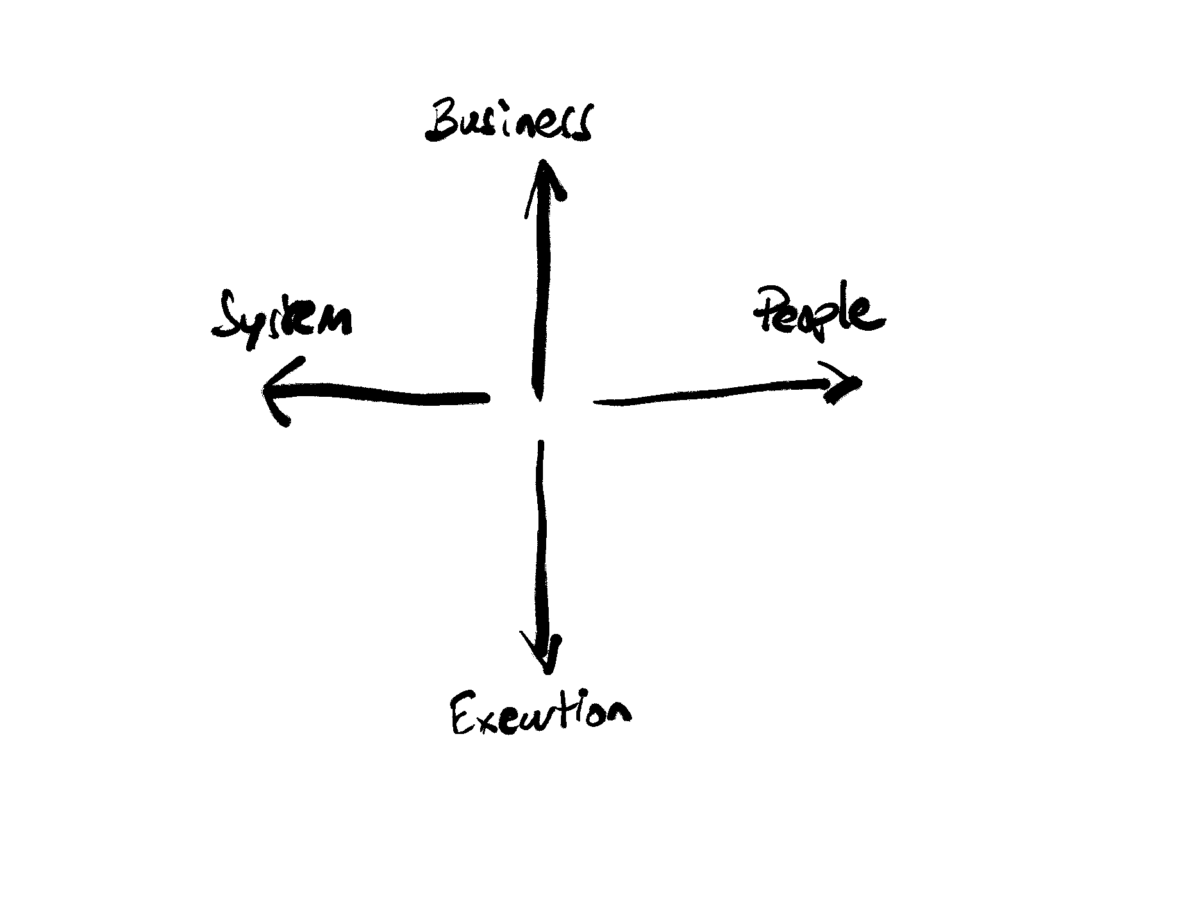
    However, our forward-looking vision encountered unexpected pushback, predominantly from the intermediate managers. They felt threatened, viewing their roles as narrowly confined to execution. This pivotal insight sparked my epiphany, leading to the creation of the BEPS navigator. It was designed to guide their transition towards a more encompassing, servant-leadership stance. Let’s delve deeper:

    • Business: It’s more than profit and loss sheets or market dynamics. It’s about comprehending the realm within which the organization functions within. Leaders should discern why their products or services exist in the first place and be able to articulate a clear and compelling vision.
    • Execution: While execution remains a critical facet, it’s not the sole responsibility. Leaders are not just schedulers or task distributors. They are the driving force ensuring the team delivers effectively.
    • People: Leaders wear multiple hats – they hire, they nurture, they manage performance. But above all, they invest in self-improvement, knowing that leadership is an ever-evolving journey.
    • System: W. Edwards Deming‘s words ring especially true here: “A Bad System Will Beat a Good Person Every Time.” Understanding the intertwined network of people, processes, tools, and organizations is vital. But leaders also hold the torch to illuminate and obliterate obstacles, ensuring their teams can function seamlessly.

    Amidst apprehensions and pushbacks, our leadership team clung to these axes, or as we initially called it, “the axes.” The shift was transformational. Our teams moved faster, silos crumbled, and products reached customers quicker.

    However, transitions are rarely smooth. Some managers couldn’t align with the new vision, some engineers misjudged the roles of User Advocate and Team Catalyst. But with every hiccup, the navigator provided a guiding light.

    In subsequent roles, I wielded the BEPS navigator in coaching and mentoring, helping leaders discern underexplored areas of their roles. Its simplicity is its brilliance – four overarching categories that can be tailored and deepened based on context. It’s not a tool for benchmarking or comparison but a mirror for introspection. Remember, balancing the axes doesn’t mean equal emphasis on all; it’s about investing energy where it’s most needed at a given time.

    The anecdote of managers fearing obsolescence in the face of transformation underscores a vital lesson. Leadership is not about controlling a system but understanding and molding it, ensuring everyone within can flourish.

  • Discover the Power of the Five Minute Journal!

    Discover the Power of the Five Minute Journal!

    In our fast-paced world, taking a few moments to reflect can make a world of difference. Introducing the Five Minute Journal, a transformative practice that can elevate your daily life.

    Why it’s a game-changer:
    🌟 Increases happiness
    🌟 Strengthens relationships
    🌟 Boosts optimism

    How it works:
    🌞 Morning Routine:

    1. List three things you’re grateful for.
    2. Envision three things that would make today great.
    3. Affirm who you are.

    🌜 Night Routine:

    1. Reflect on three amazing things from the day.
    2. Contemplate one thing that could’ve made the day even better.

    This practice isn’t just about journaling—it’s about cultivating a mindset of gratitude and growth.

    And if you’re curious about other transformative practices, dive into our book, “I am a Software Engineer and I am in Charge“. Join Sandrine on her journey, explore actionable experiments, and redefine what it means to be in charge.

    Check out the practice now: The Five Minute Journal

  • From Zero to 1,000: Building a Scalable Organization with Anne Caron

    From Zero to 1,000: Building a Scalable Organization with Anne Caron

    Startups move fast, until they don’t. Many teams discover too late that the real constraint isn’t product or funding. It’s the organization itself.

    In this episode, I spoke with Anne Caron, People Strategy consultant and former Google HR leader, about what it takes to build a company that can scale, without losing energy, clarity, and trust along the way. Anne is the author of From Zero to 1,000: The Organizational Playbook for Startups, and she brings a rare blend of experience from hypergrowth inside Google and years advising founders.

    Scaling happens in stages, and each stage changes the game

    Anne describes startup growth as five stages: 0–30, 30–75, 75–200, 200–500, 500–1,000 employees.

    Her analogy is memorable: startups grow like children. Parenting a toddler and parenting a teenager are not the same job, and neither is leading a 20-person startup versus a 300-person company.

    • 0–30: the Age of Innocence. Everything is informal. Decisions flow through founders. The risk is structuring too early and killing flexibility.
    • 30–75: Childhood. More autonomy, more roles, more layers. What worked becomes chaotic. Founders need to delegate and build first management foundations.
    • 75–200: Pre-adolescence. People want independence. Experts join. If founders keep control, turnover rises.
    • 200–500: Adolescence. You cannot control everything. You rely on the foundations you laid earlier.
    • 500–1,000: a new level of system. The HR function typically becomes a full strategic capability, often with a VP or CHRO.

    The point isn’t the exact numbers. The point is anticipation. If you wait for pain to force you to act, you will be late.

    Culture is not a poster, it is a lived reality

    Anne breaks culture down into four pillars:

    • Purpose: the origin story, why you exist
    • Mission: what you do now, and how it evolves
    • Vision: what you’re trying to build toward
    • Values: how work is really done inside the company

    Purpose, mission, and vision give direction. Values shape the day to day.

    A crucial warning: values must describe reality, not aspiration. If values don’t match lived experience, people will feel misled.

    Anne also points out something many leaders underestimate: founders influence most of the culture. Not through speeches, but through behavior. If a founder is always late, punctuality will never be a real value, no matter how often it appears on slides.

    Build the people function earlier than you think

    Anne argues that you don’t need HR on day one, but once you approach 30 employees, especially if growth is coming, you need to invest in the people function.

    Hypergrowth often starts around 30–50. Hiring takes time. Waiting until you “need a recruiter” means you are already behind.

    One practical solution Anne suggests: hire a more junior HR profile in-house, and pair them with a senior mentor who can help design what fits your context and culture.

    She also shares a clear threshold: if you are making more than 20 hires a year, it becomes more cost-effective to have an in-house recruiter rather than relying on agencies. Beyond cost, it creates internal learning and strengthens employer branding.

    Candidate experience is employer branding

    Anne makes a simple comparison: you don’t book a hotel based only on the hotel’s website. You check reviews.

    The same is true for hiring. Your reputation is shaped by candidates, including the ones you don’t hire.

    A positive, thoughtful candidate experience is rare, and it becomes a differentiator. People talk. On social media, negative experiences spread fast. Great experiences can create future opportunities, even with people you rejected today.

    Lean performance management supports initiative

    Anne’s view of performance management is broader than forms and ratings. Performance is the result of a system that enables people to do their job.

    That includes clarity, communication, tools for managers, and removing needless friction. It also means avoiding overly complex processes that slow down initiative.

    High performance often comes from empowerment, autonomy, and an environment that encourages people to take responsibility and make decisions.

    On metrics, Anne makes a helpful distinction:

    • KPIs are like a dashboard: they tell you when something is off.
    • OKRs can help drive initiatives, but they should not be used as a direct mechanism for compensation decisions.

    Both are indicators. The work is in how leaders interpret them and act on them.

    One final reminder: take time to think

    Anne closes with advice that sounds simple, and is often ignored:

    Many people issues can be resolved with reflection and common sense.
    Before creating a new process, look for the root cause: information, training, clarity, tools, leadership behavior.

    Processes do not prevent bad things from happening. Building the conditions for good work does.

    If you are scaling a company, this episode is an invitation to do the foundational work early. Not to copy what Google or Netflix did, but to define what fits your identity, your context, and your ambition.

    Listen to the episode

    You can listen to this episode on your favorite platform: AnchorSpotifyBreakerGoogleApple

    Take the time to think. Many people-related issues can be resolved with some reflection and common sense. Instead of setting up processes for every problem, try to address the root cause.

    Anne Caron

    References

    Here is the transcript of the episode

    Alexis:

    Welcome to Le Podcast on Emerging Leadership, I am Alexis Monville! In today’s episode, we have the privilege of hosting Anne Caron. An international speaker, author, and consultant, Anne brings a decade of experience as a senior HR executive from the tech giant, Google. In 2015, she channeled her expertise into her consulting practice, guiding founders in sculpting high-performing and positive organizations. Her deep-rooted experience with entrepreneurs led her to craft a unique methodology for startups, aiming to cultivate the right organizational structure and team dynamics. This methodology is beautifully encapsulated in her book, ‘From Zero to 1,000’. Today, we’ll be delving into Anne’s journey, her insights on building successful startups, and the essence of her book. Welcome, Anne!

    Anne:
    Thank you very much for having me, Alexis.

    Alexis:
    Could you give us a brief introduction about yourself?

    Anne:
    Certainly. I’m a people strategy expert, which means I focus on the human side of organizations. I’ve been doing this for the past eight years, supporting startups in building their people-oriented structures. Before that, I was with Google for 10 years. I joined in 2005 when the company had only 5,000 employees globally, and in Europe, there were 1,500. At that time, people recognized Google as a search engine, but few knew about its potential as an employer. I was hired to establish Google as a top employer in the region and to develop initiatives around talent attraction and sourcing strategies. By the time I left a decade later, the company had grown to 65,000 employees, presenting a whole new set of challenges.

    Anne:
    The challenges shifted from attracting talent to optimizing processes to handle the high volume of applications we received, which was in stark contrast to the situation a decade earlier.

    Anne:
    After those 10 years, I felt the need to return to a building phase, which led me back to the startup ecosystem to assist founders in structuring their organizations for growth.

    Alexis:
    What inspired you to delve into the world of startups and organizational development?

    Anne:
    I noticed a gap. Many startups prioritize product development, revenue, and capital raising but often neglect organizational structure until it’s too late. I saw a pressing need to support them early on, especially the founders and CEOs. While HR is essential, there’s more to people strategy than just the typical HR operations. Another motivation stemmed from my time at Google. While I learned a lot about creating a positive work culture, I noticed that as Google grew, many of its processes became similar to other large corporations. This lack of innovation was partly due to rapid growth, which often led to hiring individuals familiar with large-scale operations. These individuals would sometimes hastily implement processes they knew from other organizations without fully understanding Google’s unique culture and needs.

    Anne:
    This experience made me keen to study how we can consciously identify and define what an organization truly needs, rather than just replicating processes from other companies.

    Alexis:
    I noticed a glowing endorsement on the cover of your book from a former Senior Vice President of People Operations at Google. Can you share more about your shared experiences at Google? I particularly enjoyed his book “Work Rules!” as it highlighted practices at Google that seemed effective. Were there aspects that inspired you to think more proactively?

    Anne:
    Absolutely. I had the pleasure of working with him [Laszlo Bock] and found him to be an inspiring leader. His book provided valuable insights into the workings of a company that many startups admire. There are several books out there, like those about Google, Netflix, and Amazon, that describe how these companies achieved success. However, what worked for Google was tailored to its unique identity, shaped by its founders Larry and Sergey. While these examples are inspiring, they aren’t necessarily a one-size-fits-all playbook. Every company, like every individual, has its unique characteristics.

    Anne:
    When I began my consulting practice, my goal was to develop a methodology to help founders understand their identity, vision, and work culture. Towards the end of my time at Google, I noticed some discrepancies between the models we implemented and the company’s values. Initially, Google’s culture and values were incredibly strong and aligned.

    Alexis:
    That’s insightful. In your book, you discuss the different stages of a startup. Could you walk us through these stages and the unique challenges each presents?

    Anne:
    Certainly. I’ve defined five growth stages for startups, ranging from 0 to 1,000 employees. The last stage, from 500 to 1,000 employees, usually has its foundational elements in place. But starting with the first stage, from 0 to 30 employees, I refer to it as the “Age of Innocence.” I often compare a startup’s growth to the development of a child. The challenges and management strategies for a startup are akin to raising a child, and the issues faced at each stage differ significantly.

    Anne:
    Parenting a 10-year-old is different from parenting an 18-year-old. Similarly, I describe the stages of a startup’s growth. The first stage is like the baby phase. Everything is new and exciting. Everyone knows each other, and decisions are made collectively. If there’s a question, it’s directed to the founders. There’s a general feeling of excitement and commitment. It’s a positive time, though not without challenges. This phase is often remembered fondly, much like looking back at a baby’s early days. This is the “Age of Innocence.” The challenge here is that some founders, especially those from corporate backgrounds, try to structure too quickly. In this early stage, you don’t need many processes. Everything happens organically. Overstructuring can reduce the flexibility, which is a startup’s main competitive advantage. It’s essential to reflect on the organization’s identity, goals, and values. Often, founders are preoccupied with product development, revenue, and fundraising.

    Anne:
    The second stage is “Childhood,” when the startup begins to walk and gain some autonomy, typically between 30 to 75 employees. This is often during the Series A or B funding rounds. The focus shifts from survival to serving more customers. The informal culture that worked initially becomes chaotic and less effective. New roles emerge, and layers are added, creating a distance between the team and the founders. This can lead to confusion about priorities. Early joiners might feel discontented with the new layers, and some managers might not be suited for their roles. It’s crucial to build foundational structures and develop people management capabilities. Founders often struggle to delegate, which can slow down processes.

    Anne:
    From 75 to 150 employees, we enter the “Pre-adolescence” stage. There’s a desire for more independence and autonomy. As more experts join the team, it’s vital to delegate and allow them the space to make decisions and manage their teams. If not, it can lead to high turnover rates.

    Anne:
    From 200 to 500 employees, we enter the “Adolescence” phase. At this point, you can’t control everything anymore. It’s like having a teenager; you can’t dictate their every move. You have to trust that you’ve laid the right foundations from the start. As a CEO or founder, you can’t be on the ground with the teams, guiding them at every step. That’s why establishing a foundation early on is crucial. From 500 to 1,000 employees, you typically have a competent HR team in place, led by an HR VP or Chief HR Officer, who can strategize and plan for the next phases.

    Alexis:
    It’s interesting how you’ve related the growth stages to child development. Going back to what you mentioned about Google, due to rapid growth, there’s a tendency to hire people who’ve done it before, even if they just replicate what they know from previous roles. This might not align with the original vision of the company.

    Anne:
    It’s okay to hire experienced individuals, even if they don’t have startup experience. However, they need time to understand and absorb the essence of the organization. They should design strategies that fit the specific culture of the company. Moreover, they should be comfortable navigating ambiguity, which is common in startups.

    Alexis:
    In your book, you discuss three steps to building a positive and scalable organization. Could you delve into these steps?

    Anne:
    Certainly. The first step is defining who you are, what you’re doing, and where you’re going. Without this clarity, you can’t build anything substantial. The second step is defining your company culture, which will shape your business strategy and organizational design. There are four elements to company culture: purpose, mission, vision, and values. The purpose is your origin story, explaining what brought you to this point. The mission represents your current state, a moving target that evolves with the company. The vision is your end goal, describing the future you’re working towards.

    Anne:
    The three elements – purpose, mission, and vision – serve as the GPS of your organization. The mission acts as the vehicle, bridging the gap between the purpose and the vision. This GPS represents the overarching business strategy, which is typically broken down into ten, five, three, two, or one-year plans. These incremental steps lead you towards your ultimate goal. Without this framework, it’s challenging to have a cohesive business strategy and ensure everyone is aligned. The fourth element is the company’s values. These values determine how work is conducted within the organization. They should reflect the actual experience of working with you, not an aspirational version of who you wish you were. If these values are genuine and authentic, they’ll attract the right people. However, if they’re just aspirational, new hires might feel misled.

    Alexis:
    So, it’s about being true to who you are?

    Anne:
    Exactly. Eighty percent of a company’s culture stems from its founders. For instance, if a founder is habitually late to meetings, it’s unlikely that punctuality will be a practiced value, regardless of whether it’s listed as one. It’s essential for founders to approach this with honesty and humility. If a company claims to be innovative or empowering, these qualities should be evident in every aspect of the organization. Every process should encourage innovation and empower its people. This foundational step is crucial. Without it, you might end up merely copying others because you lack the essential elements to customize and design the right organization for you. The next step is building your people function. This involves hiring an HR team on time and establishing the basics before adding perks like TGIFs or bean bags. It’s about getting the essentials right first.

    Alexis:
    That makes sense. So, it’s about establishing a strong foundation and then building upon it?

    Anne:
    Precisely. If you don’t pay your employees on time, no amount of bean bags will make up for it. Once the basics are in place, you can introduce additional perks.

    Anne:
    Once the foundational values are established, you can begin to build systems that drive performance within teams. A significant part of this is equipping managers with the right tools and resources. However, the CEO and leadership team play a pivotal role in communication. While there are essential tools to facilitate this, my primary focus is on lean performance management. Overly complex processes can stifle initiative, and high performance often arises from taking initiative, making decisions, and feeling empowered.

    Alexis:
    So, the values serve as the foundation for subsequent steps, and everything built afterward should align with these values?

    Anne:
    Exactly. For your values to be genuinely lived and breathed, they need to be reflected in every process and policy. When these are in sync, both the values and the system are strengthened. If they’re not aligned, neither works effectively.

    Alexis:
    It’s clear that establishing these foundations early on is crucial, or there will be repercussions later on. Can you delve deeper into the creation of the people function? How does it align with the startup stages you previously outlined?

    Anne:
    In the early stages, I don’t necessarily recommend hiring a dedicated HR person. However, as you approach 30 employees, especially if you anticipate rapid growth, it becomes essential. Hypergrowth typically starts around 30 to 50 employees, and you’ll likely double or even triple in size within six to twelve months. Given the pace of this growth, you can’t wait until you have hiring needs to bring in recruiters. Recruiting takes time, and if you haven’t started early, you’re already behind. A good practice is to hire your first HR person around the 30-employee mark.

    Alexis:
    But what kind of HR profile should startups look for at that stage?

    Anne:
    That’s a challenge. At 30 employees, startups might not have the budget for a senior HR person, nor the scope of work to keep them engaged. Yet, they need the expertise of a senior HR professional to design and adapt policies and frameworks to their culture. A solution I’ve seen work well is to hire a junior HR person with a few years of experience and pair them with a more senior HR mentor. This mentor can guide them in designing processes tailored to the organization’s needs. Once you’re making more than 20 hires a year, it’s more cost-effective to have an in-house recruiter rather than relying on agencies. This approach also helps in building internal knowledge and focusing on employer branding.

    Alexis:
    That makes sense. So, it’s about balancing immediate needs with long-term growth and strategy.

    Anne:
    Precisely. With more than 20 hires in a year, having an in-house recruiter is a no-brainer.

    Alexis:
    So, when you’re building your employee experience, it starts from the moment you contact them or when they reach out to you, right?

    Anne:
    Exactly. Employer branding isn’t just about having an attractive career page on your website or showcasing photos of your office. Think about it like choosing a hotel for a vacation. Do you rely solely on the hotel’s website, or do you check reviews on Tripadvisor? It’s the experiences and opinions of those who’ve been there that matter most. This includes people who’ve interviewed with your company. Ensuring a positive recruiting experience can set you apart. It’s rare, but not complicated, to provide a memorable experience for candidates.

    Alexis:
    Absolutely. Those who interview with your company will share their experiences, and that feedback will shape your company’s reputation.

    Anne:
    With the prevalence of social media, negative experiences spread quickly. It’s rare to hear someone rave about a fantastic interview experience. To achieve that, you need to create a “wow” experience. I’ve written an article on LinkedIn called “The Cookie Effect” about creating such experiences. Even if you don’t hire someone now, if they speak highly of you, there might be opportunities in the future. It’s essential to leave a positive impression on everyone, even those you don’t hire.

    Alexis:
    That’s a great perspective. I’ll link to your article in our broadcast. You mentioned building a performance management system and also brought up OKRs. Are these two concepts connected?

    Anne:
    Yes, OKRs are related to performance management. But in essence, everything ties back to performance management. Performance is about accomplishing tasks, and performance management is about creating a system that enables people to do their job effectively. Everything we’ve discussed, from defining culture to ensuring employees don’t have logistical concerns, contributes to performance. Many factors, both internal and external to the company, influence an individual’s performance.

    Alexis:
    So, on one side, we have metrics showing how your business is running, and on the other side, we have new initiatives measured or driven by OKRs?

    Anne:
    Exactly. KPIs are like your car dashboard, providing a quick summary of essential metrics. They show you when there’s an issue, like low oil or gas levels. However, neither KPIs nor OKRs should be used solely to make decisions on salary or development. They are indicators that inform us and help us make decisions and manage people.

    Alexis:
    That’s insightful. As we wrap up our discussion, what’s one piece of advice you’d like to leave our listeners with?

    Anne:
    Take the time to think. Many people-related issues can be resolved with some reflection and common sense. Instead of setting up processes for every problem, try to address the root cause. Processes won’t prevent bad things from happening. Often, issues arise because someone wasn’t informed, trained, or equipped properly. Addressing these human aspects can be more effective than relying on processes.

    Alexis:
    Where can our listeners connect with you and learn more about your work?

    Anne:
    I’m active on LinkedIn, where I regularly post articles and reflections. They can also reach out to me through my website and learn more from my book. I’m always open to having a chat.

    Alexis:
    Thank you, Anne, for sharing your invaluable insights and experiences with us today. Your journey and the methodology you’ve developed are truly inspiring for founders and leaders aiming to build positive and high-performing organizations. To our listeners, if you wish to dive deeper into Anne’s approach and learn more about her work, I highly recommend her book ‘From Zero to 1,000’. It’s a treasure trove of wisdom for anyone in the startup ecosystem. Thank you for joining us on Le Podcast on Emerging Leadership. Until next time, keep leading and keep inspiring!

    Anne:
    Thank you for having me. It was a pleasure.

    Photo de Ales Maze sur Unsplash

  • The Myth of “Startup Culture”

    The Myth of “Startup Culture”

    The term “startup culture” is often thrown around in the business world, conjuring images of casual dress codes, open office spaces, and a relentless drive for innovation. However, after delving into the operations of various startups, like Freetrade, it becomes evident that there isn’t a one-size-fits-all “startup culture.” Instead, the culture of a startup is what its founders make of it. If they’re intentional, they can craft a unique, thriving environment. If not, they risk falling into the trap of replicating the corporate world they once sought to disrupt.

    The Illusion of a Unified Startup Culture

    Drawing from the Freetrade example in the Raconteur’s article, it’s clear that startup culture is not about pool tables or artisan coffee counters. It’s about the values, beliefs, and practices the founders and early team members embed into the company’s DNA. For instance, Freetrade’s CEO, Adam Dodds, emphasizes comfort and output over strict dress codes, reflecting his belief in prioritizing employee well-being and productivity over superficial norms.

    The Risk of Unintentionality

    Startups that don’t intentionally define their culture face a significant risk. As they grow and bring in experienced professionals from various backgrounds, especially from large corporations, they might find themselves in an environment lacking clear cultural direction. Their natural inclination would be to implement what they know best, often importing practices from the corporate world. While these practices might be efficient, they might not always align with the startup’s original vision or values.

    Intentionality in Crafting Culture

    Being intentional about company culture means actively defining and nurturing the values you want your startup to embody. It’s about creating an environment where every team member understands and aligns with the company’s values, from the newest intern to the most seasoned professional.

    When founders are clear about their startup’s culture and values, they can collaborate more effectively with experienced professionals. Instead of allowing a “copy-paste” approach from the corporate world, they can guide these professionals to implement practices that resonate with the startup’s ethos. This synergy can lead to innovative solutions that combine startups’ agility with established corporations’ expertise.

    Conclusion

    While there’s no monolithic “startup culture,” founders have the power to shape their startups’ culture actively. By being intentional about their values and guiding principles, they can ensure that their company remains true to its vision, even as it grows and evolves. As startups like Freetrade have shown, when culture is approached intentionally, it becomes a powerful tool for innovation, growth, and long-term success.

  • The Future of Consulting: How Clarasys is Redefining the Game

    The Future of Consulting: How Clarasys is Redefining the Game

    In the ever-evolving business world, it’s not uncommon to come across companies claiming to be ‘innovative’ or ‘disruptive.’ However, occasionally, you stumble upon a gem that embodies these terms. One such company is Clarasys, a consulting firm that has taken a bold leap from its traditional roots to become a beacon of innovation.

    The Journey from Classic to Cutting-Edge

    The consulting industry, known for its rigid structures and hierarchical models, has seen little change over the decades. But Clarasys, with its forward-thinking approach, has decided to challenge the status quo. As highlighted by Corporate Rebels, their transformation journey is nothing short of inspiring.

    The 8 Progressive Principles: A New Blueprint for Business

    What truly sets Clarasys apart is its commitment to eight progressive principles. With 200 people and operations in the US and the UK, they have proof of the validity of their principles. These aren’t just fancy buzzwords; they represent a profound shift in how businesses can operate in the modern age:

    Team of teams: By promoting networks of teams, Clarasys fosters agility, speed, and engagement. This structure enhances responsibility and cultivates a deeper sense of belonging among employees.

    Purpose over profit: While profitability is essential, Clarasys emphasizes building a workplace centered around a shared purpose and values.

    Distributed authority: By decentralizing decision-making, the company ensures that those make decisions with the most relevant knowledge and understanding.

    Freedom & trust: Clarasys believes in treating its employees as responsible adults, granting them autonomy, and trusting them to deliver.

    Radical transparency: In an age where information is power, Clarasys champions a culture of openness, ensuring everyone is on the same page.

    Talents over titles: Rather than being confined by job descriptions, employees are encouraged to work based on their strengths, talents, and passions.

    Servant leadership: Leaders at Clarasys support and uplift those on the front lines, fostering a collaborative and supportive environment.

    Experiment & adapt: In a dynamic world, the company values real-time learning over rigid predictions, ensuring they remain at the forefront of industry changes.

    Final Thoughts

    The transformation of Clarasys serves as a testament to what’s possible when businesses dare to think differently. Their journey from a classic consultancy to an innovative powerhouse offers valuable insights for companies and leaders looking to navigate the challenges of the 21st century.

    As we move forward, it’s essential to ask ourselves: Are we merely adhering to age-old practices, or are we brave enough to redefine the rules of the game? The choice, as always, is ours.

  • Introducing the Positivity List!

    Introducing the Positivity List!

    Ever found yourself trapped in a loop of negative thoughts, especially under pressure? We’ve got a simple yet powerful solution for you: The Positivity List. 📝

    What’s it about?
    It’s an index card (physical or virtual) where you jot down 8 topics that bring you joy. It could be memories, upcoming events, or even imaginative scenarios.

    Why it’s a game-changer?
    Research shows that thinking of pleasurable events requires effort. But with this list, you can easily shift your mindset. Just 6 minutes with your Positivity List can uplift your spirits, making challenges more manageable.

    How to use it?
    Create your list with 8 joyous topics.
    Set reminders for the next 5 days at different times.
    Spend 6 minutes with your list during each reminder.
    Reflect on the impact it has on your mood and mindset.

    Whether using it as a daily relaxation tool or a beacon during tough times, the Positivity List is your pocket-sized dose of positivity. 🌈

    For more such practices, dive into our book “I am a Software Engineer and I am in Charge“.